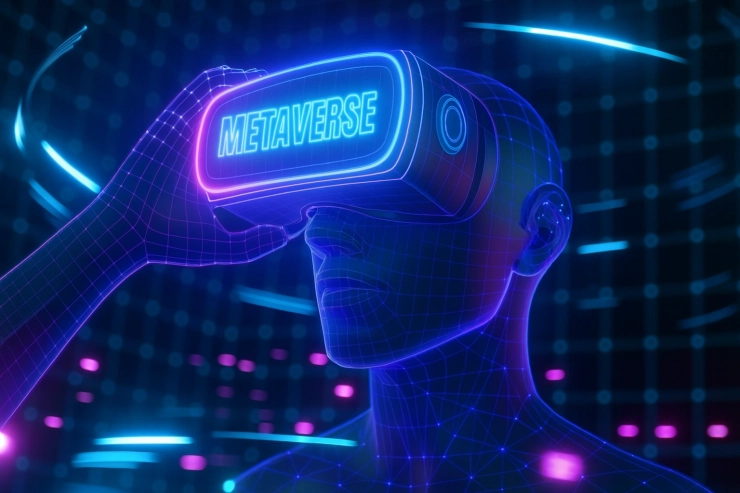
From science fiction novels to the headlines of tech news, the concept of the metaverse has moved from imagination into reality. But what is the metaverse really, and why is it being called the next big step in our digital evolution? The short answer lies in its ambition: to merge the physical and digital worlds into a single, interconnected virtual universe where people can work, play, learn, and interact in real time.\nToday, companies from Meta (formerly Facebook) to Microsoft, Google, and countless startups are investing billions into building the metaverse. This is not just a trend — it’s a technological shift that could redefine the way we live and interact online. In this article, we’ll break down the metaverse meaning, explore its core technologies, examine how it works, and see where it might take us in the future.
What is the Metaverse: Simple Definition
At its core, the metaverse meaning refers to a persistent, immersive, and interactive virtual environment that blends digital spaces with elements of our real world. It is not a single platform or game but rather a network of interconnected virtual worlds and experiences. Users enter the metaverse through devices like VR headsets, AR glasses, PCs, or even smartphones.
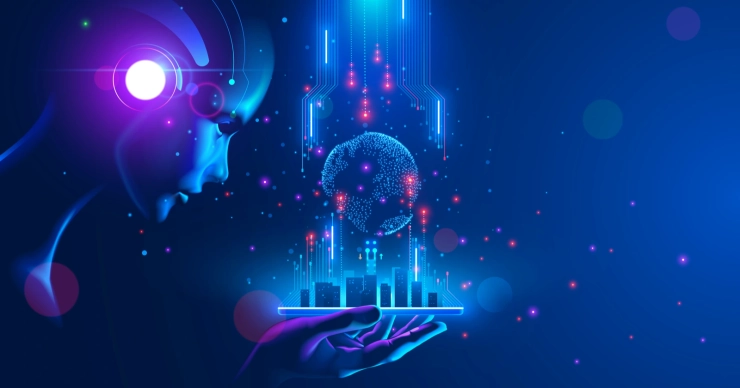
Unlike traditional digital platforms, the metaverse aims to be persistent — it continues to exist and evolve whether you’re logged in or not. It’s also realtime, meaning people around the world can interact with each other and with digital objects simultaneously. This shared sense of presence is what sets it apart from simply browsing the web or playing an online game.
Key technologies making the metaverse possible include:
- Virtual Reality (VR) for full immersion in 3D environments.
- Augmented Reality (AR) for overlaying digital elements on the real world.
- Blockchain for digital ownership and decentralized governance.
- 3D modeling and spatial computing for realistic environments and interactions.
How the Metaverse Works
If you’re understanding the metaverse for the first time, it’s important to see it as a combination of technologies and principles rather than a single app. So, what is the metaverse and how does it work in practice?\nThe metaverse merges real-world elements with digital simulation. On the user side, devices like VR headsets or AR glasses track head and hand movements, enabling natural interaction with virtual environments. On the backend, cloud computing and high-speed networks deliver complex 3D worlds in real time.
Core components include:
- Cloud Infrastructure: Handles massive data loads and renders virtual spaces without requiring high-end hardware for every user.
- AR/VR Hardware: Immerses users and enables spatial interaction.
- Artificial Intelligence (AI): Powers realistic NPC behavior, personalization, and procedural content generation.
- Blockchain & NFTs: Allow secure digital ownership of assets, such as virtual land, avatars, or items, enabling trade between worlds.
- Interoperability Protocols: Ensure that assets and identities can move seamlessly between different metaverse platforms.
This integration of systems allows the metaverse to function as a living digital ecosystem rather than isolated apps or games.
Core Principles and Features of the Metaverse
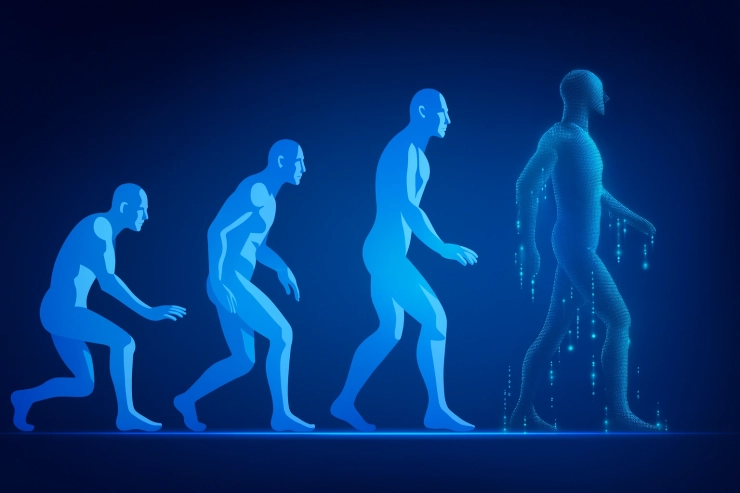
While the metaverse meaning can be summarized as a shared, persistent virtual world, understanding its core principles is essential for seeing how it will transform the digital landscape. These principles define what makes the metaverse unique compared to traditional online platforms.
- Immersion – The Feeling of Presence
- Interactivity – Real-Time Engagement
- Continuity – A Persistent Digital World
- Scalability – Hosting Millions of Users
- Identity – Self-Expression in a Digital Universe
- Interoperability – Connecting Virtual Worlds
- Economy – User-Driven Value Creation in the digital economy
Real-World Applications of the Metaverse
The metaverse meaning becomes more tangible when you see how it’s already being used in different industries.
- Virtual Collaboration: Remote teams working in virtual offices.
- Education in the Metaverse: Immersive simulations and virtual classrooms.
- Social Platforms: Next-generation 3D social media.
- Virtual Events: Metaverse concerts, exhibitions, and meetups.
- Digital Fashion & Architecture: Showcasing interactive 3D designs.
Benefits of the Metaverse
The metaverse offers opportunities that go beyond entertainment.
- Expanded Communication: Rich, immersive communication that feels more natural than video calls.
- Economic Potential: New markets for digital goods, real estate, and services.
- Inclusivity: Accessible spaces for people regardless of physical location.
- Enhanced Learning: Immersive education can improve engagement and retention.
- Brand Innovation: Companies can create unique experiences to connect with customers.
Challenges and Limitations of the Metaverse
While the metaverse meaning often sparks excitement about limitless possibilities, the reality is that creating and sustaining such a complex digital ecosystem comes with serious challenges. Understanding these limitations is key to developing a realistic view of how the metaverse will evolve.
- High Technical Requirements – VR headsets, haptic devices, 5G connectivity
- Privacy and Data Security – biometric and behavioral data risks
- Ethical & Psychological Issues – addiction, identity manipulation
- Lack of Universal Standards – limited metaverse interoperability
- Accessibility Gaps – inclusivity for people with disabilities
- Regulatory Uncertainty – laws on virtual assets and digital currencies
The Future of the Metaverse
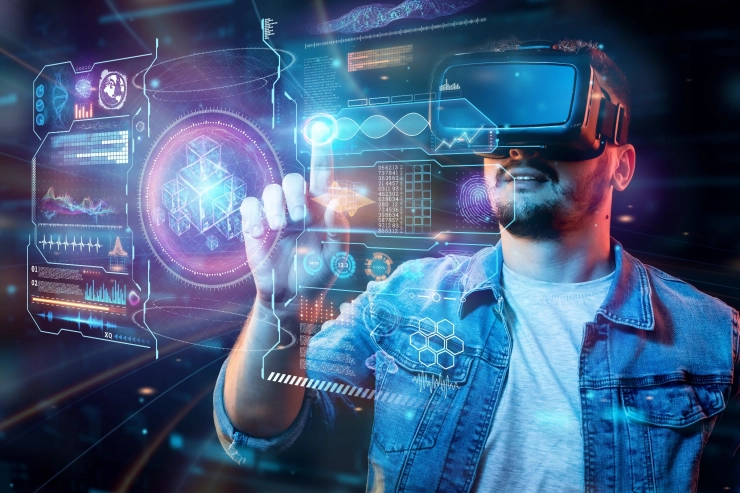
The metaverse meaning is still evolving, but it’s clear that the concept is moving from theory to reality at a rapid pace. Over the next decade, technological progress, corporate investment, and user adoption will shape what the metaverse becomes — and how deeply it integrates into our digital and physical lives.
Infrastructure Maturity and Standardization
A fully realized metaverse requires faster, more reliable, and more accessible infrastructure. This includes 5G/6G networks, edge computing, and powerful cloud platforms capable of rendering immersive environments in real time for millions of concurrent users. Standardization will be critical. Just as the internet evolved through shared protocols like HTTP and TCP/IP, the metaverse will need common technical standards for avatars, asset formats, and identity verification to ensure interoperability across platforms.
Integration with Emerging Technologies
The next generation of the metaverse will merge with innovations in artificial intelligence, digital twins, and biometric authentication. AI-powered NPCs (non-player characters) could offer personalized assistance, while digital twins will allow entire cities, factories, or ecosystems to be recreated and simulated in virtual form. Advanced haptics and neural interfaces may also transform user interaction — enabling people to “feel” textures, control environments with thought commands, or seamlessly blend real-world actions into digital spaces
Expansion Beyond Entertainment
While gaming and social experiences currently dominate public perception, the metaverse’s long-term influence will reach far beyond entertainment. We’ll see virtual workspaces where teams from across the globe collaborate as if they were in the same room, immersive education platforms offering handson simulations for any subject, and virtual healthcare environments where doctors can consult, diagnose, and even guide surgeries remotely.
A New Digital Economy
The metaverse could host a borderless economy, with its own marketplaces, currencies, and business models. Blockchain-based smart contracts will allow instant and secure transactions for goods and services, while digital property rights will create entirely new asset classes. In this future, the line between “physical” and “digital” jobs will blur, as people earn a living entirely through metaverse activities — designing virtual spaces, creating avatar clothing, offering consultancy services, or hosting events.
Governance and Community-Led Platforms
As the metaverse grows, decentralized governance will play an important role. Communities may control platform rules through DAOs (Decentralized Autonomous Organizations), shifting power away from single corporations toward collective decision-making. This could lead to more user-driven ecosystems where the community determines content policies, monetization models, and even development priorities.
Potential for a “Metaverse Internet”
In the long term, the metaverse might evolve into a successor to the current web — a persistent, 3D, interconnected network of spaces where websites are replaced by interactive worlds. In this scenario, logging into the internet might mean entering a personalized virtual hub, from which you could jump to any other metaverse experience seamlessly, just as we now click between web pages.
Conclusion
The metaverse meaning goes far beyond gaming or virtual reality — it represents a vision of a connected, persistent, and interactive digital universe. By merging physical and digital worlds, it promises to reshape communication, work, learning, and entertainment. Understanding the metaverse now is crucial, as its influence will extend into almost every sector in the coming years. If you’ve been wondering what is the metaverse and how does it work, the answer is that it’s an evolving ecosystem powered by VR, AR, blockchain, and AI — a place where your digital identity and assets are truly your own. The transformation is already underway, and as the metaverse develops, it could become the next iteration of the internet — one where we don’t just browse content but live, work, and create inside it.