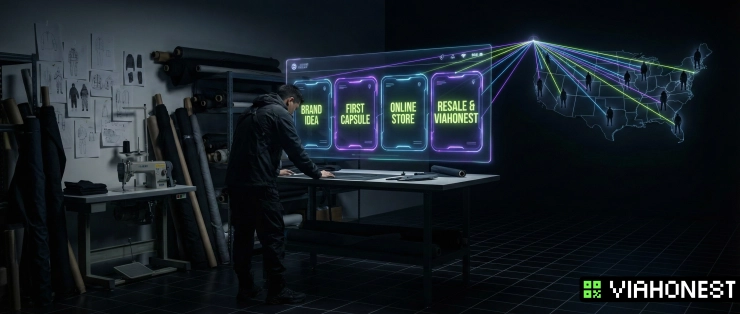
Search how to start a clothing brand in 2026 and you'll find a million people asking the same thing. The reason is simple. Social media, e-commerce, and resale marketplaces have collapsed the distance between a designer working out of a one-bedroom apartment and customers spread across the entire country. You don't need a storefront. You barely need an office. What you do need is a clear head, because the same tools that lowered the barrier to entry also raised the bar on quality. Shoppers compare you against global labels with a single swipe, they expect genuine quality, and they care about how the thing was made and where it came from. So starting a clothing line in 2026 isn't really about designing a cool hoodie. It's about building a clothing business that can earn trust and survive in a crowded, circular fashion world that punishes shortcuts.
Why launching a clothing brand in 2026 is both opportunity and test
There's a reason independent labels are having a moment. Walk into any mall and the stores start to blur together. Same silhouettes, same prints, same algorithmic guesses about what everyone simply has to own this season. People got tired of it. They're hunting for garments that say something about who they are, what they value, and which communities they actually belong to, and the small human-feeling brands are the ones answering that. TikTok, Instagram, and creator culture hand you a direct line to those people, which means you can test ideas, gather honest reactions, and build a niche audience long before you ever commit to a big production run. Layer in the rise of sustainable and circular fashion, and well-made garments that last are worth more now than they've been in a generation.
The catch is that those same tools cut both ways. A first-time customer doesn't grade you on a curve because you're new. They want clear sizing, good fabric, shipping that arrives when you said it would, and policies they can read without hiring a lawyer. They read the reviews. They notice when something doesn't add up. And they'll post about a bad experience publicly, sometimes before the package even hits the trash. Launching with no defined audience, no basic plan, or a random grab-bag of styles used to be merely risky. Now it's close to a guaranteed failure.
Which is why the real foundation of success in 2026 was never going to be one viral drop. It's the unglamorous combination of strategic research, smart operations, consistent quality, and a long-term view of what happens to each garment after it leaves your hands and starts its real life in the world.
Step 1: Choose a niche and define your brand idea
Before a single sketch, decide who you're dressing and why. Make your ideal customer a real person in your head, somebody specific enough to picture. How old are they, where do they live, what do they pull on for work or school, how do they spend a Tuesday night versus a Saturday afternoon, what's already in their closet, and what quietly annoys them about the brands they currently buy?
The temptation is to say "my clothes are for anyone who likes comfort." That sentence helps you make exactly zero decisions. A sharper version looks more like one of these:
- A 24-year-old creative in a big city, working hybrid, riding public transit, who cares about sustainability but still wants a clean, minimal look
- A 30-year-old parent who needs durable, easy-care pieces that survive kids, commuting, and a schedule with no room for dry cleaning
- A niche community (gamers, dancers, climbers, nurses, artists) that never sees itself reflected in mainstream apparel at all
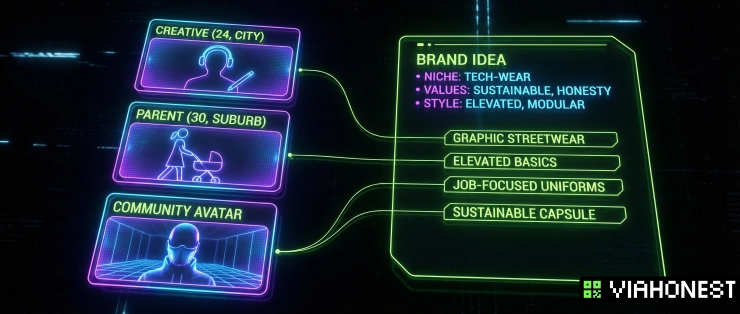
Once that person is real to you, pick a lane that fits their actual life. Graphic-driven streetwear. Performance athleisure. Elevated basics. Sustainable capsules built from low-impact materials. Maybe clothing designed around a specific job, a subculture, or a body type the big brands keep ignoring. The test is whether you can explain, in one sentence, why your label deserves closet space next to the brands this person already owns and trusts.
Your brand story grows out of the same soil. Maybe you're sick of flimsy tees that twist sideways after two washes. Maybe you're plus-size and you've never once seen your body in a campaign. Maybe you care about clothes that live several lives instead of ending up in a landfill after a single season. Whatever it is, that story isn't decoration for the "About" page. It's the filter every later decision runs through, from which fabric you order to how you shoot the lookbook.
Finally, nail down your positioning:
- Rough price level (budget, mid-range, premium) and the reason for it
- Quality promise: what someone can reliably expect from your garments, every single time, not just on the good days
- Visual direction: color palette, typography, photography style, tone of voice
A simple moodboard plus half a page of notes on who you serve and what you stand for will keep you from sliding back into "for everyone" territory the moment it's time to actually design something.
Step 2: Build your business foundation before the first drop
Plenty of people who search how to start a clothing brand skip straight to the fun part and start sketching. But a label without a basic plan for money, margin, and legal structure isn't a business. It's an expensive hobby that drains your savings while feeling productive.
Start with your primary revenue model. For most new U.S. founders that's direct-to-consumer through your own site, which hands you the best margins and full control over the story you tell, at the cost of having to generate your own traffic from scratch. Some brands also list on marketplaces like Etsy or Amazon to borrow those built-in audiences, accepting the extra fees and the loss of control that comes with it. Others test wholesale or consignment with small boutiques, trading fatter order volumes for thinner margins and messier logistics. You won't be locked into one channel forever, but committing to a primary one for year one keeps you from spreading yourself across five things you can't do well.
Then sit down with the numbers, honestly. For each garment, estimate:
- Fabric and trims
- Cut-and-sew labor
- Labels, tags, and packaging
- Shipping materials and postage
- Duties and taxes wherever they apply
- Payment processing and platform fees
- A realistic slice of overhead: your site, software, photography, and yes, your own time
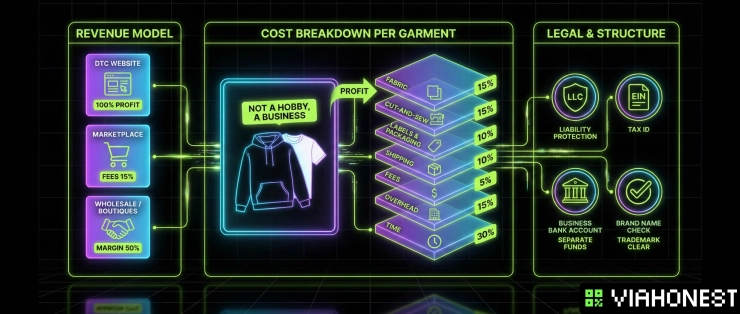
Set a retail price, then calculate the margin that's actually left. If there isn't enough after every cost is accounted for, there's nothing to fund marketing, improvements, or your own paycheck, and the whole thing stalls. Underpricing to "stay accessible" is the classic beginner trap. Customers rarely respect a brand just because it's cheap. They respect consistent quality and values they can see, and they'll pay for both.
The legal basics aren't glamorous, but they exist to protect you when something goes wrong. In the U.S., a lot of founders set up an LLC to wall off personal risk from business risk, pull an EIN for taxes, and open a dedicated business bank account so the money doesn't get tangled. At minimum, check whether your brand name and logo are already in use or trademarked in your category. Getting forced into a rebrand right as people start recognizing you is painful, expensive, and completely avoidable with twenty minutes of searching.
Even a single-page plan that captures your audience, niche, pricing, primary channel, a budget for the first 6 to 12 months, and your basic legal setup will put a frame around your creativity and make every later decision a lot less agonizing.
Step 3: Turn your idea into a focused first collection
With the business skeleton in place, you finally get to make product, but with discipline rather than enthusiasm alone. The most common creative mistake when someone is starting a clothing line is going wide instead of deep. One dress, one hoodie, one pair of shorts, a random cap, all in clashing colors and unrelated vibes. To you it feels like range. To customers it reads as chaos, and chaos doesn't convert.
Build a small, coherent capsule that says one clear thing about your brand instead. Three or four pieces that genuinely belong together: a tee, a sweatshirt, a pant. Or a tight range of dresses built around one signature fabric you really believe in. Use a limited palette and repeat it across the collection so the pieces look like a family rather than a pile of unrelated samples that happened to ship in the same box.
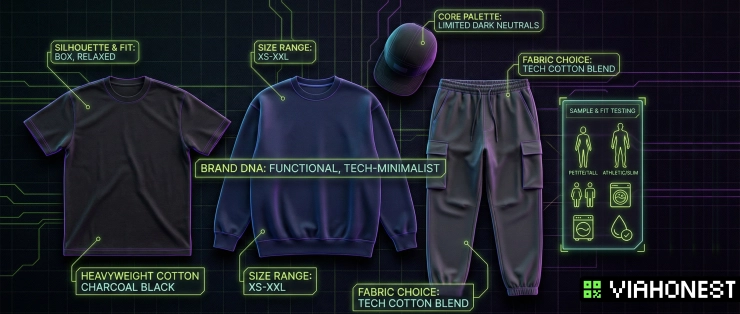
Move from concept to structure by sketching silhouettes, deciding on fit (oversized, relaxed, tailored, cropped), and locking down your size range. Even rough size charts and notes on how each piece should sit on the body will save you and any patternmaker or factory enormous headaches later. If the technical side isn't your strength, paying a freelance technical designer or patternmaker for your core pieces is money well spent. Good patterns are the spine of consistent quality, and bad ones haunt every unit you produce afterward.
Fabric is where your values stop being words and become something a customer can touch. If comfort is the whole point, chase soft handfeel and good stretch recovery. If durability is the promise, hunt for fabrics that resist pilling and hold their shape through real wear. If sustainability is in your DNA, get specific instead of vague. Organic cotton. Recycled poly. Certified blends. Deadstock. Don't just slap "eco" on the label. Explain exactly what you're using and why you chose it, because the buyers who care will check.
Then sample like your reputation depends on it, because it does. Order prototypes, fit them on different bodies across your target range, and wash them several times to see how they behave once they leave the showroom and meet a real washing machine. Watch for twisting seams. Shrinkage. Color fading. Print cracking. Ask your testers the honest questions: can they sit, move, commute, and actually live in these pieces without thinking about them? Use whatever comes back to adjust patterns, fabrics, or trims, even if it pushes your launch date out. A slower, smarter start beats shipping a flawed first batch and spending the next six months apologizing for it.
Step 4: Organize production and operations
The next stretch is the least romantic and the most underestimated: turning a refined collection into actual inventory, then moving that inventory from your hands into your customer's closet without anything breaking along the way.
Production routes trade risk against control. Print-on-demand partners let you upload designs and have items printed and shipped only as orders come in, which slashes your upfront inventory risk and works well for testing graphics, at the cost of giving up control over fabric, fit, and finishing while your margins shrink. Local sewing rooms and small workshops offer lower minimums and a real relationship, the kind where you can drive over, talk through a change, and keep communication direct. The tradeoff there is higher unit costs and limited capacity once you start to grow. Larger domestic or overseas factories bring better pricing and more complex capabilities to the table, but they want higher minimums, longer lead times, and well-prepared tech packs you'll have to learn how to make.
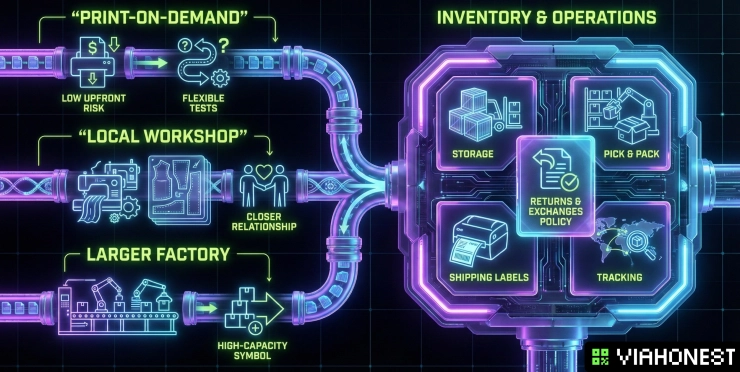
Whichever route you pick, vet your partners like the relationship matters, because it does. Look at samples of their actual work. Turn the garments inside out and inspect the seams, not just the surface. Ask pointed questions about timelines, minimums, and how they handle mistakes when they happen, because they will happen. Pay attention to how clearly they communicate and whether they set realistic expectations or just tell you what you want to hear. Start with small production runs you can afford to lose, and only scale up after you've watched how a partner actually performs under real conditions.
In parallel, get your operations boring and functional. Decide where inventory lives, whether that's a spare room or a small storage unit to start. Build a straightforward system for picking, packing, and shipping orders, including how you'll generate labels and track packages. Design packaging that reflects your identity and values, keeping in mind that minimalist recycled mailers can land just as hard as custom printed boxes when they're used with intention. Write your returns and exchanges policy ahead of time, in plain language, on your site, so a customer is never blindsided after the fact.
These operational details feel secondary to the design work. They aren't. They're the difference between a creative project and a functioning clothing business that people trust enough to buy from a second and third time.
Step 5: Launch, sell, and market your brand
Selling starts well before you hit publish on your first product page. As you build the site and the social presence, think about the emotional state of a stranger landing on your page for the first time. They don't know you. They're deciding in a handful of seconds whether to hand over their card details and a slot in their wardrobe to a brand they'd never heard of this morning.
Your own site is usually the main stage. Keep the layout clean and mobile-friendly, and shoot your photography on real bodies rather than just thin models who make everything look effortless. On the product pages, describe fabric, fit, and care in plain terms, and include clear size guides with model measurements. Make checkout simple and secure. Be upfront about shipping costs and delivery windows instead of hiding them where only the most determined shoppers will dig them out. Even if you also sell through marketplaces, your own site is the one place you fully control the experience and tell the longer story.
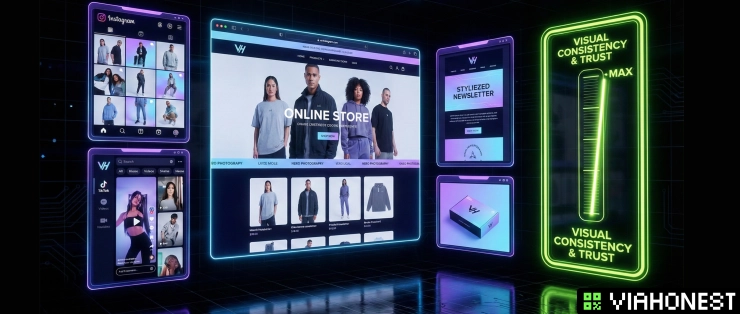
Visual consistency carries more weight than most new founders expect. Your logo, typography, color palette, and image style should feel like one world across your site, your Instagram grid, your TikTok, your emails, and your packaging. When everything matches, even a tiny brand reads as reliable and mature. Constantly rebranding or chasing a new aesthetic every quarter does the opposite, confusing the people who were starting to recognize you and weakening whatever position you'd built.
Treat marketing as an ongoing conversation rather than a series of one-off announcements nobody asked for. Tell the story of your first capsule. The fabric decisions. The sampling problems that nearly derailed it. The people who helped you get it across the line. Mix behind-the-scenes content with styling advice and genuinely useful posts about care, fit, and longevity. Work with micro-influencers whose audiences actually overlap with your niche instead of chasing big names with general followings, because a creator with a small but engaged audience often drives more real action than an account ten times the size that has no connection to what you stand for.
Above everything, treat your earliest buyers as the core of a community, not a list of transactions. Answer DMs and emails like a person. Thank people when they share photos of themselves wearing your stuff. Ask for honest feedback after a few weeks of real wear. Those first supporters will shape your reputation more than any ad budget you could buy, and they'll do it for free if you treat them right.
Step 6: Use resale and ViaHonest to grow in a circular world
The last piece of the 2026 strategy is accepting that your responsibility doesn't end the moment the first owner opens the box. With sustainability and value sitting near the top of how people make decisions now, customers increasingly ask themselves a question that used to be invisible: what happens to this piece after I'm done with it? If your garments are built to last and actually hold resale value, they become long-term ambassadors for your brand instead of clutter heading to the bottom of a donation bin.
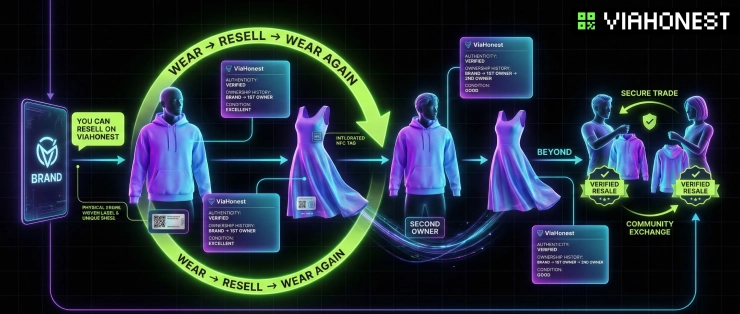
Resale platforms turn that question into a growth channel. When somebody resells your hoodie or dress, they aren't just clearing closet space. They're introducing your label to a new person who may never have seen a single piece of your marketing. Think of it as slow, organic advertising you didn't pay for. There's one catch, though, and it's a big one: trust. Buyers on the secondary market worry about fakes, altered items, and damage that only reveals itself after the package arrives and it's too late.
That's exactly where ViaHonest earns its place in the strategy. The idea underneath it is simple. Give every garment a transparent, verifiable story. On ViaHonest, an item can be tied to proof of authenticity, a documented ownership history, and honest information about its condition. For buyers, that removes the risk of paying for something fake or misrepresented. For you as the brand, it protects your reputation and makes it genuinely harder for counterfeiters to ride on your name and pocket the difference.
You can fold ViaHonest into your operation in a way that feels natural rather than forced:
- In your packaging or post-purchase emails, mention that when customers eventually decide to part with a piece, they can list it on ViaHonest. That gives them a trusted path to resell and a reason to register as sellers
- On your site or social channels, occasionally point out that your pieces also show up secondhand on the platform, which gives budget-conscious or sustainability-minded shoppers a way to register as buyers and discover your brand through authenticated pre-owned items
You don't need to hammer this into every post. A few well-placed mentions are enough to make resale feel like a natural extension of what your label already stands for: honesty, durability, and respect for the full life cycle of a garment. In practice, that means your brand isn't just shipping new clothes. You're quietly supporting a world where pieces get worn, loved, resold, and kept out of landfills for as long as humanly possible.
Conclusion: from first capsule to long-term brand

Put all of it together and learning how to start a clothing brand in 2026 stops looking like a gamble and starts looking like a structured creative project with clear stages. You begin by defining a precise niche and a real person you actually want to dress. You build a lean but honest plan around money, margin, and the legal basics. You design a focused first collection, sample it until it's right, and choose production partners who can deliver what you promised your customers. You set up operations so ordering, shipping, and returns feel smooth instead of stressful. You launch through channels you can realistically manage, tell your story with consistency, and treat every early buyer like they're already part of the inner circle, because they are.
You don't need a huge budget or a warehouse to begin. What you need is clarity, patience, and respect for the full journey a garment takes. Treat starting a clothing line not as a one-time drop but as the creation of a living, breathing brand, where new releases, everyday wear, and transparent resale through ViaHonest all reinforce each other, and you move from a daydream toward a durable clothing business. Keep returning to that first question of who you serve and how your pieces can live more than one life, and your answer to how to start a clothing brand only gets stronger with every collection you put out into the world.