Introduction
Real estate has always represented stability and tangible value — a cornerstone of global wealth creation. But until recently, investing in property required significant capital, complex paperwork, and intermediaries who controlled access. The rise of rwa tokenization — turning real-world assets into on-chain financial instruments — is now changing that landscape.
By combining blockchain, smart contracts, and digital ownership, real estate can be transformed into programmable, transparent, and globally tradable assets. This process, known as tokenized real estate, allows investors to own fractional shares of property, while asset managers gain new liquidity and efficiency.
This isn’t just a trend; it’s a structural shift. Just as NFTs digitized art and collectibles, blockchain real estate is digitizing property ownership. And the same technology powering RWA marketplaces — like ViaHonest, which connects physical goods with digital verification — is now being used to bring trust and transparency to real estate investment.
What Is Real Estate Tokenization?
Defining Tokenized Real Estate
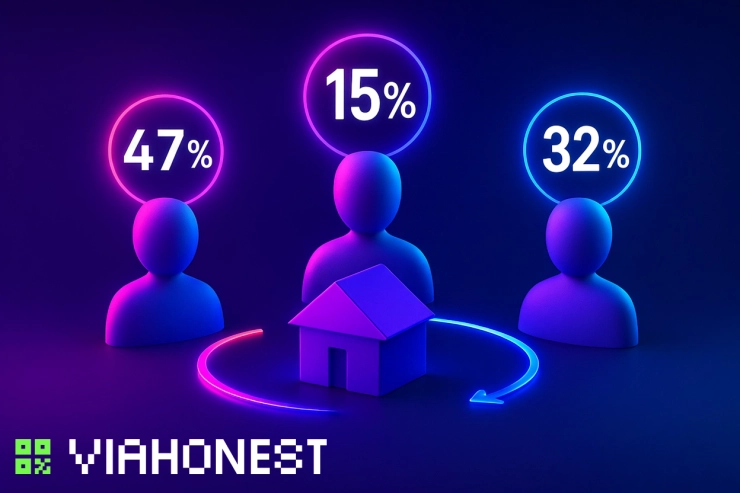
Tokenized real estate refers to the process of converting property ownership rights into digital tokens on a blockchain. Each token represents a fraction of the underlying asset — such as a condominium, commercial building, or land plot — recorded immutably on-chain.
Instead of relying on paper-based registries or centralized databases, blockchain provides a transparent, tamper-proof ledger that proves who owns what. Through rwa tokenization, real-world properties gain the same transferability, traceability, and liquidity that digital assets enjoy.
This transformation enables investors worldwide to buy and sell property shares without the friction of traditional markets. A $10 million building can be divided into 100,000 tokens, each representing $100 worth of ownership. For the first time, real estate becomes borderless, divisible, and instantly tradable.
Why RWA Tokenization Matters in Web3
RWA tokenization bridges traditional finance and decentralized ecosystems. It brings tangible, cash-flow-generating assets into Web3, offering stability to a crypto market historically driven by volatility.
Institutional investors, DeFi protocols, and retail participants are all converging on this model. It introduces a new hybrid economy — where off-chain assets are managed through on-chain infrastructure.
Projects like ViaHonest, which tokenizes physical collectibles and luxury items through blockchain authentication, are proof of how this principle scales beyond property. Whether it’s a verified art piece or a fractionalized apartment unit, tokenization provides the same core benefit: digital ownership backed by real-world value.
The Technical Model — Smart Contracts and Fractional Ownership
How Blockchain Powers Tokenized Real Estate
At its core, blockchain real estate relies on smart contracts — self-executing programs that automatically enforce the rules of ownership, transfer, and revenue distribution. When a property is tokenized, a smart contract governs:
- how many tokens exist,
- what each token represents,
- how profits (like rent or resale proceeds) are shared,
- and who can trade or hold the tokens.
These rules are immutable once deployed, ensuring that all stakeholders — from developers to investors — operate transparently. Ownership data, transfers, and income events are recorded directly on the blockchain, eliminating disputes or manipulation.
Fractional Ownership: The Democratization of Real Estate
Fractional ownership lies at the heart of this transformation. Instead of one entity holding full control over a property, thousands of investors can share ownership through tokens. Each holder owns a verifiable portion of the asset and can trade their share anytime.
This structure introduces liquidity into one of the most illiquid markets on earth. Investors can buy fractions of properties in multiple cities, balancing risk while participating in global growth opportunities.
Platforms applying similar mechanics — like ViaHonest with its digital collectibles tied to physical goods — show how tokenization extends to any asset class. The same model used for sneakers, art, or luxury watches can underpin billion-dollar real estate assets, giving them new digital life.
Automation and Trust via Smart Contracts
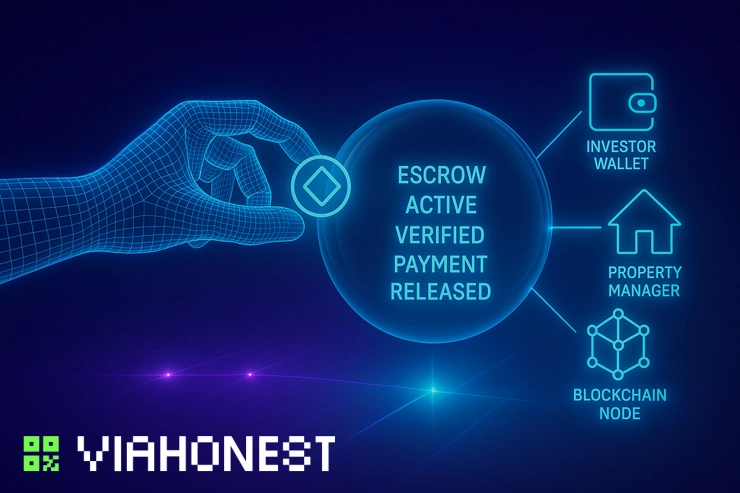
Smart contracts remove intermediaries. Rental income, for instance, can be distributed automatically to all token holders based on proportional ownership. Compliance processes — KYC, AML, investor accreditation — can also be automated through blockchain-based identity layers.
This is the foundation of a defi RWA ecosystem: decentralized finance powered by realworld assets, enabling instant collateralization, borrowing, or secondary trading.
Regulatory Aspects and Licensing
The Legal Landscape
Despite its technological promise, RWA tokenization still faces regulatory challenges. Real estate tokens often qualify as securities, meaning they must comply with financial laws in jurisdictions like the U.S., EU, or Singapore.
In the United States, tokenized real estate offerings typically fall under the purview of the Securities and Exchange Commission (SEC). To stay compliant, platforms may operate under Regulation D (for accredited investors), Regulation A+ (mini public offerings), or Regulation S (for international sales).
KYC, AML, and Investor Protection
Compliant platforms must integrate robust Know Your Customer (KYC) and Anti-Money Laundering (AML) protocols to ensure transparency and prevent misuse. Blockchain simplifies these processes by linking verified identities with wallet addresses, reducing fraud risk.
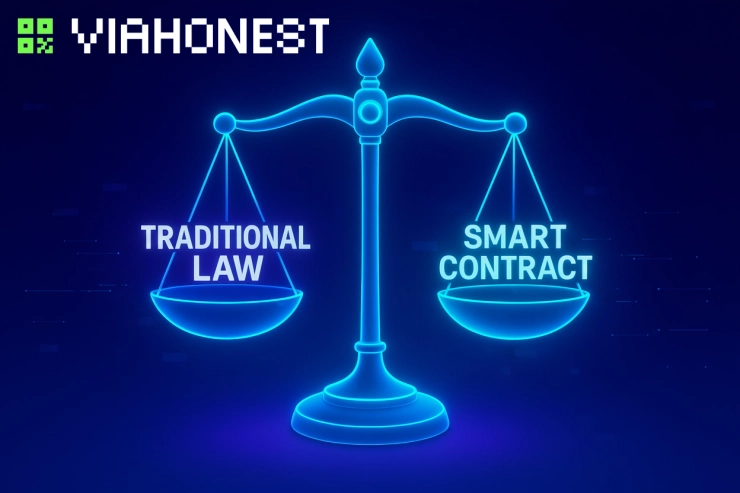
Ownership of tokenized assets can also be managed through legally binding agreements stored off-chain but referenced by smart contracts. This dual-layer structure — legal + digital — bridges traditional law and decentralized infrastructure.
Projects like ViaHonest already apply similar verification logic to consumer products: every item linked to an NFT includes verifiable provenance, ownership history, and authenticity. The same principle can safeguard property tokenization at institutional scale.
Global Regulation: A Patchwork in Progress
Countries are gradually aligning their frameworks. Switzerland and Liechtenstein have passed clear tokenization laws; the European Union’s MiCA regulation (Markets in Crypto-Assets) will standardize digital asset oversight in 2025. The U.S. is still refining its stance but increasingly recognizes tokenized securities as legitimate investment instruments.
Ultimately, regulation will determine how fast blockchain real estate grows. But one thing is certain: the infrastructure is ready — the legal system is catching up.
Risks and Benefits for Investors
The Advantages
The benefits of tokenized real estate are extensive and tangible:
- Liquidity. Investors can trade property shares in real-time instead of waiting months for a sale
- Accessibility. Entry barriers fall dramatically — anyone can invest with as little as $100.
- Transparency. Every transaction is publicly verifiable on the blockchain.
- Global Reach. Investors from any jurisdiction can participate, expanding market exposure.
- Efficiency. Automated smart contracts reduce fees and settlement delays.
These advantages make RWA investing a natural evolution of property markets, aligning with broader Web3 trends of inclusion and automation.
The Risks
However, innovation comes with risk:
- Regulatory Uncertainty. Legal definitions vary by region.
- Market Volatility. Token prices can fluctuate, especially in secondary markets.
- Platform Dependence. Investors rely on the technical and legal integrity of the tokenization platform.
- Custody Concerns. Digital asset management introduces new cybersecurity responsibilities.
Mitigation Strategies
To minimize exposure, investors should:
- Choose platforms with audited smart contracts and transparent governance.
- Diversify across multiple properties and jurisdictions.
- Verify that legal rights (rents, dividends, voting) are properly encoded in tokens.
- Stay updated on evolving defi rwa regulations.
Tokenization doesn’t remove risk — it redistributes it more efficiently through decentralization.
How ViaHonest Illustrates the Future of RWA Marketplaces
From Real Estate to Phygital Ownership
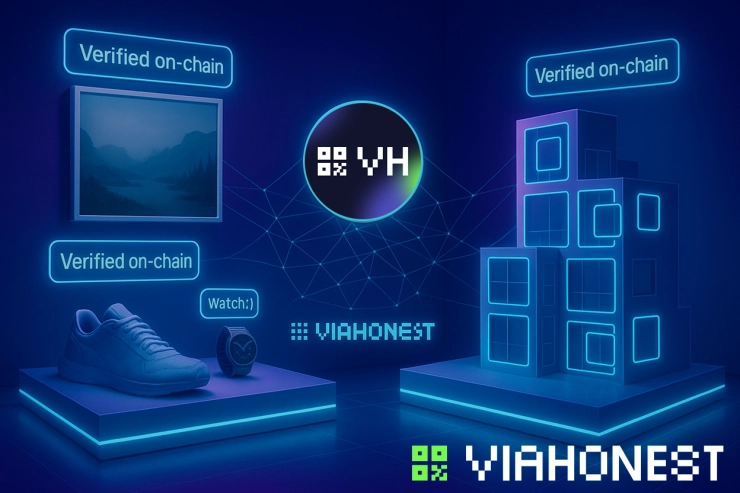
While ViaHonest does not tokenize real estate specifically, it represents the same Web3 infrastructure that makes property tokenization possible. The platform is a phygital marketplace — connecting physical goods (like fashion, art, collectibles, and streetwear) with blockchain-based verification.
Each item listed on ViaHonest receives a unique Certified Digital Collectible (NFT) linked through QR, NFC, or RFID tags. This NFT acts as a digital twin, recording the item’s authenticity, ownership history, and transaction data on the blockchain.
The same technology that authenticates a limited-edition sneaker can validate a property deed, a luxury watch, or a tokenized apartment share. ViaHonest’s innovation proves how Web3 verification models scale across industries.
Trust, Transparency, and Accessibility
In both real estate and consumer goods, trust defines value. Buyers want assurance that what they purchase is genuine — whether it’s a pair of collectible sneakers or a share in a building.
ViaHonest solves this through blockchain verification, ensuring that every transaction is authentic, transparent, and traceable. It also supports crypto payments, enabling crossborder deals without relying on traditional banks.
For real estate investors, these mechanisms mirror what’s needed in blockchain real estate platforms — secure identity verification, reliable ownership tracking, and transparent secondary markets.
A Marketplace for the Future of Tokenized Commerce
ViaHonest invites users to participate in this new economy — as buyers, sellers, or collectors.
- Sellers can register to tokenize their goods, attach authenticity tags, and reach a global audience.
- Buyers can explore verified listings, purchase items in crypto, and own digital proof of authenticity stored permanently on-chain.
This seamless integration of physical and digital ownership demonstrates how RWA tokenization is reshaping not just real estate, but commerce itself. The same principles will soon govern houses, art, vehicles, and more — all living on-chain, traded peer-to-peer, and verified by blockchain.
If you’re exploring how tokenization can unlock liquidity and trust for physical assets, ViaHonest offers a working model — already bridging the physical and digital worlds today.
Conclusion — Web3 and the New Era of Asset Ownership
The tokenization of real estate is not a futuristic concept — it’s a transformation already underway. By combining blockchain real estate infrastructure, fractional ownership, and rwa tokenization, we’re moving toward a world where owning property is as seamless as owning digital assets.
For investors, this means liquidity, global access, and transparent management. For developers and asset managers, it offers efficient fundraising and smart contract automation. And for regulators, it provides auditable, tamper-proof records of ownership and transfer.
Platforms like ViaHonest show how this logic extends beyond property — to art, collectibles, and commerce — building an ecosystem of phygital trust that defines the future of Web3 markets.
As tokenization matures, real estate will become part of a larger, interconnected on-chain economy. Rwa investing will evolve from a niche to a mainstream asset class — one where every square foot, painting, or collectible lives on the blockchain, open to anyone, anywhere.
The bridge between the physical and digital world is already built. Now it’s time to cross it.