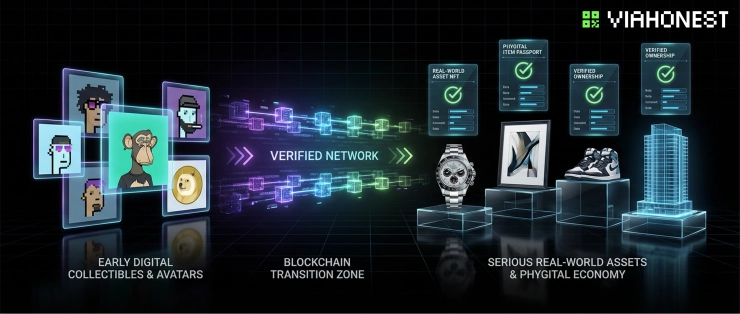
NFTs began as a cultural and technological phenomenon centered around digital art, collectibles, and early experiments in digital ownership. What started as a way to verify scarcity and provenance for online images has matured into a framework for authenticating, trading, and managing a wide range of valuable items. Today, the industry is shifting toward rwa nft models, where NFTs certify rights to real, physical assets rather than just digital files. This transition signals a broader evolution: NFTs are no longer a niche corner of Web3 culture — they are becoming a global infrastructure layer for asset ownership.
As consumer trust increases and institutional interest accelerates, the market moves steadily toward phygital systems that fuse blockchain transparency with tangible-world value. That shift sets the stage for the next era of Web3: secure, on-chain representations of verified physical items, accessible to both collectors and investors.
From JPEGs to RWA: How Tokenization is Replacing Traditional Ownership
The earliest waves of NFTs were dominated by digital collectibles — artworks, avatars, and cultural badges that introduced a new form of online identity and community expression. But the underlying technology always had broader potential. Blockchain allows for immutable provenance, transparent transfer history, and programmable ownership. These capabilities extend naturally to any asset, not just digital art.
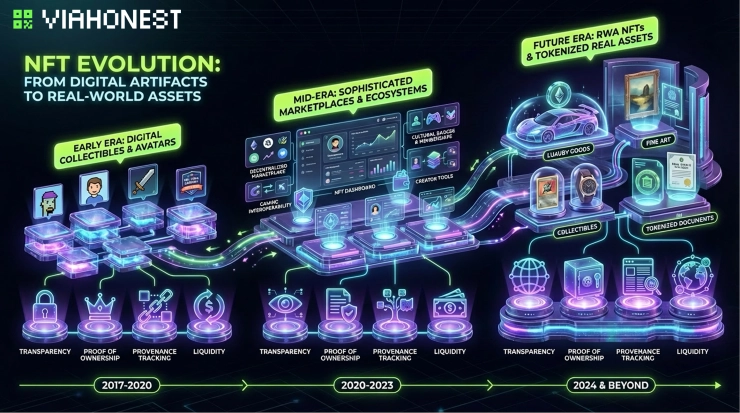
Several factors pushed NFTs beyond the "JPEG era":
Transparency
Physical markets — luxury goods, rare collectibles, high-value items — suffer from counterfeits and unclear provenance. NFTs provide an indelible record of authenticity and ownership.
Proof of Ownership
Traditional certificates are fragile, easy to forge, or lost over time. On-chain tokens solve these issues through verifiable identity and timestamped history.
Provenance Tracking
Collectors, investors, and insurers rely on trusted records. NFT technology offers a secure ledger of every transfer, inspection, or appraisal linked to an object.
Liquidity and Accessibility
High-value assets often have limited liquidity. Blockchain rails allow faster transactions, global accessibility, and programmability for future financial integrations.
As Web3 matured, it became increasingly clear that moving from a purely digital economy to an asset-backed economy — where NFTs represent legally verified rights to real items — was not only possible but inevitable. The infrastructure grew, custodial services improved, and regulatory clarity advanced. The result: NFTs began their expansion into a much larger, more impactful role within global markets.
What Are Phygital NFTs?
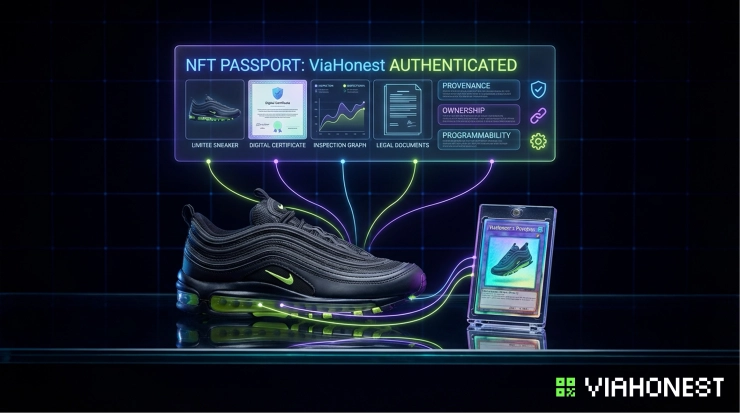
A phygital NFT is a non-fungible token cryptographically tied to a physical object. It acts as a digital passport: a source of truth for authenticity, ownership lineage, and item-specific metadata. This model serves as the connective tissue between the physical world and blockchain ecosystems.
Categories of Phygital Assets
Phygital NFTs can authenticate and represent ownership for a wide range of assets, including:
- Fashion items and luxury goods
- Collectibles such as trading cards, sports memorabilia, or rare objects
- Consumer electronics
- Jewelry, watches, and precious metals
- High-value physical goods stored in custodial vaults
- Real estate, from fractional holdings to property-linked documentation
These NFTs are not just representations of objects but functional records of proof. They may include photos, certificates, inspection data, legal attachments, or detailed provenance metadata.
Core Functionalities of Phygital NFTs
- Provenance Tracking: A permanent log of authenticity and transfer history
- Authenticity Certification: Eliminates fraud by tying NFTs to verified objects.
- Owner-of-Record System: Transfers ownership instantly and securely onchain.
- Programmability: Options for royalties, access control, or asset-backed benefits.
As adoption grows, phygital NFTs enable consumer markets, luxury brands, and asset managers to anchor real-world items in secure digital ecosystems.
Tokenizing Physical Objects Through NFTs
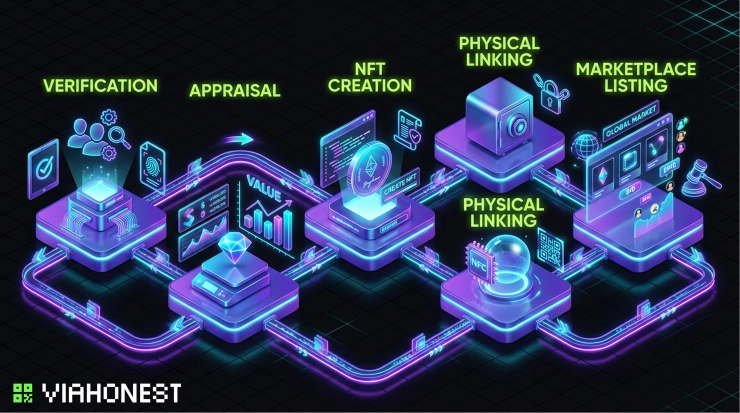
Tokenizing physical items means converting real-world assets into digital representations that can be owned, traded, or fractionally divided. The process ensures the asset is authenticated, appraised, and connected to an NFT that acts as its on-chain identity.
The Phygital Tokenization Workflow
- Verification
The physical object is inspected by experts to determine its authenticity and current condition. - Appraisal
Its market value is assessed through certified professionals, creating a transparent valuation record. - NFT Creation
An NFT is minted with metadata embedded on-chain: photos, certificates, provenance notes, legal status, and more. - Physical Linking
The NFT is cryptographically tied to the asset — often using seals, NFC chips, or custodial vault confirmations. - Marketplace Listing
The authenticated item is released on a phygital nft marketplace, enabling immediate global access and secondary sales.
This framework opens the door to fractionalized ownership as well. Through fractional nft mechanisms, high-value items — like rare art, luxury goods, or real estate — can be split into digital shares, allowing multiple investors to participate. This brings liquidity to markets that were historically inaccessible.
NFT Real Estate: A Key Growth Segment
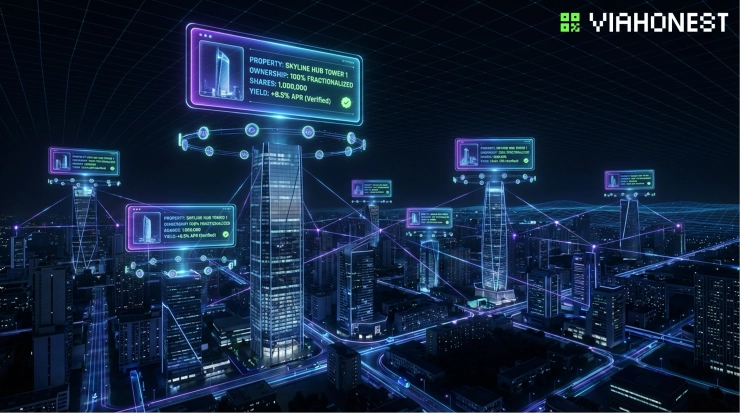
Real estate stands out as one of the fastest-growing categories in tokenization. As nft real estate initiatives expand, blockchain becomes a natural tool for managing property rights, fractional ownership, and transparent documentation. Properties can be represented by tokens that facilitate verified transfers, instant settlement, or even co-investment structures.
From Art Tokens to Asset-Backed Instruments
Most importantly, NFTs evolve into nft backed by assets, where the digital token represents a real, verifiable, and insured object. This drastically reduces speculative risk and increases practical utility, transforming NFTs into functional components of modern finance.
Risks and Advantages of Phygital NFTs
Phygital NFTs represent an important convergence of physical and digital value, but the model introduces new dynamics that go far beyond the early NFT ecosystem. Understanding both sides — advantages and risks — is essential for investors, collectors, and asset issuers who want to participate responsibly.
Advantages of Phygital NFTs
Transparent, Immutable Provenance
One of the most powerful benefits of phygital NFTs is the ability to track an item's entire lifecycle with tamper-proof accuracy. In traditional markets — luxury goods, collectibles, fine art — provenance is often fragmented and vulnerable to manipulation. Paper certificates can be forged, ownership histories can be hidden, and verification requires expensive intermediaries.
Phygital NFTs eliminate these weaknesses through on-chain metadata:
- Every transfer is timestamped and immutable
- Authenticity records cannot be altered retroactively
- Appraisal, certification, and inspection logs can be stored on-chain
- Buyers can independently verify an item's history before purchase
This significantly boosts market confidence, especially in categories plagued by counterfeits such as luxury fashion, watches, jewelry, and sports memorabilia.
Protection Against Counterfeits
Counterfeiting remains a multibillion-dollar global issue, affecting both consumers and brands — and most "verification methods" fail because they are added after the fact. Platforms like ViaHonest solve this by integrating NFC chips and blockchain passports directly into the minting process, so a token is issued only after identity checks, inspection, and provenance registration. In practice, this turns authenticity from a brand promise into an auditable, portable on-chain record that follows the item through every resale.
To make that work reliably, modern phygital infrastructure typically combines:
- NFC chips (or encrypted identifiers) embedded into the product
- Serialized verification tags linked to on-chain IDs
- Vault custody confirmations (when assets are stored professionally)
- Tamper-proof seals for physical integrity checks
- Blockchain "passports" containing expert appraisal data, documentation, and a complete ownership trail
When these layers are enforced at issuance — not just at resale — blockchain immutability creates a verification standard far stronger than conventional certificates. For brands, this reduces fraud and chargebacks; for buyers and collectors, it guarantees authenticity across every secondary-market cycle.
On-Chain Liquidity for Traditionally Illiquid Markets
Most physical assets — especially high-value ones — are illiquid. Selling a watch, artwork, collectible card, or even a piece of real estate can take weeks or months. Buyers must be located, authenticity verified, and logistics coordinated.
Phygital NFTs change this by placing physical assets onto blockchain rails:
- Transfers can occur in seconds
- Buyers and sellers can access global markets instantly
- Ownership can be transferred without moving the physical asset
- Settlement occurs trustlessly and programmatically
This liquidity is one of the strongest incentives for investors entering the phygital space.
Fractional Ownership and Democratized Access
Some of the most valuable assets in the world — rare art, premium collectibles, high-end goods, and real estate — are inaccessible to everyday buyers due to high price barriers. Fractional NFT technology enables these items to be owned collectively.
Fractionalization provides:
- Lower entry thresholds for investors
- Shared appreciation of asset value
- Easier diversification across different phygital categories
- A path for collectibles and luxury goods to operate like financial instruments
This model is particularly relevant for younger U.S. investors seeking alternative asset classes beyond traditional stocks and bonds.
Increased Market Efficiency and Interoperability
Phygital NFTs introduce programmability to physical ownership. This enables:
- Automated royalty distributions
- Smart-contract escrow
- Conditional transfers
- Insurance integrations
- Lending and borrowing against physical collateral
Through phygital infrastructure, assets become interoperable across marketplaces, financial tools, and decentralized applications.
Is RWA Safe? Legal, Custodial, and Regulatory Risks Explained
While the potential is significant, the phygital model also introduces complexities that must be acknowledged.
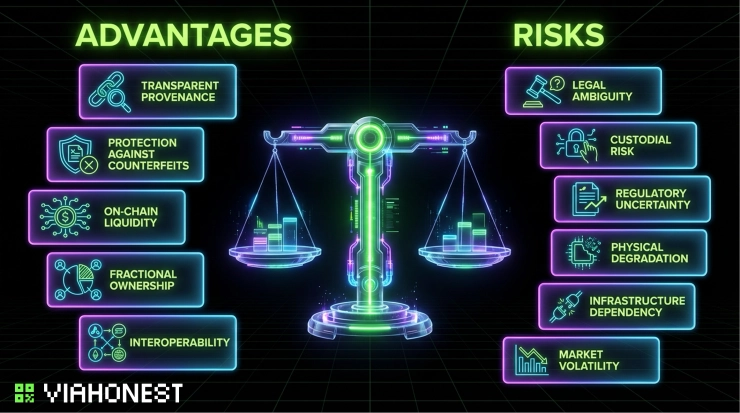
1. Legal Ambiguities and Ownership Structure
The relationship between a token and a physical asset is not always clear under existing laws. In the U.S., the legal framework depends on how the tokenized item is structured:
- If the NFT is considered a simple certificate of authenticity — legal risk is low
- If it represents ownership rights — contract compliance is essential
- If it offers fractional shares — securities regulations may apply
Misclassification can expose both issuers and investors to regulatory consequences. Proper documentation and legal structuring are crucial.
2. Custodial Risk: Who Holds the Physical Asset?
For phygital NFTs to function, the physical object must be stored and protected. Custody introduces several risk layers:
- Theft, damage, or natural disasters
- Insurance complexities
- Disputes over storage responsibilities
- Trust in custodial partners
Assets held outside professional vaults or accredited custodians face increased vulnerability. In contrast, secured custody combined with insured storage reduces risk but increases cost.
3. Regulatory Uncertainty
Regulators in the U.S. — including the SEC, CFTC, and state agencies — are still evaluating how tokenized physical assets should be treated. Potential areas of scrutiny include:
- Securities classification (especially for fractionalized assets)
- AML/KYC compliance requirements
- Tax implications of tokenized transfers
- Consumer protection frameworks
Lack of standardized rules means platforms must proactively implement compliance systems to avoid future liabilities.
4. Physical Degradation or Loss of the Asset
Even with perfect verification, the physical item remains vulnerable. Market value can be affected by:
- Wear and tear
- Loss or theft
- Environmental damage
- Mishandling by the owner or custodian
If the physical object is compromised, the NFT's value is inherently impacted. This creates a risk profile different from digital-only NFTs, which cannot physically deteriorate.
5. Dependency on Technology and Infrastructure
Phygital NFT systems rely on:
- Blockchain networks
- Custodial providers
- NFC hardware
- Token minting platforms
- Marketplaces
- Legal smart contracts
Failures, outages, or exploits at any point in the chain can disrupt markets or compromise ownership integrity. Choosing reputable platforms with robust security and operational standards is essential.
6. Market Volatility and Price Discovery Challenges
Early phygital markets are still finding equilibrium. Because item authenticity is new to blockchain and liquidity levels vary, price discovery can be inconsistent. Risks include:
- Overvaluation due to hype
- Undervaluation due to limited buyers
- Fragmented liquidity across multiple marketplaces
As infrastructure matures, these issues will gradually stabilize, but investors should remain cautious.
Mitigating Risks Through Better Infrastructure
Despite the challenges, strong architectural and regulatory frameworks significantly reduce risk.
Effective mitigation includes:
- Third-party custody & vault services
- Legally binding links between NFTs and assets
- KYC/AML compliance
- Insurance and appraisal standards
- Transparent documentation and periodic audit logs
- Stable, secure phygital platforms (e.g., ViaHonest)
Platforms embracing these mechanisms create a safer environment for mainstream adoption and institutional participation.
ViaHonest and the Integration of NFT with Real-World Assets
ViaHonest brings together the essential components of tokenization — expert appraisal, legal verification, and secure on-chain representation — to make phygital NFTs practical and trustworthy. As a Web3 platform designed specifically for real-world asset tokenization, ViaHonest provides a streamlined process for verifying, securing, and listing physical items as digital tokens.
How ViaHonest Strengthens the Phygital Economy
A Trusted Environment for Asset Tokenization
ViaHonest enables creators, sellers, and asset holders to mint nft backed by assets, whether they are premium goods, collectibles, or physical investments like real estate. The platform includes safeguards such as expert validation, transparency tools, and dedicated custodial partnerships.
Marketplace for Verified Phygital Items
As a secure marketplace, ViaHonest allows buyers and investors to access authenticated physical items through digital tokens. This expands global reach while ensuring that each listed asset passes through identity checks, inspection procedures, and on-chain provenance registration.
Tokenized RWA Passports: The Core of Trust
ViaHonest uses NFT-passports — blockchain-based identity documents for physical items — to provide:
- Professional appraisal and authenticity checks
- Legal verification and compliance
- Permanent provenance metadata
- Full on-chain ownership history
These passports create confidence for both investors and collectors, helping users engage in phygital markets with higher assurance.
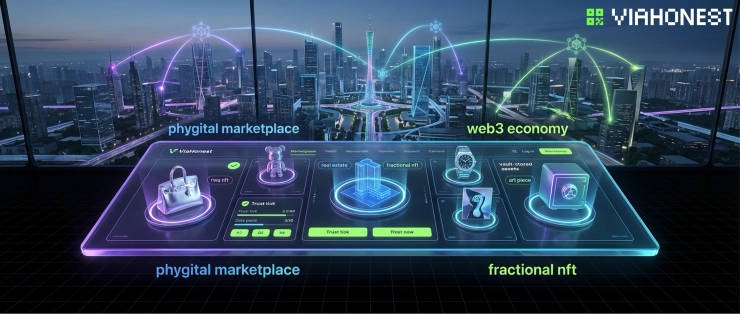
A Smooth Transition to Participation
With registration available for both asset owners and investors, ViaHonest offers a frictionless experience. Sellers can authenticate and list items securely, while buyers gain access to verified phygital assets with transparent histories. The platform's infrastructure simplifies onboarding and encourages broader participation in the emerging asset-based Web3 economy.
Bridging the Digital and Physical Worlds
Tokenized RWA platforms are transforming into sophisticated ecosystems for real-world ownership, anchoring physical items in blockchain-based structures. The fusion of NFTs with tangible goods represents the natural next phase of Web3, enabling markets where authenticity, liquidity, and transparency intersect. The shift from digital collectibles to asset-linked systems shows how far the industry has evolved: phygital technologies now serve as bridges between physical markets and digital infrastructure.
As the phygital nft marketplace model grows, platforms like ViaHonest accelerate the adoption of secure, transparent tokenization. This momentum brings the industry closer to a future shaped by rwa nft, where value is grounded in real-world objects and managed through decentralized technology. Together, these innovations build the foundation for a global, asset-based Web3 economy — one where NFTs connect the digital and physical worlds more seamlessly than ever before.