The global financial landscape is undergoing a major transformation, and one of the most promising innovations driving this shift is asset tokenization. If you’re wondering what is asset tokenization, think of it as the process of converting the ownership rights of an asset into a digital token that exists on a blockchain. These digital tokens can represent physical assets like real estate, art, or commodities, as well as intangible assets like intellectual property or digital securities.\nThe concept has gained significant momentum because it aligns with the broader digitalization of financial systems and the rise of Web3 technologies. By making assets more accessible, tradable, and transparent, tokenization could redefine the way individuals and institutions interact with markets.\nIn this article, we will explore what is digital asset tokenization, how tokenization works, its real-world applications, and why it is considered a critical pillar of the future of trading.
What is Asset Tokenization?
At its core, asset tokenization is the process of creating a digital representation of ownership for an asset and recording it on a blockchain network. When you ask what is asset tokenization, you’re essentially asking how traditional forms of property rights can be reimagined in the digital space.
What is digital asset tokenization? It is a specialized form of tokenization that deals with assets existing purely in digital form, such as cryptocurrencies, NFTs, and digital securities. The underlying principle remains the same: a blockchain-based token stands as proof of ownership and can be transferred, traded, or divided among multiple owners.
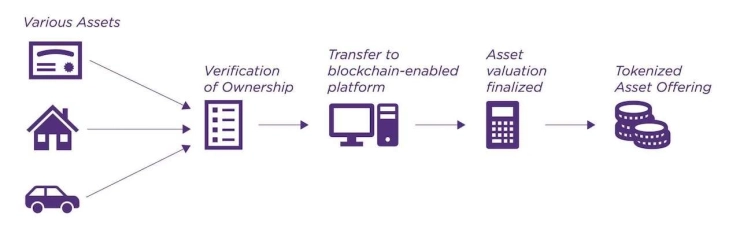
Examples of assets that can be tokenized include:
- Real estate: residential or commercial properties.
- Art and collectibles: paintings, sculptures, rare items.
- Commodities: gold, silver, oil, and agricultural products.
- Financial instruments: stocks, bonds, derivatives.
- Digital goods: intellectual property, digital media rights.
How Asset Tokenization Works
The process of asset tokenization involves several key steps that ensure both security and compliance:
- Asset Identification – Determining the asset to be tokenized and verifying its legal ownership.
- Valuation and Structuring – Establishing the asset’s value and deciding how it will be represented in tokens (e.g., fractional shares).
- Token Creation – Using blockchain technology and smart contracts to generate tokens that represent ownership rights.
- Legal and Regulatory Compliance – Ensuring tokens comply with securities laws and other applicable regulations.
- Listing and Trading – Making tokens available on digital exchanges or peer-to-peer marketplaces.
The technologies enabling tokenization include:
- Blockchain – Provides the immutable ledger for recording transactions.
- Smart Contracts – Automate execution of agreements without Intermediaries.
- Oracles – Feed real-world data to blockchain systems for asset verification and pricing.
Process of Asset Tokenization: Step-by-Step

Tokenizing an asset isn’t just a matter of “putting it on the blockchain.” It’s a structured, multi-stage process that combines legal compliance, financial structuring, and technical implementation. Here’s how it works in practice:
- Asset Identification and Eligibility Check The process begins by selecting the asset to be tokenized — whether it’s a physical property, a piece of artwork, a commodity, or a financial instrument. At this stage, ownership rights are verified to ensure the entity offering the token has full legal authority to do so. For regulated assets like securities, eligibility must comply with local financial laws.
- Valuation and Structuring A professional appraisal determines the asset’s market value. The issuer then decides how to structure the tokens — for example, will they represent fractional ownership (e.g., 1,000 tokens for a building) or be tied to specific usage rights (e.g., rental income shares)? This stage also involves deciding whether the tokens are fungible (identical) or non-fungible (unique).
- Legal and Regulatory Compliance Compliance is crucial. Depending on the jurisdiction, tokenized assets might be classified as securities, commodities, or utility tokens. Legal experts ensure that offering documents, investor disclosures, and token sale structures meet all applicable regulations. This step is essential to avoid future disputes or enforcement actions.
- Smart Contract and Token Development Once the structure is defined, developers create blockchain-based tokens using smart contracts. These contracts encode the rules of ownership transfer, dividend distribution, and any restrictions on trading. The choice of blockchain (Ethereum, Polygon, Avalanche, etc.) impacts transaction speed, costs, and interoperability.
- Custody and Asset Backing The physical or original asset must be stored or managed securely. For tangible assets, this might involve placing them in a regulated custodian facility or under escrow arrangements. For financial instruments, this can mean linking token ownership directly to existing market records.
- Platform Integration and Listing The tokens are listed on a compliant digital asset marketplace or trading platform. This allows investors to buy, sell, or trade them in a regulated and transparent environment. Integration may include KYC/AML checks for participants, ensuring that only authorized users can transact.
- Trading and Secondary Market Activity Once launched, the tokens can be traded on secondary markets. This creates liquidity for previously illiquid assets and enables global participation. Blockchain ensures that every transfer is recorded in an immutable ledger, reducing fraud risk.
- Ongoing Management and Reporting Even after issuance, the asset must be actively managed. This includes distributing returns (such as rent or dividends), maintaining asset value, and providing transparent reports to token holders. Smart contracts can automate many of these tasks, ensuring efficiency and trust.
Advantages of Asset Tokenization
Asset tokenization delivers a range of transformative benefits, reshaping how assets are owned, traded, and managed:
- Accessibility and democratization of investment – Investors can participate in markets that were once restricted to high-net-worth individuals by purchasing fractional ownership tokens.
- Enhanced liquidity – Illiquid assets like real estate or fine art can be traded instantly on global exchanges.
- Reduced transaction costs – Smart contracts automate settlements, cutting the need for costly intermediaries.
- Transparency and traceability – Blockchain records every transaction, ensuring full auditability and trust.
- Security and automation – Cryptographic protection and automated execution minimize risks and errors.
Benefits of Asset Tokenization
Asset tokenization delivers transformative benefits:
- Accessibility – Fractional ownership allows entry for small investors.
- Enhanced liquidity – Trade illiquid assets instantly on global exchanges.
- Reduced transaction costs – Smart contracts cut intermediaries.
- Transparency – Blockchain ledger ensures traceability.
- Security – Cryptographic protection minimizes risks.
Asset Tokenization vs. Traditional Asset Management
| Feature / Aspect | Traditional Asset Trading | Asset Tokenization |
|---|---|---|
| Accessibility | Often limited to high-net-worth individuals | Open to a wider range of investors via fractional ownership |
| Liquidity | Illiquid assets may take months or years to sell | Tokens can be traded instantly on global exchanges |
| Transaction Costs | Multiple intermediaries increase fees | Smart contracts reduce costs by automating processes |
| Transparency | Centralized records, often opaque | Blockchain ledger provides full transparency |
| Settlement Time | Days to weeks | Near-instant settlement |
| Geographic Reach | Limited by jurisdiction | Global market access |
| Security | Paper-based or centralized digital records | Cryptographically secured blockchain records |
Real-World Applications of Asset Tokenization
The practical uses of digital asset tokenization are already emerging across industries:
- Real estate tokenization – fractional property ownership.
- Tokenized bonds – faster settlement and lower costs.
- Supply chain tokenization – tracking goods with blockchain transparency.
How Asset Tokenization is Transforming the Financial System
The integration of asset tokenization into global markets is reshaping traditional finance:
- Link to DeFi and Web3 – Tokenized assets can be integrated into decentralized finance protocols, enabling borrowing, lending, and yield generation without traditional intermediaries.
- Global Market Access – Tokenization removes geographical boundaries, allowing assets to be bought and sold worldwide.
- Migration of Traditional Assets into Digital Ecosystems – Stocks, bonds, and even intellectual property can be issued and traded entirely on blockchain networks.
- Disintermediation – By cutting out middlemen, tokenization makes transactions faster, cheaper, and more efficient.
The Future of Asset Tokenization
The coming years will likely see exponential growth in tokenized asset markets:
- Institutional adoption – major banks and fintech platforms joining.
- Market expansion – renewable energy, IP tokenization, income streams.
- Global digital financial layer – a unified blockchain-based trading system.
Asset Tokenization and ViaHonest
ViaHonest integrates tokenization technology to ensure secure, transparent, and profitable transactions. Using Token Proof and escrow smart contracts, sellers protect their products while earning royalties on resales.
Conclusion
Understanding what is asset tokenization and what is digital asset tokenization is essential for anyone looking to participate in the next wave of financial innovation. By turning physical and intangible assets into blockchainbased tokens, we open the door to a more inclusive, liquid, and transparent marketplace.\nAs this technology matures, asset tokenization will bridge the gap between traditional finance and the decentralized digital economy. It’s not just a passing trend — it’s a structural shift that could define the future of trading.\nNow is the time to explore tokenized markets and understand how they can reshape your investment strategies.