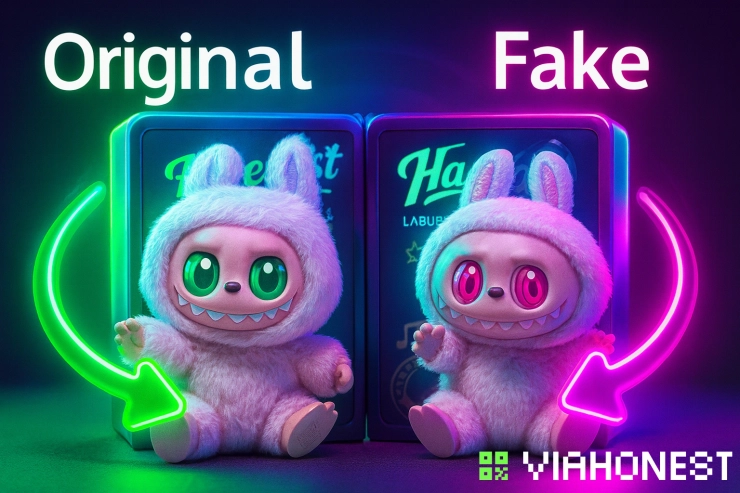
Labubu, the mischievous little creature designed by POP MART, has exploded in popularity over the past few years. With its quirky expressions, limited editions, and strong collector demand, it has become one of the most coveted art toys worldwide. Naturally, this popularity has attracted counterfeiters. Fake Labubu figures and plush toys are flooding the market, tricking buyers into spending serious money on worthless replicas.
That’s why knowing how to tell if a Labubu is real is essential. Whether you’re a collector or a first-time buyer, spotting the differences between real Labubu vs fake can save you hundreds of dollars and protect the value of your collection.
In this guide, we’ll break down the signs, compare real vs fake Labubu box details, and explain how platforms like ViaHonest help you buy safely.
Key Differences Between Real and Fake Labubu
1. Material Quality
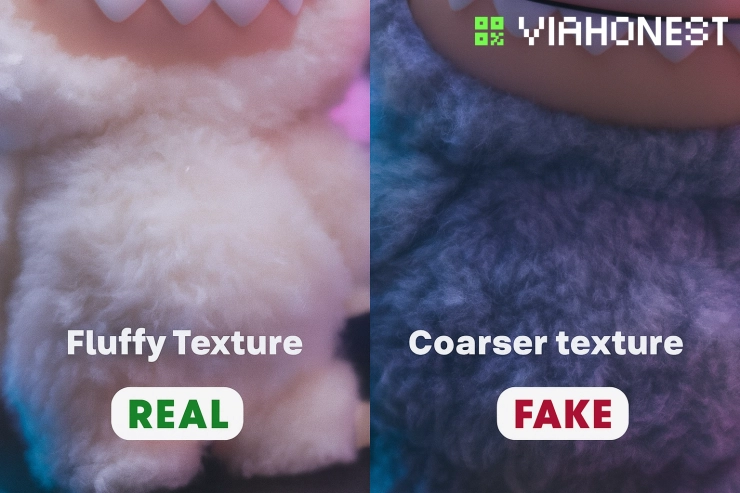
- Real Labubu. Genuine Labubu toys (both vinyl and plush versions) are manufactured using high-grade materials. Vinyl models feel solid yet slightly flexible — they won’t crack under light pressure. Plush versions are soft to the touch, with uniform fabric texture and no lumps inside. Paintwork on authentic vinyl is even, without streaks or discoloration.
- Fake Labubu. Counterfeits often use cheap PVC or rubber substitutes that feel brittle. Colors may look dull, and when you bend or squeeze the toy, it may leave marks or even break. Plush fakes frequently contain low-density stuffing, making them either too stiff or unnaturally floppy.
2. Stitching and Craftsmanship
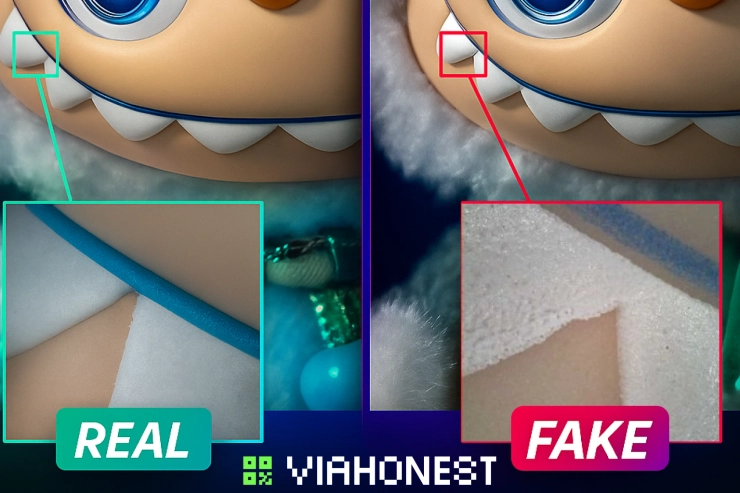
- Real Labubu. Every seam is carefully aligned, especially on plush versions. You won’t find threads sticking out or uneven sewing. Limbs and ears are symmetrical, and the toy holds its shape naturally.
- Fake Labubu. Look for uneven seams, bulky corners, or crooked alignment. Counterfeit plushies often have mismatched limbs or tilted faces. Vinyl models may have visible mold lines where two halves were glued poorly.
3. Logo, Fonts, and Colors
- Real Labubu. POP MART branding is consistent across all releases. Fonts are sharp, colors perfectly matched to official promotional images, and no spelling mistakes are ever present. The Labubu name always uses clean typography with proper spacing.
- Fake Labubu. Counterfeits often expose themselves through branding errors. Fonts may look slightly thicker or thinner, words can be misaligned, and colors appear oversaturated or faded. Some fakes even misprint “POP MART” or “Labubu.”
4. Packaging and Box Quality
- Real vs Fake Labubu Box. Genuine boxes are part of the collectible’s identity. They use thick, high-quality cardboard with glossy finishes. Printing is sharp, character art is detailed, and the colors are identical to POP MART’s marketing materials. Each box closes neatly without gaps.
- Fake Boxes. Counterfeits often use thinner cardboard that bends easily. The printing may look grainy, off-color, or blurred. Spelling mistakes, uneven edges, or faded logos are common.
5. Serial Numbers and QR Codes
- Real Labubu. Many authentic Labubu releases include a unique QR code or serial number. Scanning it should redirect you to POP MART’s official verification site or app. The code is printed clearly, not smudged, and every figure has a unique number.
- Fake Labubu. Counterfeiters sometimes print random QR codes that don’t scan or lead to broken links. Some reuse the same code across multiple figures. Others skip this detail entirely.
Detailed Comparison: Original vs. Counterfeit
| Feature | Real Labubu | Fake Labubu |
|---|---|---|
| Material | High-quality vinyl or plush; smooth finish | Cheap, brittle, uneven texture |
| Stitching | Clean, even, durable | Loose, frayed, crooked |
| Logos & Fonts | Accurate POP MART branding, crisp printing | Misspelled words, blurred logos |
| Color | Vibrant, consistent shades | Faded, mismatched tones |
| Box Quality | Thick cardboard, sharp print | Flimsy box, blurry graphics |
| Serial/QR Code | Unique, scannable, valid | Missing or fake |
This table shows exactly how to tell real vs fake Labubu quickly.
Where Fake Labubu Figures Are Sold Most Often
1. Social Media Platforms
Instagram, TikTok, and Facebook are common hotspots for counterfeit Labubu sales. Sellers often use stolen images of authentic figures, advertise “limited editions” at unrealistically low prices, and pressure buyers with phrases like “Only a few left.” Most of these accounts are recently created, with little posting history or generic comments. In contrast, real collectors or stores usually have established profiles with consistent branding and long-term engagement.
2. Cheap E-Commerce Marketplaces
Websites such as AliExpress, DHgate, or Taobao are notorious for counterfeits. While some sellers openly label their products as replicas, many attempt to pass them off as originals. The biggest warning sign is pricing — if the figure costs half of the official retail price, it is almost certainly fake. Safer options are to buy only from official POP MART flagship stores on these platforms or from verified sellers with authenticity badges.
3. Auction Sites and Classifieds
Platforms like eBay, Mercari, or Craigslist host both genuine collectors and counterfeiters. Scammers usually avoid showing close-up photos of the box or QR code, use vague descriptions such as “rare Labubu,” and often insist on unsafe payment methods. Buyers should request detailed photos and stick to payment options that offer buyer protection; otherwise, the risks are high.
4. Informal Marketplaces and Pop-Ups
Flea markets, small toy fairs, or street pop-up stands often feature fake Labubu figures. Sellers rely on impulse buyers who don’t take the time to check details. Once the event ends, these vendors usually vanish, leaving no chance for refunds or complaints. Unless the booth is officially partnered with POP MART, it’s safest to assume the products are counterfeit.
5. Private Direct Messages and Group Chats
Some counterfeiters bypass platforms entirely and approach collectors directly through WhatsApp, Telegram, or Discord. They offer “exclusive deals” with quick shipping, but what arrives is usually a poorly made fake — or nothing at all. Buying outside trusted platforms without verifiable proof of authenticity almost always leads to disappointment.
Why These Channels Attract Counterfeits
Counterfeiters thrive in these spaces because oversight is weak, accounts can be recreated in minutes, and buyers chasing rare Labubu editions often let their guard down when they see a “great deal.” This is exactly why platforms like ViaHonest matter. Every product listed includes a transparent ownership history, making it far easier to confirm authenticity. Buyers no longer have to second-guess whether they’re looking at labubu real vs fake — the proof is built into the transaction itself.
How to Avoid Scams When Buying Labubu
1. Research the Seller Carefully
One of the easiest ways to avoid fake Labubu figures is to look closely at who you’re buying from. Genuine sellers usually have a track record: established online shops, long-standing collector accounts, or visible reviews from past buyers. If a seller’s profile is brand new, has only a few listings, or lacks detailed feedback, that’s a red flag. Always check their social media presence, community reputation, and whether they interact transparently with buyers.
2. Ask for Detailed Photos and Proof
Scammers rely on vague listings. A trustworthy seller won’t hesitate to provide close-up photos of the Labubu figure, the box, the POP MART logos, and the QR code or serial number. If they only share stock images or refuse to show packaging details, it’s best to walk away. Comparing these photos with official POP MART releases also helps spot inconsistencies in color, font, or design.
3. Inspect Receipts and Guarantees
Authentic Labubu figures come from POP MART or authorized distributors. Serious collectors keep their receipts because it adds to the value of the toy. If the seller can provide an original purchase receipt, warranty slip, or POP MART order confirmation, you’re far less likely to be dealing with a counterfeit. Sellers unwilling to provide any documentation should be approached with caution.
4. Watch Out for Unrealistic Pricing
Price is often the clearest signal. Rare or limited Labubu editions maintain or increase their value over time. If you see a figure listed for significantly less than retail price, chances are it’s a fake. While deals do exist, authentic sellers rarely slash prices by 50% or more. Trust your instincts: if it feels “too good to be true,” it probably is.
5. Use Safe Payment Methods
Scammers often push buyers to pay via direct bank transfer, PayPal “friends and family,” or even gift cards — methods that provide no buyer protection. Legitimate sellers should accept secure payment options like PayPal goods and services, credit cards, or other platforms that allow disputes and refunds if the product turns out fake. Avoid any seller who pressures you into unprotected transactions.
6. Buy Through Trusted Platforms
Finally, the safest option is to use platforms that integrate product verification into the buying process. Services like ViaHonest let sellers list their Labubu figures only after documenting their origin, and buyers can instantly view the full ownership history. This transparency makes it nearly impossible for counterfeit products to slip through.
By following these steps — researching the seller, demanding clear proof, checking receipts, evaluating prices realistically, insisting on safe payments, and using trusted platforms — you can significantly reduce the risk of wasting money on a fake Labubu.
How ViaHonest Helps You Avoid Fake Labubu

Here’s where technology makes a real difference. Platforms like ViaHonest were built to fight counterfeit markets head-on.
Transparent Product History
ViaHonest connects sellers and buyers through a transparent system:
- Seller uploads a product and specifies its origin.
- The system records the full transaction chain, making each resale traceable.
- Buyers see the entire history — who owned it before, where it came from, and whether it’s original.
Verification and Feedback
If a buyer has doubts, they can:
- Check the product’s QR code within the platform.
- Report concerns through built-in complaint channels.
Why It Matters
For sellers, it builds trust. Uploading authentic Labubu figures with proof increases credibility.\nFor buyers, it ensures peace of mind — no more guessing between labubu real vs fake.
Want to try it? Registration is open for both sellers (who can list their figures) and buyers (who can shop safely). Joining ViaHonest is the easiest step toward scam-free collecting.
Tips for Safe Collecting

Collecting Labubu figures can be exciting and rewarding, but the rise of counterfeits makes caution essential. Beyond simply avoiding scams, a smart collector develops habits that protect both their wallet and the long-term value of their collection. Here are some practical strategies to keep your Labubu hobby safe.
Keep Records of Every Purchase
Every time you buy a Labubu, save the receipt, take photos of the packaging, and keep screenshots of the seller’s listing. These records not only help verify authenticity later but also increase resale value if you decide to sell your figure in the future. Serious collectors often store receipts in binders or digital folders.
Compare Against Official Sources
Before purchasing, cross-check the figure’s details with official POP MART releases on their website or app. Look at color tones, logo placement, and packaging artwork. Counterfeit versions almost always show minor discrepancies. Building a habit of comparing with authentic references makes spotting fakes much easier over time.
Join Collector Communities
Online communities — whether on Reddit, Discord, or dedicated collector forums — are powerful tools. Members regularly share scam alerts, photo comparisons, and advice on new releases. Being part of these groups helps you stay ahead of counterfeit trends and gives you access to experienced collectors who can verify questionable listings.
Store Your Figures Properly
Safe collecting isn’t only about avoiding fakes — it’s also about preserving what you own. Keep Labubu figures away from direct sunlight to prevent fading, avoid damp areas to prevent mold on packaging, and handle them with clean hands to maintain paint quality. For higher-value editions, consider protective cases.
Avoid Rushing Into Purchases
Counterfeiters thrive on urgency. They push buyers with phrases like “last one available” or “buy now before it’s gone.” Take your time. Research the seller, inspect the photos, and confirm authenticity before sending payment. A genuine figure will still be worth it tomorrow, while rushing often leads to regrets.
Use Verified Platforms for Extra Safety
Even the most cautious collector can slip up when buying from unknown sellers. Platforms like ViaHonest add an extra layer of protection by documenting the full history of each listed Labubu figure. Sellers provide proof of origin, and buyers see a transparent chain of ownership. This turns safe collecting from a guessing game into a straightforward process.
Conclusion
Counterfeit Labubu figures are everywhere, but with the right knowledge, you can avoid falling into the trap. By checking material quality, stitching, logos, packaging, and serial codes, you’ll quickly learn how to tell if a Labubu is real. Remember: the real Labubu vs fake difference is obvious once you know what to look for.
And if you want absolute certainty, platforms like ViaHonest make the process easier — showing you the product’s history, protecting your money, and supporting honest sellers. At the end of the day, it’s better to pay a fair price for an authentic collectible than waste money on a counterfeit.
Ready to buy or sell with confidence? Register on ViaHonest today — because your collection deserves the real thing