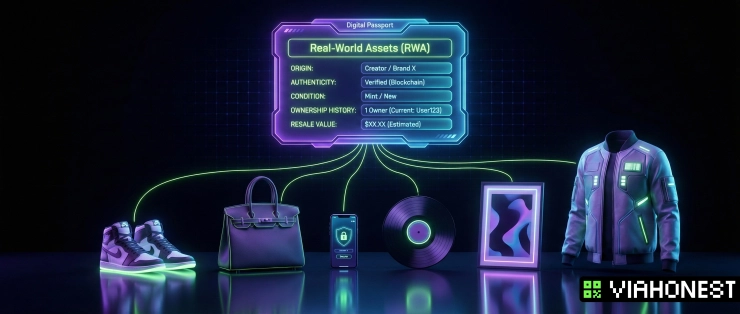
When people first hear the term real world assets, they often ask a basic but important question: what is RWA and why should I care? Put simply, real-world assets are physical things that have value in the real world — sneakers, designer bags, phones, vinyl records, art, even certain pieces of clothing — especially when their story, condition and authenticity are clear and verifiable. The phrase RWA meaning can sound technical, but at its core it's about treating everyday objects like traceable, tradeable assets rather than anonymous stuff.
In this article, we'll unpack what counts as a real-world asset, how RWAs differ from digital-only assets, which types of items fit this idea best, and why transparency, authenticity and resale matter so much today. We'll also look at the problems that plague the resale market — fakes, missing history, scattered information — and how ViaHonest connects physical items to "digital passports" that make them safer and easier to buy, sell and hold long term.
This is already happening in practice. Platforms like ViaHonest allow physical items to be registered with a digital passport, turning everyday goods — from sneakers to merch — into verifiable real-world assets rather than anonymous resale items.
Real-World Assets vs Digital-Only Assets
Physical value backed by digital records
At the simplest level, real-world assets are physical things you can touch, use, store and trade. That might be a limited pair of sneakers, a high-end phone, a designer jacket, a rare vinyl record or a collectible figure. These items already have value, but that value grows when other people can see where they came from, how they've been treated and whether they're authentic.
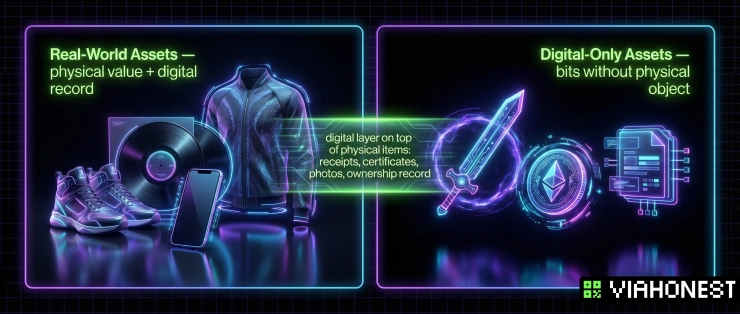
Digital-only assets, by contrast, exist purely as bits: a digital file, a token, an in-game item. They may be important in certain ecosystems, but they don't live as physical objects in your closet or on your shelf. You can't wear them, drop them, scratch them or mail them.
The interesting shift today is that physical goods increasingly come with a digital layer on top — a record of ownership, receipts, photos, certificates, authentication checks. When that information is organized and verifiable instead of scattered across emails and screenshots, a pair of sneakers or a bag starts to behave more like a serious asset: it has provenance, a trackable lifecycle and a clearer resale value. That's where real-world assets sit: at the intersection of physical objects and trustworthy digital records.
Types of Real-World Assets (RWA)
Quick Start: Turn Your Item into an RWA in 5 Minutes
Already own a limited pair of sneakers, a designer bag, a collectible, or even branded merch? You can turn it into a real-world asset in minutes.
Register your item on ViaHonest, add basic details, upload proof of authenticity, and link it to a digital passport. From that moment, your item becomes verifiable, traceable, and easier to sell at a fair price.
No technical setup is required — just register and let the passport travel with the item.
The category of RWAs is broader than many people think. It's not only about ultra-luxury. It covers any physical item where history, condition and authenticity materially affect value.
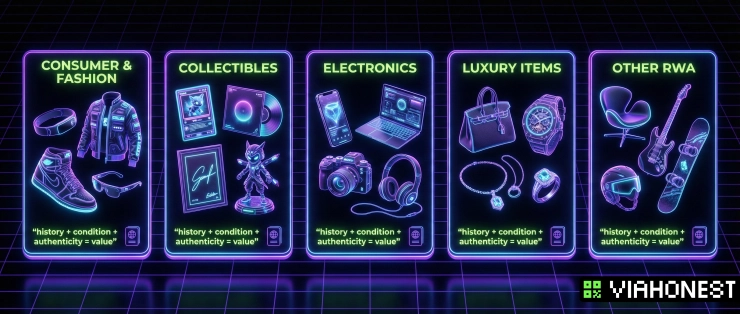
One big bucket is consumer goods and fashion: clothing, shoes, accessories, limited drops and collaboration pieces. A basic T-shirt might not qualify, but a numbered jacket from a collab, a limited sneaker release, or a first-edition capsule from a cult brand certainly can.
Another clear category is collectibles: trading cards, figures, vinyl records, signed prints, physical art, special edition books. These items are often bought with resale or long-term holding in mind, and subtle differences — edition number, signature, condition — can change the price dramatically.
Electronics also fit when condition and proof of origin matter: phones, laptops, cameras, audio gear. A well-documented device with clear purchase and repair history is more valuable and less risky to buy secondhand than a mystery item with no background.
Then there are high-value items like designer bags, watches and jewelry. These are classic real-world assets: they often retain or even grow in value if they're authentic, well preserved and properly documented.
Beyond that, almost any physical category can become part of the RWA conversation if it can be stored, evaluated and credibly resold — furniture, instruments, sports equipment, even certain tools. What matters is not just the object itself but the quality of the information that follows it.
Why Real-World Assets Matter Today
Resale, trust and the rise of transparency
Real-world assets are getting more attention because the way we buy and sell things has changed. People are more skeptical of marketing claims and more interested in transparent information about what they're buying: where it came from, whether it's real, and how it's been used.
Resale and circular economy trends play a big role here. Instead of throwing things away, many people choose to resell or buy secondhand. High-quality items can move through several owners and still be useful. In that world, the story of an object — its "passport" — becomes part of its value.
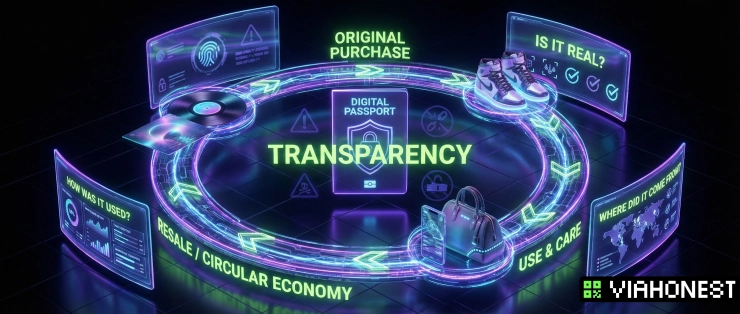
At the same time, fraud and counterfeits have become easier to produce and harder to spot with the naked eye. Fake sneakers, knockoff bags, copied electronics and forged "limited editions" show up everywhere. Without tools to verify authenticity, buyers and sellers have to rely on guesswork and trust alone.
This is why centralized, item-level verification is becoming essential. Instead of relying on scattered screenshots and receipts, platforms like ViaHonest provide a single, trusted source of truth for physical assets.
The idea of a digital passport for physical things — a structured, verifiable record of their life — addresses that problem. Instead of treating items as anonymous, we link them to a transparent footprint. That's the practical heart of real world assets.
Key Features of RWA in a Digital Context
To understand RWA meaning in a modern setting, it helps to break real-world assets into four key features that matter when they're tracked digitally: provenance, condition, authenticity and liquidity.
Liquidity is directly tied to trust. Items with full provenance and verification consistently outperform "mystery items" on secondary markets. In 2026, goods with documented history and authenticity sell on average 15–20% higher than similar items without verification.
This is why sellers increasingly choose to place their items on platforms like ViaHonest, where transparency is visible to buyers before a transaction happens.
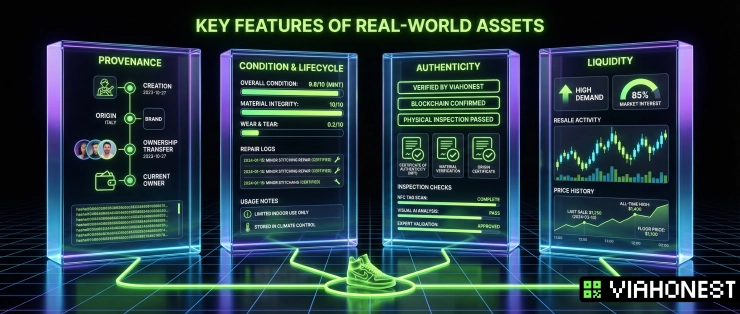
Provenance is origin and ownership history. Condition and lifecycle describe how the item has changed over time. Authenticity verifies that the item is what it claims to be. Liquidity reflects how easily the item can be resold when buyers feel safe.
In a digital context, the better these records are organized and trusted, the more an object behaves like a real asset rather than a risky secondhand purchase.
Everyday Examples of Real-World Assets
You don't need to be a luxury collector to interact with real-world assets. Most people already own some; they just don't think about them that way yet.
Limited sneakers, designer clothing, electronics with clear service history — all of these become more valuable and easier to trade when their stories are documented. The object itself doesn't change; the transparency around it does.
That's the everyday face of RWA: familiar items gaining asset-like qualities through clear, verifiable history.
Challenges with Real-World Assets
Fake goods, lost documentation and fragmented information systems create low trust in secondary markets. Buyers hesitate, sellers accept lower prices, and brands worry about reputational damage.
Selling on platforms like eBay or StockX introduces a specific risk many sellers know too well: unjustified returns and item swapping. Buyers may claim an item is not authentic or return a different product than the one they received, leaving sellers with losses and little protection.
A digital passport on ViaHonest helps prevent this. By documenting authenticity, condition, and ownership at the moment of sale, sellers gain evidence that protects them from fraudulent returns and buyer-side manipulation.
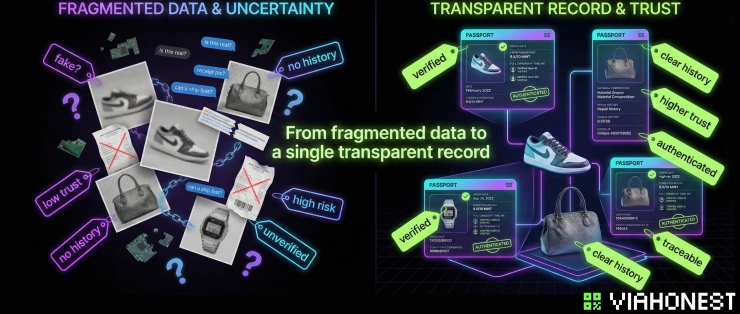
Without a unifying way to track authenticity and history, the potential of real-world assets remains partially locked.
How ViaHonest Connects to Real-World Assets (RWA)
Digital passports for physical items
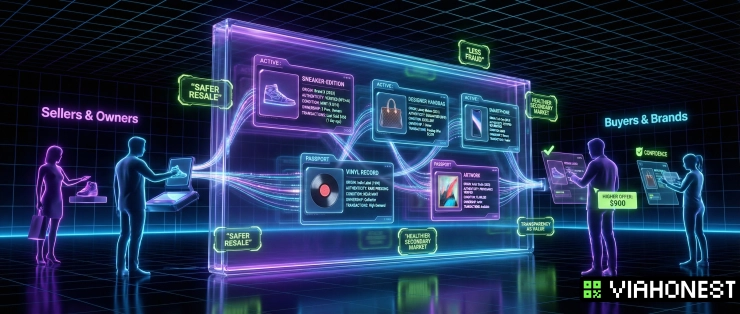
ViaHonest addresses these challenges by giving physical objects a single, evolving digital passport. Instead of scattering receipts, photos and messages, everything connects to one transparent record that moves with the item.
This makes authenticity easier to verify, resale safer, and ownership clearer over time. Sellers stand out, buyers feel more confident, and items retain value longer.
Benefits of RWA for Buyers, Sellers and Brands
Treating physical items as RWAs aligns incentives. Sellers gain proof, buyers gain confidence, and brands benefit from healthier secondary markets that don't quietly reward fakes.
Transparency becomes an asset in itself.
Conclusion
Real-world assets aren't a new category of objects — they're a new way of relating to things we already own. When provenance, condition and authenticity are captured honestly, everyday items become traceable, tradeable assets with longer lives and more trust.
That's the deeper RWA meaning: a shift toward accountability and transparency in how we buy, sell and value physical goods. In 2026, the true RWA meaning is simple: physical items with verified history sell faster, safer, and for more — and platforms like ViaHonest are what make that verification possible at scale.