The Internet's Power Shift

Now imagine an internet where you own everything. No one can erase your profile, change the rules, or hijack control. Your content, your money, your digital identity - all in your hands. That's Web3: the next evolution of the internet where you're not a guest, but a co-owner and active participant.
In this article, we'll explore:
- Why Web3 is called the "next-generation internet"
- The fundamental differences between Web2 and Web3
- How Web3 technology is entering everyday life
- What DAOs are and how they're creating organizations without bosses
- What the internet could look like in 10 years
Why Web3 Is Called “The Next Generation of the Internet”
The Evolution of the Web
The internet has gone through three distinct phases:
- Web1 (The Static Web): Like a digital library where websites could only be read. Early Amazon was just a book catalog without reviews.
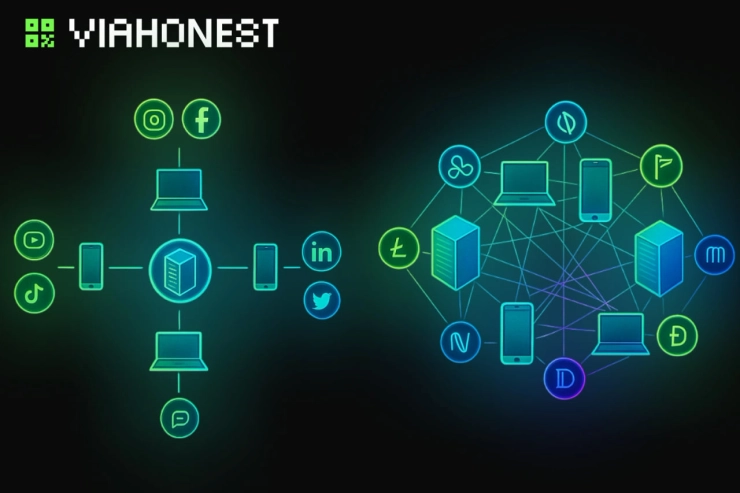
- Web2 (The Social Web): Introduced interactivity through social media, YouTube, and marketplaces. Users could create content, but control remained with platforms.
- Web3 (The Decentralized Web): An internet where data, money, and content belong to users, not corporations. When you publish something, it's distributed across thousands of computers worldwide and recorded on a blockchain.
Core Web3 Technologies
Web3 works through three key innovations:
- Smart Contracts: Automatic agreements that execute exactly as programmed. For example, send a token and instantly get access to a service - no middlemen.
- Cryptography: Provides protection where only the keyholder has access to their data.
- dApps: Decentralized applications with no single owner. Imagine a YouTube where videos can't be taken down for dissent.
Web2 vs Web3: The Battle for Content Control
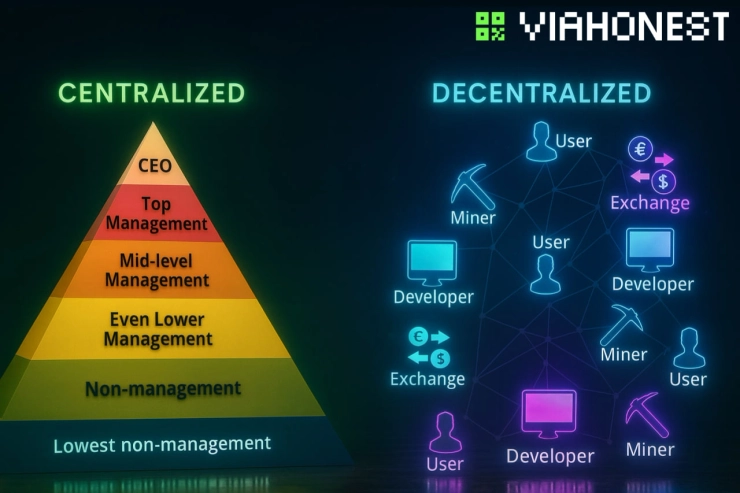
What's the real difference between Web2 and Web3? It's about where power resides:
| Principle | In Web2 | What Web3 Gives You |
|---|---|---|
| Content | You post — they own it. They can delete, restrict, or block it. | You publish — you own it. No one can remove or erase your posts. |
| Data | Everything is stored by companies: Google, Meta, Amazon. | Data is distributed across thousands of computers. No leaks. Full anonymity. |
| Revenue | The platform profits from your content. You’re just a source of money. | You decide how to monetize: tokens, NFTs, donations, smart contracts. |
| Censorship | Algorithms decide what to show or hide. Your reach can be “throttled.” | Open systems. No shadow bans or hidden restrictions. |
| Access | Email, passwords, SMS — all vulnerable and easily hacked. | Access via crypto wallet. One key for all platforms. Protected by a private key only you know. |
| Decisions | You’re just a user. The company makes all decisions. | You’re a participant. Through DAOs, you can vote and influence how the platform works. |
Web2 gave us convenience — but also dependence on corporations. We’ve gotten used to social media, streaming, and marketplaces, and in exchange we’ve given up control: over our data, income, and voice.
Web3 doesn’t just offer an alternative — it offers a new framework. Here, you’re not a guest, but a co-owner. But with freedom comes responsibility — and the need to understand how everything works. Because in Web3, you’re not just clicking — you’re participating, creating, and making decisions.
Next — let’s look at some real-world examples. Let’s dive in.
How Is Web3 Entering Everyday Life?
Web3 isn’t just theory — it’s here. Real-world examples:
1. Social Media Without Censorship
Platforms like Lens Protocol (a decentralized Twitter/Instagram alternative) let you:
- Own your content (stored on blockchain)
- Keep followers even if you switch platforms
- Avoid arbitrary bans & algorithm manipulation
2. Finance Without Banks
Web3 enables permissionless finance:
- Swap tokens instantly (Uniswap)
- Get loans without credit checks (Aave)
- Store crypto in self-custody wallets (MetaMask)
3. Digital Identity Without Logins
Instead of passwords, you use:
- Crypto wallets (e.g., MetaMask)
- Human-readable names (e.g., yourname.eth via Ethereum Name Service)
4. Work Without Traditional Employment
Platforms like Gitcoin & Coordinape let you:
- Earn crypto for contributing to projects
- Build reputation based on work — not resumes
5. NFTs Beyond Art: Real-World Utility
Some brands (e.g., ViaHonest) issue NFTs as digital passports for products, proving:
- Authenticity
- Ownership history
- Warranty & insurance
DAOs: Companies Without Bosses
A Decentralized Autonomous Organization (DAO) is a community-run entity with no central leadership.
How DAOs Work
- Members hold governance tokens (like shares)
- Voting happens on-chain (transparent, no backroom deals)
- Smart contracts enforce decisions (no human bias)
Real DAO Examples
- Gitcoin DAO – Funds open-source projects
- PleasrDAO – Collectively owns rare digital art
- CityDAO – Buys and governs real-world land
- BanklessDAO – Creates crypto education & media
The Future of DAOs
- Decentralized job markets (work for multiple DAOs)
- Community-governed cities (blockchain-based voting)
- Tokenized education (earn crypto for learning)
The Internet in 2030: Web3 Predictions
By 2030, Web3 will be as seamless as Wi-Fi or smartphones. Predictions:
- Mass adoption of crypto wallets (no seed phrases, easy logins)
- Mainstream dApps (user-friendly like Instagram)
- Big brands embracing Web3 (Nike, Visa, Meta already investing)
- Decentralized identity (Polygon ID, Worldcoin)
Industry Shifts Underway
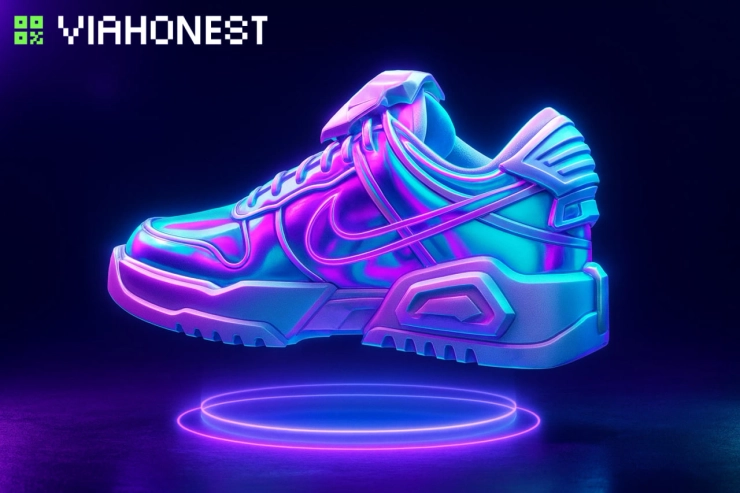
- Nike → $185M+ in NFT sneaker sales
- Visa/Mastercard → Building crypto payment rails
- Amazon → Testing decentralized storage
- Google Cloud → Running blockchain nodes)
Web3 isn’t just a trend — it’s the future of the internet.
Conclusion: Don’t Wait — Join the Web3 Revolution
Web3 is already here, reshaping how we:
- Communicate (decentralized social media)
- Manage money (DeFi, crypto wallets)
- Govern organizations (DAOs)
- Buy & sell (NFTs, tokenized assets)
The choice is yours:
- Stay in Web2 (where corporations control your digital life)
- Embrace Web3 (where you own your data, content, and future)
Start learning today — and own your place in the internet’s next era.