Interest in rare and investment-grade coins has grown steadily over the past decade. What was once a niche hobby has become a serious alternative asset class, attracting collectors, long-term investors, and even first-time sellers who discover unexpected value in old collections. Today, coins that are worth money are no longer limited to museums or elite auctions — they are actively traded in global markets.
One of the biggest surprises for newcomers is how dramatically a coin's market value can exceed its face value. A coin with a nominal worth of one dollar can sell for thousands, sometimes millions, depending on a specific set of factors. That gap between face value and market price is exactly what drives curiosity and opportunity.
So, what is the most valuable coin in the world to sell? The short answer: it depends on rarity, condition, historical importance, and trust in the selling process. In this article, we'll break down which coins command the highest prices, why they do so, and how to approach selling them safely and profitably in today's market.
Why Some Coins Are Worth So Much Money
At first glance, it may seem surprising that a small metal object can sell for the price of real estate or outperform traditional investments. In reality, high coin values are the result of a clear and logical system that has been shaped over centuries. Professional collectors, dealers, and auction houses rely on the same core principles when determining why certain coins that are worth money consistently achieve record prices.
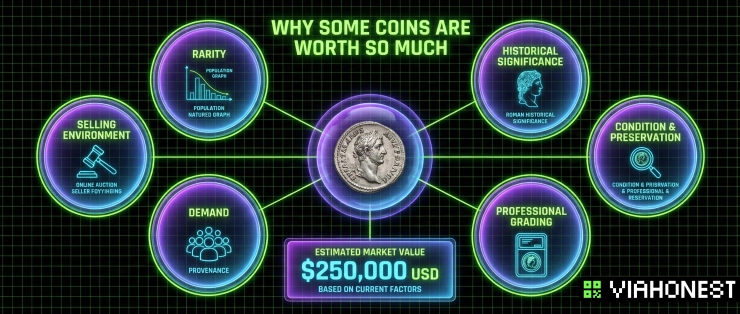
Below is a more cohesive explanation of how these factors work together.
Rarity: The Foundation of All High-Value Coins
Rarity is the starting point of any serious valuation. However, rarity is not limited to how many coins were originally minted. What truly matters is how many examples still exist today — and in what condition.
Some coins are rare because they were produced in limited numbers, such as experimental strikes or special issues. Others are rare because most examples were lost, melted, or heavily worn through circulation. There is also condition rarity, where a coin may be common overall but exceptionally scarce in high-grade form.
This layered concept of rarity explains why two coins from the same year can have vastly different market values. Collectors are not competing for "a coin," but for the best surviving example of that coin.
Historical Significance: When a Coin Becomes a Story
Coins gain additional value when they represent more than currency. Pieces tied to important historical moments — such as the birth of a monetary system, economic upheaval, or political change — carry emotional and cultural weight.
First-issue coins, transitional designs, and coins minted during wars or reforms often act as physical witnesses to history. Buyers are not simply acquiring precious metal; they are purchasing a documented connection to a specific moment in time. The clearer and more verifiable that connection is, the stronger the coin's long-term appeal becomes.
Condition and Preservation: Small Details, Massive Price Gaps
Condition is where valuation differences become exponential. Two identical coins can differ in price by multiples purely because of preservation quality.
Wear on high points, surface marks, original luster, and strike sharpness all play a role. Importantly, improper cleaning or restoration — often done with good intentions — can permanently damage value. Collectors place a premium on originality, even if it includes natural aging.
This is why top-condition coins are not just more expensive, but disproportionately rare. As grade increases, the number of surviving examples drops sharply, driving prices upward.
Professional Grading: Turning Subjective Quality into Market Trust
Professional grading connects rarity and condition to real market value. Third-party grading services authenticate coins and assign standardized grades, creating a shared language that buyers and sellers trust.
This process reduces uncertainty, prevents disputes, and makes high-value coins more liquid. While ungraded coins can still be valuable, they face greater skepticism — especially as prices rise. In practice, professional grading often determines whether a coin is treated as a collectible curiosity or a serious investment asset.
Demand: Value Exists Only Where Competition Exists
No matter how rare or historic a coin may be, its value depends on demand. High prices emerge when multiple collectors want the same coin and are willing to compete for it.
Demand is influenced by long-term collector interest, institutional participation, and public attention generated by major auctions. Coins with consistent demand across generations tend to be more stable and predictable in value. These are often the same pieces people mean when they search for valuable coins to look for, because their desirability has already been proven by the market.
Provenance: Why Ownership History Matters
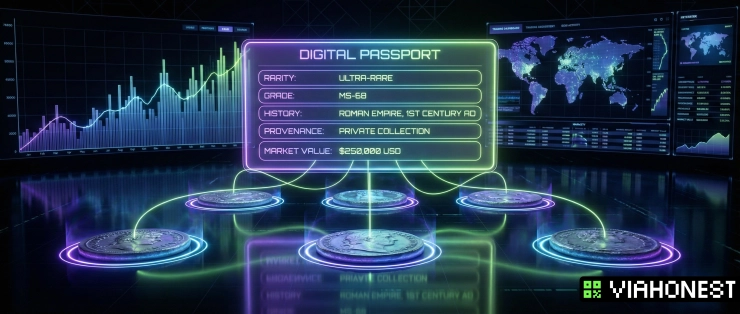
Provenance adds another layer of credibility and appeal. A well-documented ownership history reassures buyers and can elevate a coin beyond its technical characteristics.
Coins previously held in notable collections or featured in landmark auctions often command higher prices. Provenance strengthens authenticity, adds narrative value, and increases buyer confidence — especially in high-end transactions.
The Selling Environment: Where Value Is Realized
Finally, a coin's value is shaped by the environment in which it is sold. Even an exceptional coin can underperform if offered in an untrusted or opaque setting.
Modern buyers expect transparency, verification, and clear transaction processes. Platforms that emphasize documented ownership, authenticity, and trust tend to achieve better outcomes for both buyers and sellers. In many cases, how a coin is sold matters almost as much as which coin is being sold.
In essence, coins reach extraordinary prices when rarity, condition, history, demand, and trust align. These factors do not work in isolation — they reinforce one another. Understanding this interaction is essential before making any decision about valuation or sale.
Top 5 Most Valuable Coins in the World
When people search for valuable coins to look for, they're often hoping to identify coins that have already proven their worth at auction. Below are some of the most famous examples.
1794 Flowing Hair Silver Dollar
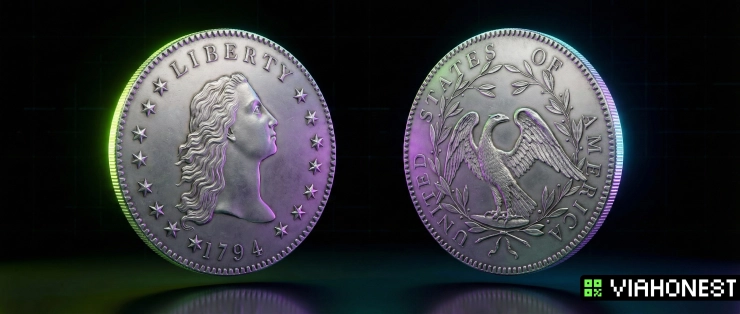
- Year: 1794
- Country: United States
- Why it's valuable: Widely believed to be the first silver dollar struck by the U.S. Mint.
- Approximate sale price: $10+ million
1933 Saint-Gaudens Double Eagle
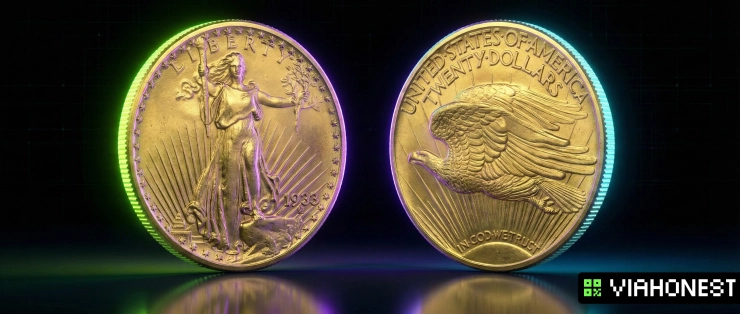
- Year: 1933
- Country: United States
- Why it's valuable: Never officially circulated due to the Gold Recall; most were destroyed.
- Approximate sale price: $18+ million
1913 Liberty Head Nickel
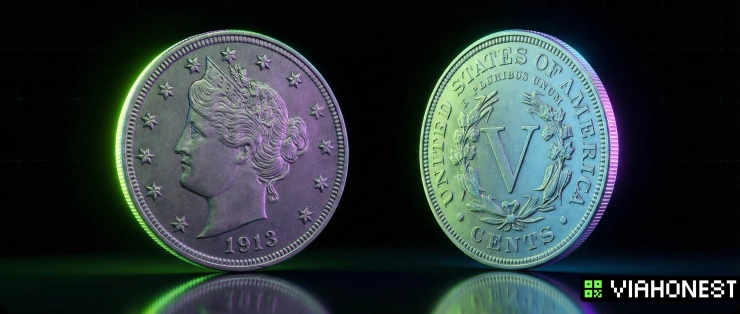
- Year: 1913
- Country: United States
- Why it's valuable: Only five known to exist; unauthorized minting.
- Approximate sale price: $4–5 million
1787 Brasher Doubloon
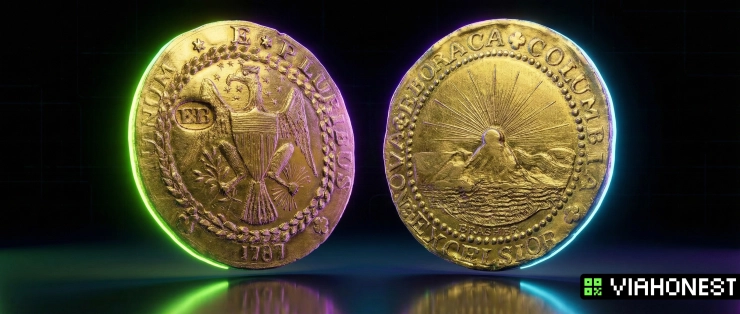
- Year: 1787
- Country: United States
- Why it's valuable: Privately minted gold coin predating the U.S. Mint.
- Approximate sale price: $7+ million
1804 Draped Bust Silver Dollar
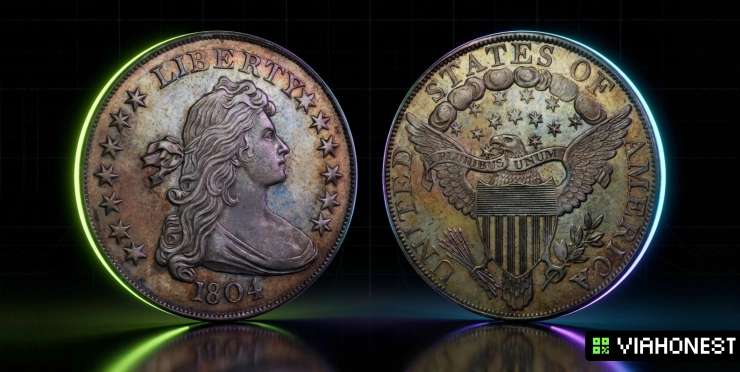
- Year: 1804
- Country: United States
- Why it's valuable: Diplomatic presentation coins; extremely limited.
- Approximate sale price: $3–4 million
These examples represent the very top of the market, but they also illustrate a pattern: rarity, story, and verified authenticity consistently drive value.
How to Find Out the Value of Old Coins Before Selling
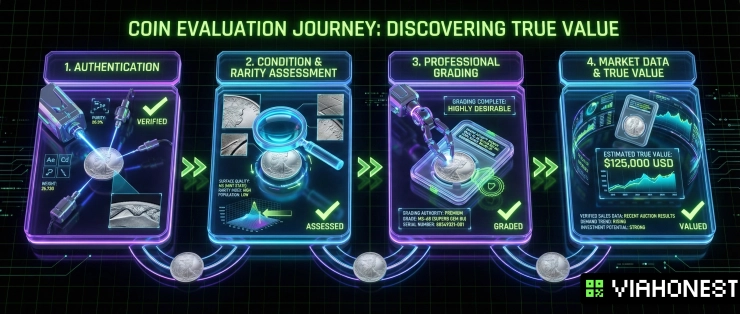
Before listing or offering a coin for sale, proper evaluation is critical. Guesswork can lead to underpricing or failed transactions.
Authentication Comes First
Counterfeits are common in high-value numismatics. Professional authentication confirms metal composition, strike details, and origin. Selling without verification significantly reduces buyer confidence.
Assessing Condition and Rarity
Examine wear, damage, cleaning marks, and overall preservation. Even minor flaws can drastically affect price. Rarity must be confirmed through reliable numismatic references, not assumptions.
The Role of Professional Grading
Third-party grading services assign standardized grades that buyers trust. Graded coins are easier to sell, easier to insure, and typically command higher prices.
Why "Similar Listings" Are Misleading
Online listings often reflect asking prices, not completed sales. Many are misgraded or inaccurately described. Real value is established by verified sales data and expert assessment, not optimistic comparisons.
Where and How to Sell Rare Coins

Choosing the right sales channel is just as important as knowing what your coin is worth. If you're researching how to sell coins, the method you choose can directly affect your final return.
Auction Houses and Specialized Platforms
Major auction houses offer global exposure and professional handling, but they often charge high commissions and require long lead times. They're best suited for museum-grade coins.
Online Marketplaces
Digital platforms have made coin trading more accessible, allowing sellers to reach buyers directly. However, trust becomes the main challenge — buyers want proof, sellers want protection.
Platforms like ViaHonest bridge this gap by combining online accessibility with verification-focused infrastructure, making them suitable for both experienced collectors and first-time sellers.
Risks of Selling Without Verification
Private sales without authentication or transaction safeguards expose both parties to fraud, disputes, and payment issues. High-value coins amplify these risks.
How ViaHonest Helps You Sell Valuable Coins Safely
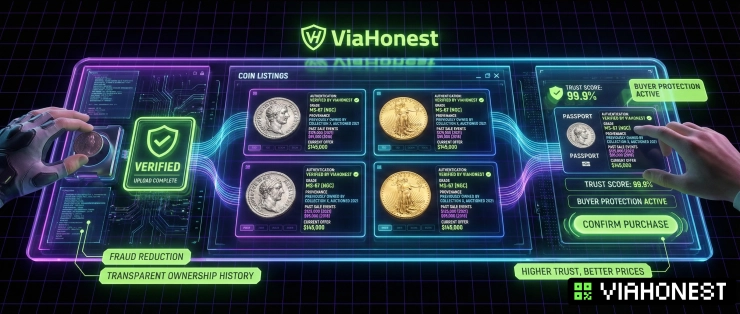
Trust is the currency of modern collectibles. ViaHonest was designed to address the biggest pain points in high-value peer-to-peer transactions.
- Transparent ownership history helps buyers understand provenance.
- Authentication support reduces uncertainty and builds credibility.
- Fraud risk reduction protects both sides of the deal.
- Higher buyer confidence often leads to faster sales and better prices.
For sellers, registration on ViaHonest makes it easier to list valuable coins with confidence. For buyers, it creates a safer environment to purchase authenticated assets without relying solely on reputation or luck. The onboarding process is intentionally simple, encouraging responsible participation without unnecessary friction.
Conclusion
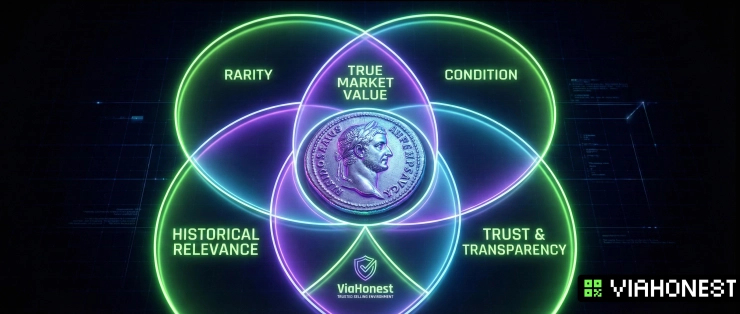
The reality of the most valuable coin in the world is that its price is never determined by age alone. True value is created where rarity, condition, historical relevance, and trust intersect. Coins that meet all four criteria consistently outperform expectations.
Whether you're holding a potentially rare piece or actively exploring coins that are worth money, success depends on proper evaluation and the right selling environment. The same applies to buyers searching for secure acquisitions.
In today's market, knowing how to sell coins safely is just as important as knowing which ones are valuable. With transparent tools and a trust-focused approach, ViaHonest provides a modern solution for anyone looking to sell or buy rare coins with confidence.