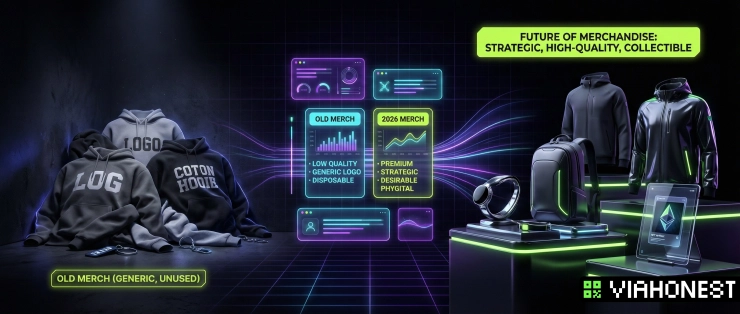
In 2026, merch ideas are no longer about placing a logo on a hoodie and hoping fans will buy it out of loyalty. Merchandise has evolved into a strategic product category that sits at the intersection of brand identity, utility, and long-term value. Audiences in the US market have matured: they expect better materials, smarter design, and products that feel justified in both price and purpose.
Today's buyers are selective. They ask whether an item is useful, whether it will last, and whether it reflects values they actually support. This shift explains why many traditional merchandise examples fail to convert, while thoughtfully designed products succeed even at premium price points.
As merchandise becomes more intentional and value-driven, more brands are also thinking about what happens after the first sale — including verification, resale, and long-term trust. Platforms like ViaHonest support this shift by helping physical merch retain identity and credibility over time.
So, what are the best merch ideas today? In short: items people would still want even if the logo disappeared. The strongest merch in 2026 delivers real-life usefulness, aligns with a clear identity, and is built to hold value over time rather than exist as a disposable promotional item.
Why Not All Merch Ideas Work
The Core Reasons Merch Fails
Most unsuccessful merch follows the same pattern: it is created for the brand, not for the user. Products are rushed, chosen from generic catalogs, and designed without understanding how they fit into everyday life. As a result, they end up unused, unworn, or quickly forgotten.
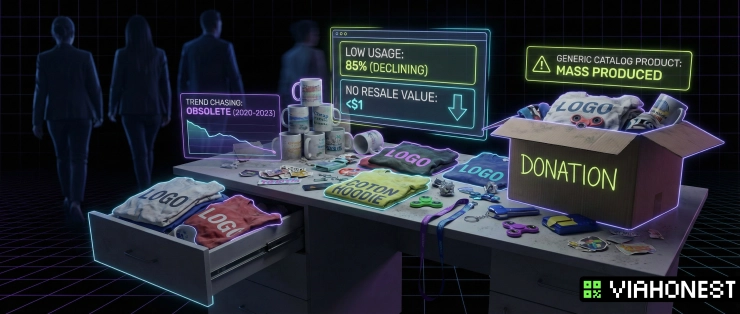
Another common issue is trend chasing. Brands copy what appears popular at the moment without asking whether it makes sense for their audience. A product that works for a music artist may fail completely for a tech community or a lifestyle brand.
Why Merch Without Practical Value Gets Ignored
If an item does not solve a small problem, add comfort, or improve a routine, it becomes decorative at best. Decorative merch rarely survives long outside of a drawer or shelf. This is why functional items consistently outperform novelty products across almost all categories.
People in the US market especially value practicality. Even emotional purchases are justified internally by usefulness: "I'll actually wear this," or "I can use this every day." Without that justification, conversion rates drop sharply.
The Importance of a Product's Second Life
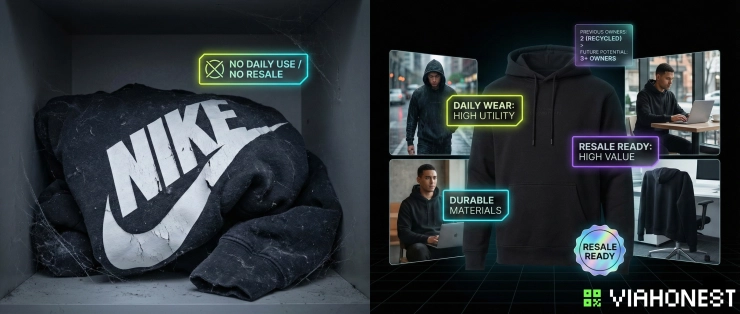
A factor many brands still ignore is what happens after the first owner stops using the product. Does it get donated, resold, or thrown away? Products that have a clear secondary life — through durability, timeless design, or collectibility — retain perceived value.
When merch is designed with resale in mind, buyers feel safer making the initial purchase. They know the product is not a dead-end expense, but an asset that can move on while still representing the brand positively.
This is where resale-aware merch strategies become practical rather than theoretical. When products are designed to have a second life, verification and ownership history stop being optional. This is why some brands already register limited and collectible merch on ViaHonest, ensuring that each item remains distinguishable and trusted as it moves between owners.
Top 5 Merch Ideas by Category
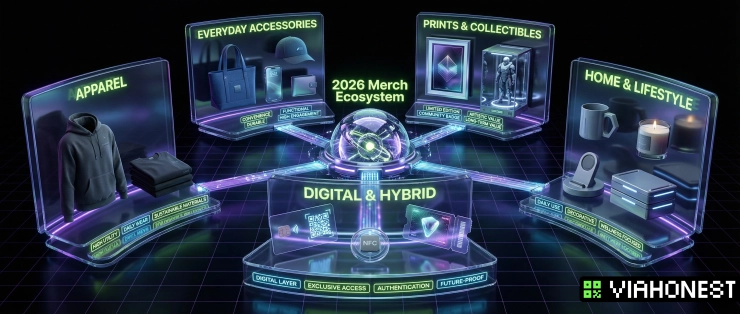
Merch Apparel
Apparel remains one of the most popular types of merch, but expectations have changed. Heavyweight fabrics, refined fits, and minimal branding dominate successful releases. Instead of loud graphics, brands lean into subtle identity markers that feel wearable in everyday contexts.
2026 Case: Limited Apparel Drops With Verified Identity
In 2026, apparel performs best when it is released in small, clearly defined drops rather than continuous restocks. Brands increasingly launch limited runs of hoodies, crewnecks, or tees with documented editions and transparent production details.
Each item is linked to a digital passport that confirms the drop, edition size, and authenticity. Buyers know exactly what they are purchasing, and resale listings can be verified rather than guessed.
These apparel drops are often registered on ViaHonest, allowing items to retain identity long after the initial release. As a result, limited apparel holds value better, circulates more safely on the secondary market, and generates additional visibility when pieces reappear in resale.
Quality apparel works because it integrates seamlessly into a person's existing wardrobe. When clothing feels like a natural choice rather than a statement piece, it gets worn more often — and becomes ongoing brand exposure rather than a one-time purchase.
Everyday Accessories
Accessories succeed when they disappear into daily routines. Tote bags, caps, phone accessories, wallets, and tech organizers are strong performers because they solve small but constant needs.
The key here is durability and design restraint. Overdesigned accessories often feel awkward to use, while clean and functional ones become staples. This category consistently produces some of the best merch to sell because the usage frequency is high.
2026 Case: Functional Accessories as Verifiable Objects
Everyday accessories are increasingly treated as long-term objects rather than disposable merch. In 2026, brands release items like tote bags, caps, wallets, and tech organizers with durability and verification built in.
Instead of relying on branding alone, sellers attach a digital identity to each item, confirming originality and production details. This approach is especially effective for accessories that are used daily and frequently resold.
Platforms like ViaHonest make it possible to register these items individually, ensuring that even simple products remain distinguishable from mass-produced lookalikes. This transforms everyday accessories into trusted, repeat-use merch with resale value.
Merch Prints & Collectibles
Prints and collectibles work best when scarcity and narrative are involved. Limited editions, numbered runs, and artist collaborations add meaning beyond the object itself. These items are not meant for everyone — and that is exactly why they work.
Collectibles are also among the strongest merchandise examples for resale. Their value often depends on condition and authenticity, making transparency especially important for long-term trust.
2026 Case: Numbered Collectibles With Transparent History
Collectibles in 2026 are defined less by visuals and more by documentation. Limited prints, posters, and art objects are released with clear edition numbers and registered ownership.
Each piece is treated as an individual asset rather than a generic product. Buyers can verify whether a print is part of an original run, whether it has changed owners, and how its condition has evolved.
Many creators register these collectibles on ViaHonest, where digital passports preserve provenance and prevent counterfeit listings. This approach increases buyer confidence and allows collectible merch to function similarly to traditional art markets.
Home & Lifestyle Merch
Home and lifestyle products bridge personal space and brand connection. Items like candles, mugs, desk objects, and storage solutions perform well when they match the aesthetic of modern living spaces.
The challenge in this category is relevance. Products should enhance daily environments, not disrupt them. Brands that understand how their audience lives tend to create home items that feel intentional rather than promotional.
2026 Case: Lifestyle Objects Designed for Second Life
Home and lifestyle merch in 2026 is designed with resale in mind from the start. Items such as mugs, candles, desk objects, and storage accessories are released in curated editions rather than mass quantities.
These products often include a digital record that documents the edition, materials, and origin. When items move between owners, their identity moves with them.
By registering lifestyle merch on ViaHonest, brands ensure that even non-collectible items maintain credibility and trust over time, especially when resold through secondary channels.
Digital & Hybrid Merch
Digital merch is no longer experimental — it is strategic. Access passes, digital certificates, exclusive content, and hybrid products that combine physical items with digital ownership are becoming mainstream.
Hybrid merch is particularly powerful because it supports verification, history, and resale. When digital layers track ownership or authenticity, they add confidence for both buyers and sellers in secondary markets.
2026 Case: Hybrid Merch as a Verifiable Asset
Hybrid merch has become one of the strongest performing categories in 2026. Physical products paired with digital verification outperform standalone items in both conversion and resale.
Examples include apparel with ownership-linked digital records, collectibles tied to digital certificates, and access-based merch with transferable rights. These products are designed to exist across physical and digital layers.
ViaHonest plays a central role in this model by acting as the registry where physical items and their digital identity are linked. This allows hybrid merch to function as a verified asset rather than a one-time purchase.
How to Choose a Winning Merch Idea
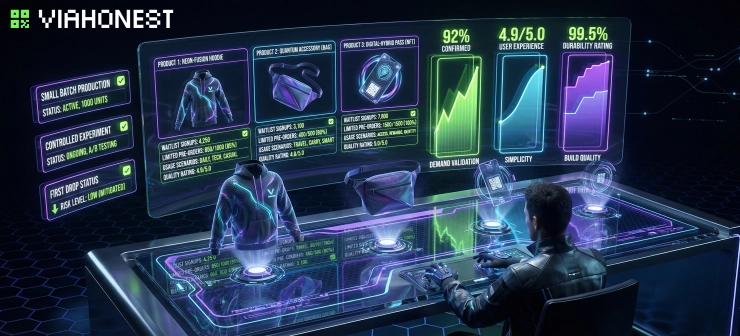
What to Evaluate: Demand, Simplicity, and Quality
Strong merch starts with demand validation. This does not always require large surveys — small drops, waitlists, or limited pre-orders can reveal real interest. Simplicity matters just as much. Products that are easy to explain and easy to use perform better over time.
Quality should never be an afterthought. In 2026, audiences quickly associate product quality with brand credibility. One poorly made item can damage trust more than it generates revenue.
Reducing Risk on the First Drop
The safest approach is controlled experimentation. Start with one or two items, limited quantities, and clear positioning. This minimizes financial exposure while generating valuable data about preferences, sizing, pricing, and usage.
Early adopters also tend to be the most vocal. Their feedback can shape future releases and prevent expensive mistakes at scale.
Why Starting Small Wins Long-Term
Large assortments often dilute focus. When too many options are offered, none feel special. Starting small allows each product to carry weight and narrative, reinforcing the idea that merch is curated — not mass-produced.
Over time, this approach builds anticipation for future drops rather than fatigue.
Common Mistakes When Choosing Merch
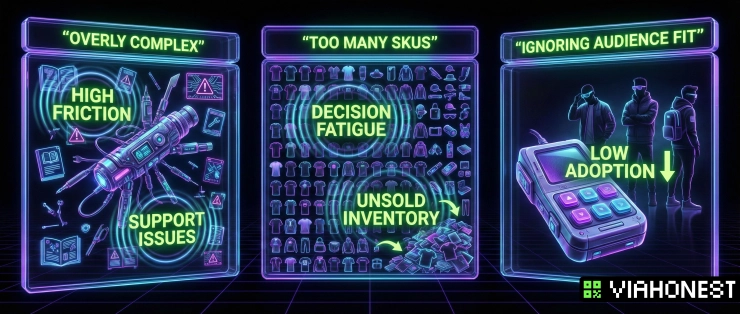
Overly Complex or Impractical Products
Complex products increase costs, production risks, and user frustration. If a product requires explanation, assembly, or special care, it immediately narrows its audience. Simplicity almost always outperforms novelty.
Too Many SKUs at Once
A wide assortment may look impressive, but it often leads to unsold inventory and decision paralysis. Focused releases feel intentional and premium, while oversized catalogs feel transactional.
Ignoring Quality and Audience Fit
Designing merch based on internal preferences rather than audience behavior is a costly mistake. Successful merch reflects how users actually live, work, and dress — not how a brand imagines they do.
Merch and Resale: What Matters
Why Fans Resell Merch
Resale is not a sign of disloyalty. Fans resell items when tastes change, collections rotate, or financial priorities shift. When resale is easy and fair, it strengthens the ecosystem rather than weakening it.
Products That Hold Value Best
Items that maintain value tend to share common traits: durability, limited availability, and clear provenance. Apparel with timeless design, collectibles with documented editions, and hybrid merch with digital verification outperform disposable products.
Trust on the Secondary Market
Trust is the foundation of resale. Buyers want confidence that items are authentic, accurately described, and fairly priced. Without trust, secondary markets collapse into risk-heavy transactions.
How ViaHonest Supports Merch and Resale
ViaHonest was built to support modern merch ecosystems, not just one-time sales. For sellers, the platform enables verified listings that protect brand reputation while giving products a transparent lifecycle. Authenticity confirmation and item history reduce fraud and misrepresentation.
For buyers, ViaHonest offers confidence. Knowing where an item came from, how it has changed hands, and that it is legitimate removes hesitation from both primary and secondary purchases. This makes merch feel like a safer investment rather than an emotional gamble.
By supporting secure resale, ViaHonest also helps brands maintain control over how their products circulate. Instead of disappearing into anonymous marketplaces, merch retains its story and identity.
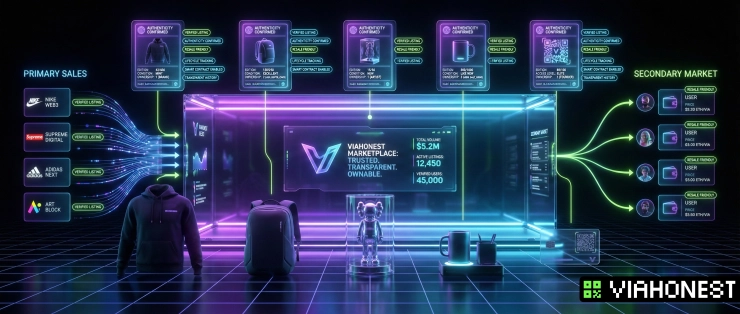
2026 Reality: Why Brands Register Merch Instead of Just Selling It
By 2026, brands that treat merch as disposable struggle to maintain long-term value. In contrast, creators who register products early gain compounding benefits: safer resale, higher trust, and ongoing visibility.
Instead of losing control after the first sale, merch continues to represent the brand through verified ownership and transparent history. Platforms like ViaHonest make this possible at scale, turning merch into infrastructure rather than promotion.
Conclusion
Strong merch ideas in 2026 are built on a simple formula: real utility, clear identity, and uncompromising quality. When merch is treated as a long-term asset rather than a promotional afterthought, it generates trust, loyalty, and sustainable revenue.
The smartest brands design products with both first ownership and second life in mind. Whether you are launching your first drop or expanding an existing line, thinking about resale and transparency from day one creates lasting value.
In 2026, the strongest merch ideas are those designed to live beyond the first owner — and platforms like ViaHonest are what make that lifecycle transparent, verifiable, and trusted.