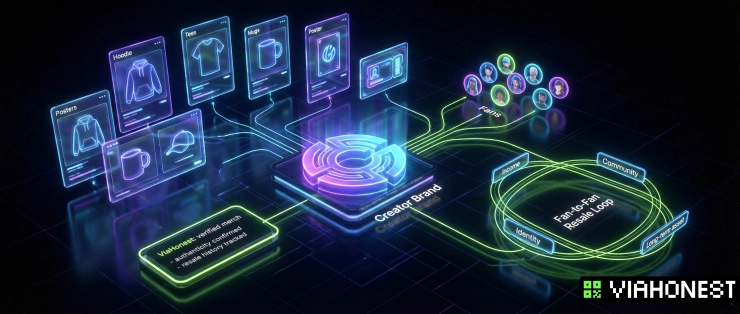
For creators, artists, podcasters, streamers and brands, the real question isn't just how to make merch, but how to create products people genuinely want to wear, use and keep. At the same time, you need to understand how to design merch that feels aligned with your brand, makes financial sense, and can live a long, trusted life even when fans start reselling it to each other.
Strong merch does three things at once: it supports your income, strengthens your brand and gives your community a way to show they belong. And if you think about authenticity and resale from the start, your limited drops can become real-world assets rather than disposable swag.
Why Ordinary Merch Is Disposable — and Merch with a Passport Is an Asset
Today, most merchandise is designed to be sold once and forgotten. A T-shirt is printed, shipped, worn, and eventually disappears from relevance. If it ever reaches the resale market, it becomes anonymous: no proof of origin, no verified history, no reliable way to tell whether it's authentic or not.
This is why traditional merch is often treated as disposable. It has no persistent identity. Once it leaves the original store, it loses context, trust, and long-term value.
Merch with a digital passport works differently. Each item has a verifiable identity that links the physical product to a transparent record. Authenticity can be checked. Ownership history can be traced. Limited pieces remain unique even years after the original drop.
When merch carries a passport, it stops being just a branded product. It becomes a real-world asset — something that can be collected, safely resold, and trusted beyond the first transaction.
Why Merch Matters for Creators, Brands and Communities
Merch as income, identity and long-term presence
Merch is one of the few things that moves with your audience into their offline life. A hoodie from a streamer, a mug from a podcast, a tote from a brand, a poster from a band – these are quiet daily touchpoints that keep you present long after a video, episode or campaign is over.
For creators, that matters because digital revenue can be unstable. Platform rules change, ad budgets shrink or grow, algorithms shift. Physical products give you a more direct, ownable channel: fans pay you, you deliver something tangible, and there's no middle layer deciding how visible you are that day.
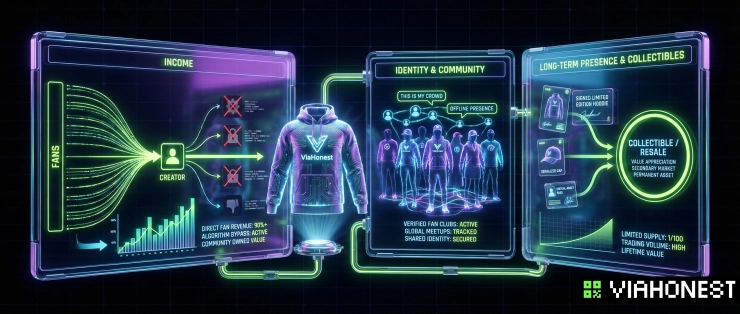
It's also about identity. Fans use merch to say "this is who I am" or "this is my crowd." Two strangers in the same hoodie or cap can start talking instantly. For companies and projects, a well-designed tee or cap turns employees, customers and partners into subtle ambassadors. When the quality is good and the design is thoughtful, people will happily integrate branded items into their everyday style instead of treating them as throwaway promo.
Finally, limited or special releases naturally turn into collectibles. Fans trade old tour shirts, signed items, first-edition drops and collaboration pieces. That secondary life is powerful for your brand, but only if people can trust what they're buying and selling.
Define Your Merch Goal and Audience
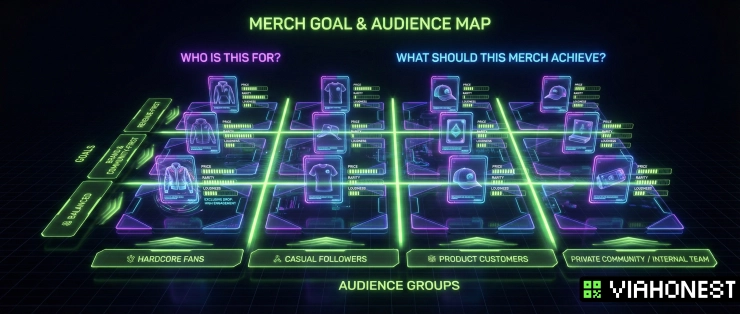
Before you create a single design, you need to be clear about two things: who this merch is for and what it should achieve.
Your audience might be your most dedicated fans who know every reference and inside joke, more casual followers who just want something simple with your name on it, customers of a product or SaaS brand, or members of a specific community like a Discord, Patreon tier or internal company group. Each of those groups has a different appetite for price, rarity and loudness.
At the same time, your goals shape every decision. Some creators treat merch primarily as a revenue stream; others see it as a brand and community tool first, with money as a secondary benefit. Many want both: accessible pieces that anyone can buy, plus limited drops for the people who've been around the longest.
The key is to make sure merch feels like a natural extension of your brand. Tone of voice, colors, values and visual style should translate straight from your content or product into physical form. A minimalist productivity brand probably leans toward clean, subtle designs; a chaotic meme account can get away with louder graphics; a thoughtful, research-heavy podcast might focus on smart, simple pieces people aren't embarrassed to wear anywhere.
If you can write one or two sentences that describe who your merch is for and why you're making it, you've given yourself a compass for all the steps that follow.
Choose the Right Types of Merch
Once your audience and goals are clear, you can think about formats. Not every creator needs every product, and starting with a curated set is almost always better than launching a giant catalog.
Most merch ecosystems are built around a few familiar pillars: apparel like T-shirts, hoodies, crewnecks and caps; everyday accessories such as mugs, water bottles, tote bags, stickers and phone cases; and print-based items like posters, art prints, lyric sheets or zines. You can also layer in digital + physical bundles – for example, an exclusive episode or behind-the-scenes video paired with a signed print.
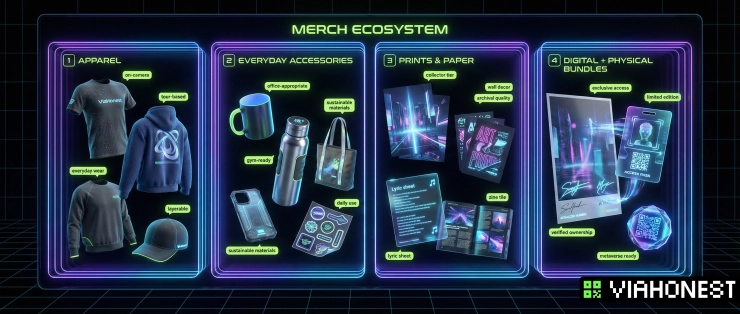
The best choices depend on how people interact with you. Musicians often lean into tour and era-based merch that ties to specific shows or releases. Streamers and gamers do well with comfy clothing and desk accessories that live on camera and in the setups their fans use. Companies and projects tend to win with understated "everyday" pieces that work in an office, coworking space or on a commute.
Instead of trying to tick every box, start with a small core that feels undeniably "you": maybe one strong tee, one hoodie, and one everyday accessory – or a poster, a hat and a mug. Use that first set to learn what sells, what sizes people want and what kind of designs get the most love, then expand deliberately instead of guessing.
Design Your Merch So People Actually Use It
Turning brand elements into wearable design
Now we're at the creative heart of it: turning your brand into visuals people want to carry around. This is where the question of how to design merch becomes practical.
The strongest designs usually combine recognizability with real-world wearability. They use elements your audience already associates with you – logo, color palette, catchphrases, inside references – but arrange them in a way that works outside your channel too. Someone should be able to wear your hoodie to a coffee shop or office without feeling like a walking billboard, unless "loud and obvious" is exactly the point.
Clarity matters. Text should be readable, not a puzzle. Graphics should still communicate something from a few steps away. A clever line of copy or a small detail that only fans understand can be a powerful hook, but it still needs to sit on a base design that looks good regardless.
There are several ways to get the artwork made. You might handle it yourself if you're comfortable with design tools, collaborate with a designer or illustrator who understands your aesthetic, or even run a structured collab with a fan artist. If you invite your community in, make sure you use clear agreements about ownership, credit and payment so everyone feels respected.
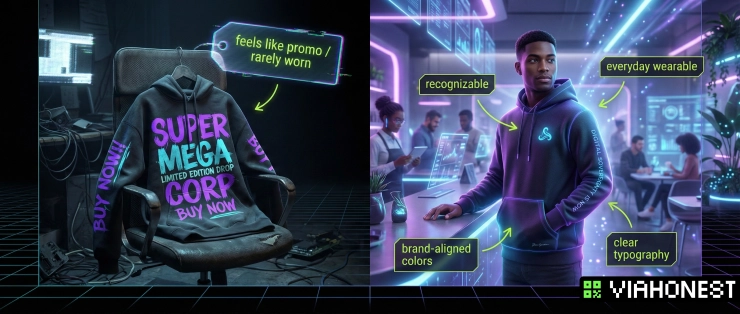
Whatever the source, test concepts before you commit. Share a few options in your close community or subscriber group, ask which pieces people would truly buy and wear, and pay attention not just to polite compliments but to the designs that spark genuine excitement. That feedback will save you from printing hundreds of units of something people only "kind of like."
Pick a Production Method That Fits Your Risk and Scale
With designs ready, the next decision is how to produce your merch. This choice is less about creativity and more about balancing risk, flexibility and control.
Print-on-demand and small-batch production reduce upfront risk. Items are produced only after an order is placed or in limited quantities, which makes this approach ideal for early testing, niche designs or experimental drops.
Bulk production offers more control over materials, fit and finishing, and lowers per-unit cost at scale. It works best for core products or limited releases where demand is already proven.
Many creators combine both approaches: validating ideas with low-risk runs first, then moving successful items into bulk production. Whatever method you choose, ordering and testing samples is essential before launching.
Pricing and Profit Without Losing Your Audience's Trust
Pricing is where a creative project becomes a business. It's also where many creators feel most uncomfortable. Fans are usually more understanding than you fear – as long as the quality matches the price and you're not clearly cutting corners.
The first step is to understand your true costs per item: production, printing, labels and packaging, platform and payment fees, a reasonable share of shipping materials and postage, and some value for the time you or your team spend managing orders and support. Only when you've added everything up can you set a price that isn't random.
From there, a "good–better–best" structure often works well. You can offer a more affordable entry point like stickers, basic tees or simple mugs; a mid-tier layer of hoodies, heavier garments or more intricate accessories; and a top tier of limited, signed or premium items that justify higher prices through scarcity, storytelling or elevated materials.
Price sends a signal about your brand. If it's weirdly low, people may assume you aren't paying attention to quality or undervalue your own work. If it's extremely high for what they receive, they'll feel taken advantage of. The sweet spot is where your audience can see why an item costs what it does – and feel good about supporting you through it.
Where and How to Sell Your Merch
Once the products and prices are ready, you need a storefront and a buying experience that feels safe and straightforward.
Most creators use a dedicated online shop or a merch section on their existing site, linked clearly from social profiles, video descriptions and podcast show notes. Some platforms offer integrated tools that surface your products directly under your content. For brands and companies, a store section on the main site is often enough, especially if customers are already used to logging in there.
Offline sales can be powerful too. Selling at concerts, live shows, conferences, fan meetups or internal company events adds emotional weight to each purchase. People remember where they got a specific shirt or poster, and that memory gets attached to your brand every time they see it.
Wherever you sell, presentation matters. Clear, sharp photos or well-made mockups help people imagine the item in their own life. Honest descriptions that explain fit, materials and care instructions reduce returns and build trust. Transparent shipping costs, delivery estimates and return policies prevent unpleasant surprises at checkout.
Marketing your merch should feel like storytelling, not just shouting "buy now." Show the design process, samples arriving, boxes being packed. Give your closest community early access or special colorways. Collaborate with other creators or brands so you both tap into each other's audiences. And when people share photos of themselves with your merch, reshare and celebrate it – that social proof means more than any ad spend.
Quality, Trust and the Secondary Market
Quality is the quiet foundation of everything you do with merch. When a hoodie keeps its shape, a print stays vivid, a mug survives years of dishwashing, people notice – and they mentally connect that reliability back to you. When things fall apart quickly, they remember that too.
With limited or collectible items, there's another layer: resale. Fans naturally buy, sell and trade rare shirts, early drops, signed posters and collaboration pieces. That's not a problem to avoid; it's a sign of a healthy, engaged community. But the secondary market introduces risk: counterfeits, misrepresented condition and scams can quickly erode trust.
You can reduce that risk by building authenticity cues into your products from the beginning: custom woven labels, unique tags, small design details that are hard to copy, or even printed serial numbers or codes tied to a specific run. Those touches help serious fans spot the real thing.
They become much more powerful when connected to a system that can verify those details across time and owners, instead of leaving everything to guesswork.
This is where the difference between ordinary merch and asset-grade merch becomes clear. When authenticity and ownership history are left to guesswork, resale turns into risk. Platforms like ViaHonest exist to remove that uncertainty by giving physical items a verifiable record that travels with them across owners and marketplaces.
How ViaHonest Supports Authentic Merch and Safe Fan-to-Fan Resale
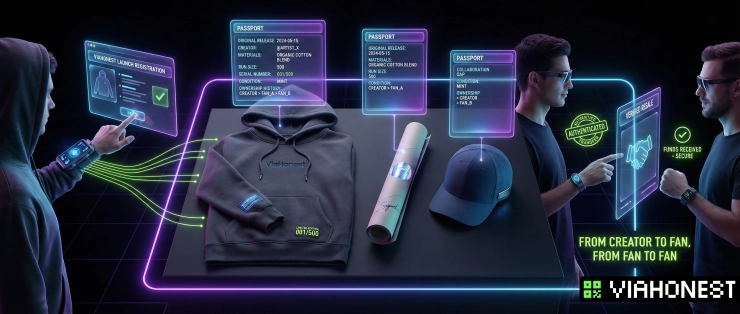
This is where ViaHonest becomes part of your long-term strategy. Instead of letting limited pieces drift through reselling platforms with no reliable way to check if they're real, you can link each official item to a transparent record that travels with it.
For you and your fans, that means a few important things. First, authenticity: when a piece of merch is registered, buyers can see that it's an original, not a knock-off using your logo without permission. Second, history: items can carry information about past owners and current condition, so collectors know what they're paying for. Third, safer resale: fans can trade rare drops with far less fear of being scammed.
You can integrate this without overwhelming people. When you launch a limited drop, you might tell buyers they can register their items on ViaHonest to create an official record – a natural nudge for them to sign up as sellers in the future if they ever decide to part with their piece. At the same time, you can point more price-sensitive or late-arriving fans to authenticated pre-owned merch on the platform, inviting them to join as buyers if they missed the original release.
In other words, ViaHonest helps you turn limited merch into trusted, trackable real-world assets, not just hype items that become a minefield of fakes and doubts after the first sell-out.
How Merch Registration Works in Practice
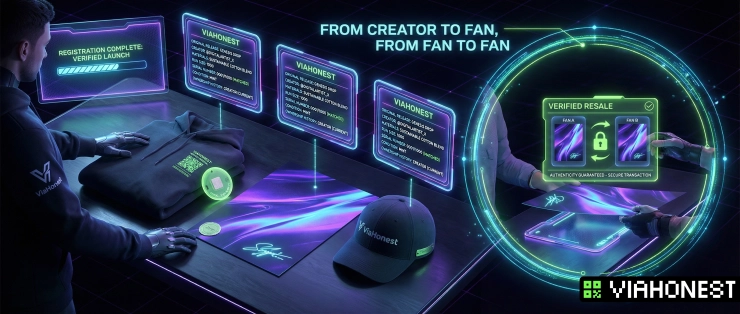
Each official merch item can be linked to a unique identifier that connects it to a digital passport on ViaHonest. Depending on the product and drop format, this identifier can take different forms.
Common options include a QR code printed on a tag or card, an embedded NFC tag for premium or collectible items, or a unique serial number assigned to limited editions. The identifier is unique to each individual item, not just the design or model.
After purchase, the buyer scans the QR code, taps the NFC tag, or enters the serial number to register the item on ViaHonest. This creates a digital passport tied directly to that physical product.
The passport can include confirmation of authenticity, drop and edition details, ownership history, and condition updates over time. If the item is later resold, the passport transfers with it, allowing the next buyer to verify the item and its history before completing the transaction.
For creators, this adds authenticity without complicating fulfillment. For fans, it turns limited merch into something verifiable, traceable and safe to trade.
Conclusion: Turn Your Merch into a Long-Term Asset for You and Your Community
When you step back, how to make merch is really a structured journey. You start by defining who you're serving and what your merch should do. You choose formats that match how people experience your work, then figure out how to design merch that feels natural in their daily lives. You select production methods that balance risk and control, set prices that respect both your effort and your audience, and build a buying experience that feels honest and simple. Finally, you protect the whole system with good quality, clear authenticity cues and a smart approach to resale.
You don't have to launch with a huge line. A small, well-thought-out first drop – one hoodie, one tee, one accessory – is enough to learn, improve and grow. The next step is to sketch out your first merch concept, write down who it's for, and decide what message you want it to carry when someone wears or uses it.
When merch is designed with identity, verification and resale in mind from day one, platforms like ViaHonest help turn it into a long-term asset — one that carries trust, history and value far beyond the first sale.