For more than a century, the paper certificate of authenticity has been the trusted handshake between artists, galleries, and collectors. A printed page, a signature, maybe an embossed seal, and the work was officially "real." In 2026, that system is finally falling apart. Forgeries are easier to produce than ever, paper records get lost or damaged within a few years, and collectors increasingly want verification they can pull up on their phone in three seconds rather than dig out of a folder somewhere.
A certificate of authenticity, or COA, is a document that confirms a work of art, collectible, or limited-edition product is genuine, identifies who made it, when, and in what edition, and ties that information to a specific physical piece. Traditionally this has been a printed paper document. The problem is that paper certificates fail at the one job they exist to do. They are easy to fake, easy to lose, impossible to verify remotely, and disconnected from the actual object they describe. Digital and blockchain-based authenticity records solve all four problems at once.
This guide breaks down why paper COAs are no longer fit for purpose, what is replacing them, and how artists, sellers, and collectors should think about authenticity in 2026. We will look at where the old system fails, what digital alternatives actually do better, and how a platform like ViaHonest is building authenticity into the listing itself rather than treating it as a piece of paper that travels separately.
What a Certificate of Authenticity Actually Does
Before declaring paper dead, it is worth being precise about what a certificate is supposed to accomplish. A good COA does four things.
It confirms the work is original and not a reproduction. It identifies the maker, the title, the date of creation, the medium, and the edition number if it applies. It connects all of that information to a specific physical object through measurements, photographs, or a unique mark. It provides a chain of custody that future buyers, insurers, or auction houses can trust.
When any of those four jobs fails, the certificate is decorative rather than functional. And in 2026, paper certificates fail at all four with depressing regularity.
Where Paper Certificates Break Down
The case against paper is not theoretical. It is built on patterns that everyone in the art and collectibles world has watched play out for years.
Forgery Has Outpaced Paper
The technology to fake a paper certificate is now embarrassingly accessible. Consumer-grade printers can reproduce embossed seals, watermarks, holograms, and signatures to a standard that fools all but the most experienced eye. A determined forger can produce a convincing COA for under a hundred dollars. The certificate that was supposed to protect the buyer becomes part of the forgery itself.
This problem compounds in the secondary market. A fake painting accompanied by a fake certificate is a much harder sell to spot than a fake painting alone. The paper actively makes the deception more effective.
Paper Gets Lost
Estimates from auction houses and insurance adjusters suggest that a significant share of paper certificates are lost, damaged, or separated from their work within ten to fifteen years of issue. Houses get sold. Estates get cleared. Folders get thrown out. Basements flood. The certificate that proved authenticity in 2010 cannot be found in 2026, and the work suddenly carries a discount of 20 to 40 percent at resale because the provenance trail is broken.
The cruel part is that the work itself is still authentic. The collector simply cannot prove it anymore.
Verification Cannot Happen Remotely
A paper COA only proves anything if you have it physically in front of you, in the same room as the work, with someone qualified to read it. Online buyers in 2026 do not have that luxury. They are scrolling on a phone, often deciding within seconds whether a piece is worth their attention. A photo of a certificate is not the same as a certificate, and even a high-resolution scan can be edited in two minutes by anyone with basic software skills.
The result is that paper certificates simply do not function in the channels where most art is actually sold today.
Paper Is Disconnected From the Object
Even a perfectly preserved paper COA has one fatal flaw. It is a separate object from the work it certifies. A forger can swap a real certificate onto a fake painting. A reseller can sell the certificate separately and substitute a print for the original. The link between document and object depends entirely on trust, which is exactly what the certificate was supposed to verify in the first place.
The Drawbacks of Paper COAs at a Glance
- Trivial to forge with modern printing technology
- Easily lost, damaged, or separated from the artwork over time
- Cannot be verified remotely by online buyers
- No live link to the physical object they describe
- No update mechanism when ownership changes
- No tamper detection if the certificate is altered
- Provenance trail breaks the moment paper is lost
- Resale value drops sharply when the COA is missing
What Digital Authenticity Records Actually Solve
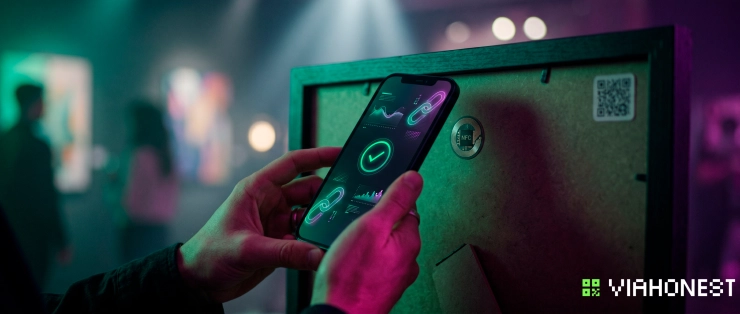
The replacement for paper is not a single technology. It is a category of digital authenticity records that share a few key properties. They live online. They are tied to the specific object through a scannable identifier or embedded chip. They cannot be altered without leaving a trace. They update when the work changes hands. And they can be verified in seconds by anyone with a phone.
The most common formats in 2026 are blockchain-backed certificates, platform-issued digital COAs tied to a seller account, NFC chips embedded in the artwork or its frame, QR codes linked to a verification page, and combinations of all of the above.
Where Digital COAs Win
- Forgery resistance through cryptographic signatures or blockchain records
- Persistent records that cannot be lost in a move or estate clearance
- Instant remote verification by scanning a code or visiting a link
- Direct link between the certificate and the physical object
- Automatic provenance tracking across owners
- Tamper logs that show every change to the record
- Integration with marketplace listings so buyers see authenticity before they buy
- No storage burden for collectors
Where Digital COAs Still Have Limits
Honesty matters. Digital authenticity is not magic, and pretending it is would be the same mistake the paper era made.
- Some collectors still want a physical document to display or store
- Blockchain certificates can be confusing for non-technical buyers
- Platforms hosting digital COAs must remain operational long-term
- Linking a digital record to a physical object requires a trustworthy initial step
- Standards are still fragmenting across platforms
The good news is that none of these problems are unsolvable, and most of them are already being addressed by mature platforms.
Paper vs Digital: How They Actually Compare
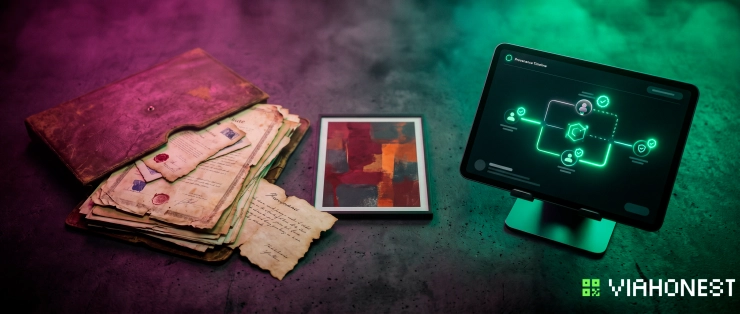
The differences become impossible to ignore when you line up what each format does in practice.
Forgery resistance. Paper is trivial to fake. Digital records with cryptographic backing or blockchain anchoring are practically impossible to forge without controlling the issuing system.
Loss risk. Paper can be lost forever. Digital records persist as long as the platform or chain exists, and they can typically be re-accessed by the verified owner.
Remote verification. Paper requires physical possession to verify. Digital records can be verified in seconds from anywhere with a phone.
Object linking. Paper is a separate document that lives or dies on trust. Digital records tied to NFC chips, QR codes, or platform listings are physically and logically bound to the object.
Provenance tracking. Paper provenance is whatever someone wrote down, if they wrote anything down at all. Digital provenance updates automatically every time the work changes hands within a tracked system.
Cost to issue. Paper certificates cost time, printing supplies, and storage. Digital certificates are usually issued automatically with the listing.
Buyer experience. Paper certificates arrive in the mail or in a folder, easily misplaced. Digital certificates appear in the buyer's account the moment the purchase is confirmed.
Insurance and resale value. Paper certificates that go missing tank the value of the work. Digital records are still there when the work is resold, insured, or appraised.
The pattern is consistent. Digital wins on every job a certificate is supposed to do, and paper survives only because of habit and aesthetics.
How Modern Platforms Are Building Authenticity Into the Listing
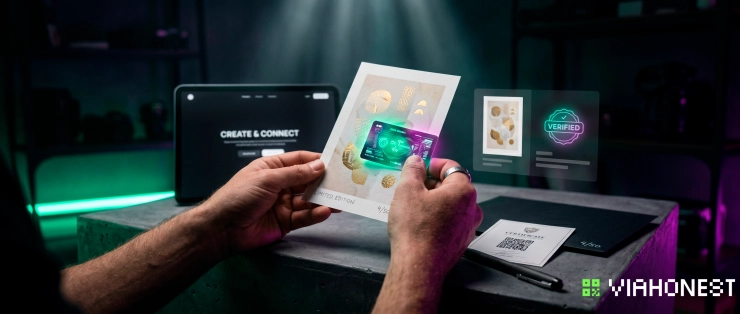
The most important shift in 2026 is conceptual. Authenticity used to be a document that traveled alongside the artwork. Now it is becoming a property of the listing itself. When a seller is verified on a platform, when each piece is uniquely tracked, and when ownership transfers are recorded automatically, the certificate stops being a separate object and starts being a feature of the work.
Platforms like ViaHonest are built around this idea. Authenticity, seller verification, and provenance are baked into the way listings are created and sold, not bolted on as a printed afterthought. The buyer does not have to ask for a certificate, store it, or hope it survives the next move. The record exists, it persists, and it travels with the piece automatically.
Why This Approach Matters for Artists
- Each piece gets a verifiable digital record from the moment it is listed
- Edition numbers and edition sizes are tracked by the platform, not the artist's memory
- Buyers see authenticity confirmation before they pay
- Provenance updates automatically when the work resells
- No need to print, sign, and mail anything separate
- The artist's reputation is tied to a verified profile, not a stack of paper
Why It Matters for Collectors
- Verification in seconds instead of folders of paperwork
- No risk of losing the document and tanking resale value
- Confidence that the work was issued by the actual artist, not a forger
- Clear ownership history when buying secondhand
- Easier insurance, appraisal, and estate planning
If you are an artist still printing and mailing paper certificates with every sale, there is a faster, more trustworthy way. Start selling on ViaHonest and every piece you list gets a verified digital record automatically. No printer, no signature stamp, no folder of carbon copies.
What Artists and Sellers Should Do Right Now
The transition from paper to digital is happening whether individual sellers participate or not. Buyers are already developing expectations. Insurance companies are starting to ask for digital records during claims. Auction houses are quietly building digital provenance into their internal systems.
If you are an artist or seller still working in paper, here is the practical playbook for 2026.
Audit Your Existing Records
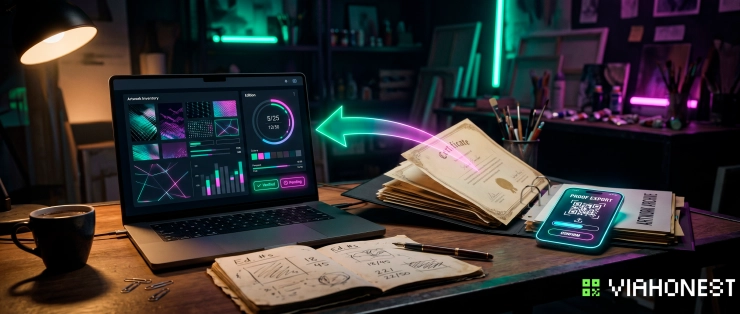
Pull together every certificate you have ever issued, every edition list, every collector contact you remember. Spreadsheets are fine. The goal is not to digitize the paper, it is to make sure you actually know what you have sold, to whom, and in what edition. This is the foundation of any future digital authenticity system.
Choose Where Authenticity Lives
You have three reasonable options. A platform that handles authenticity automatically when you list. A blockchain-based service that issues standalone digital COAs. A dedicated provenance database aimed at fine art professionals. Each has tradeoffs around cost, ease of use, and how well the records travel between systems.
For most working artists and creators, the platform-integrated path is the lowest friction. If you are also listing your work through a creator-first marketplace, the certificate already exists as part of the listing.
Reissue for Important Pieces
For work you have sold in the past that may resell at meaningful prices, consider reissuing a digital certificate that references the original sale. This is not a substitute for the original COA, but it provides a verifiable digital anchor that survives even if the paper is lost.
Communicate the Change to Buyers
Some collectors will ask where their paper certificate is. The honest answer in 2026 is that the digital record is more reliable, easier to verify, harder to lose, and travels with the work automatically. Most buyers, once they understand the difference, prefer it.
For a closer look at how the platform philosophy ties authenticity to seller verification, the About ViaHonest page goes deeper.
Common Objections and Honest Answers
Every shift in how authenticity is handled brings pushback. Most of the objections to digital COAs have reasonable answers.
"Collectors want something physical to hold." Some do. Many platforms offer optional printed cards or NFC-embedded tags that can travel with the work for buyers who want a physical artifact. The difference is that the printed card references the persistent digital record rather than replacing it.
"What if the platform goes out of business?" A fair question. The best digital authenticity systems either anchor records on a public blockchain or provide exportable proofs that the owner can store independently. This is a real consideration when choosing where to issue your certificates.
"Older collectors will not understand it." Most do, surprisingly fast. Scanning a QR code with a phone is not a generational barrier in 2026. The bigger learning curve was checking email twenty years ago.
"Paper has worked for a hundred years." It has worked imperfectly for a hundred years, and the rise of online sales has made its failure modes far more visible. The art market did not get less fraud-prone in the digital era. It got more, and paper has not kept up.
Who Is Already Doing This
The shift away from paper is broader than the art world. We will be publishing detailed case studies soon on how digital authenticity is changing the game across categories:
- Independent artists issuing verified editions to collectors
- Sneaker resellers proving authenticity for high-value pairs
- Streetwear and merch creators tracking limited drops
- Photographers managing signed editions across multiple buyers
- Designers and craft makers verifying small-batch goods
If you want to be one of the first stories featured, launch your first drop with verified authenticity built in and tag the brand.
Frequently Asked Questions
Are paper certificates of authenticity still legally valid?
Yes, a paper COA is still a valid document if it is genuine and can be verified. The problem is not legal validity, it is practical reliability. Verification, persistence, and forgery resistance are all weaker than digital alternatives.
Do I need a blockchain to issue a digital COA?
No. Blockchain anchoring is one option, but many strong digital authenticity systems use cryptographic signatures, platform verification, and persistent databases without requiring buyers to understand any of the underlying tech.
What if a collector still wants a paper certificate?
You can absolutely provide one as a supplementary keepsake. The digital record is the primary source of truth, and the paper becomes a souvenir tied to it rather than the authoritative document.
How does ViaHonest handle authenticity?
Authenticity, seller verification, and ownership records are built into the listing and the platform account. Each piece you sell gets a verifiable digital record from the moment it goes live, and ownership updates automatically with each transaction.
Can I use digital COAs alongside galleries that still use paper?
Yes. Many artists run a hybrid system, providing paper certificates where galleries require them and issuing digital records for direct sales and creator-first platform listings.
How long does it take to set up digital authenticity for my work?
On a platform that integrates authenticity into listings, it takes no extra time at all. Listing a piece creates the digital record automatically. On standalone services, expect to spend a few minutes per piece.
What happens to the digital record if I switch platforms?
The best systems let you export proofs or anchor records on a public blockchain so the authenticity travels with you. Before committing to any system, check how portable the records actually are.
What if I am a collector buying secondhand?
Always verify the digital record before you pay. A legitimate seller can show you a live verification link or scan in seconds. If they cannot, treat it as a serious red flag regardless of how good the paper certificate looks.