
If you have ever tried to flip a pair of Jordans or move a closet full of barely-worn runners, you already know the answer is rarely simple. The best platform to resell sneakers depends on what matters most to the seller: fees, buyer trust, speed, audience, or seller protection. There is no single winner, and anyone who tells you otherwise is probably trying to sell you a course.
Some marketplaces are built for fast sales. Others take a bigger cut but bring you serious buyers who pay serious money. A few are perfect for rare pairs and a nightmare for everyday shoes. The choice you make shapes your margins, your risk, and how reliably you can build a resale routine that actually pays you back. So let's break down where to sell, when to sell there, and how to stop leaving money on the table.
What Makes a Good Sneaker Resale Platform?

Before talking about specific options, it helps to understand what separates a strong sneaker resale platform from one that just looks busy on the surface.
A good platform usually does three things well. First, it gets your listing in front of the right audience: people who already came looking for sneakers, not someone hunting for a lawnmower. Second, it makes the transaction feel safe for both sides, which usually means some form of authentication, escrow, or buyer-seller protection. Third, it keeps fees predictable so you can price with confidence instead of guessing what you'll actually pocket.
There are roughly three categories worth knowing. General marketplaces cast a wide net and reach almost any buyer with a credit card. Sneaker-focused platforms specialize in authentication and tend to attract collectors and resellers who know exactly what they want. Local selling apps cut shipping out of the equation entirely and let you meet a buyer in a coffee shop parking lot.
No single platform wins across all those categories. A rare collab that would fetch top dollar from a collector might sit untouched on a casual marketplace for weeks. A pair of slightly used trainers, on the other hand, would feel out of place on a high-end resale site and probably do better closer to home. The right choice almost always comes down to the kind of inventory you have, how fast you need the cash, and how much risk you're willing to manage yourself.
Why Sellers Compare Different Platforms
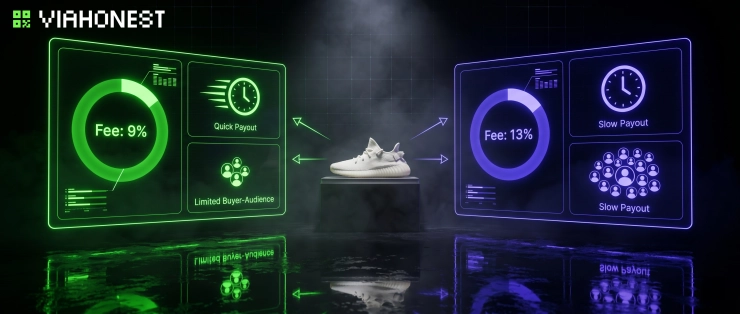
Most newer sellers list on one site, see a single result, and assume that's just how reselling works. Comparing a few options usually changes the math fast.
Fees are the obvious starting point. Some platforms charge a flat seller fee. Others stack a commission, a payment processing fee, and sometimes a shipping label cost on top. Two platforms can advertise similar percentages and still leave you with very different payouts.
The audience matters just as much. A sneaker-specific buyer expects deadstock, knows what a real receipt looks like, and is willing to pay a premium. A general-marketplace buyer often wants a deal and may not understand the difference between retail and resale value. Pricing strategy has to bend around who is actually scrolling.
Speed of sale and payout timelines also vary more than people realize. Some platforms release funds almost immediately. Others hold them for days, or until buyer confirmation, or until an authentication step clears. If you're reinvesting profits into your next pair, that delay is real cash flow friction.
And then there's protection. Authentication services protect both sides from fakes. Shipping policies decide who eats the cost if a package goes missing. Dispute systems determine whether a bad-faith buyer can drain weeks of your work in a chargeback. These differences are easy to overlook until the day they matter.
One more thing to keep in mind: sneakers behave differently from broader shoe categories. Heels, boots, and casual everyday shoes have their own buyer pools, and a platform that's great for hyped sneakers can be the wrong place to sell loafers.
Best Platforms to Resell Sneakers

Here's a breakdown of the main categories sellers actually use, and when each one makes sense.
Sneaker-focused resale platforms
These are the platforms built specifically around sneaker culture. They authenticate every pair, attract a knowledgeable buyer base, and tend to deliver the strongest prices on hyped, deadstock, or collectible models. The trade-off is steeper fees and stricter listing standards, since used or off-condition pairs often get rejected.
Best for: deadstock pairs, hyped releases, limited drops, anything where the box and the laces and the receipt all still exist.
General online marketplaces
The giant catch-all platforms reach the widest possible audience. Anyone shopping online can stumble onto your listing, which means more eyeballs but also more tire-kickers. Fees are usually moderate, but counterfeits and disputes happen more often, and you carry more of the trust-building yourself with photos and descriptions.
Best for: a mix of new and used pairs, shoes outside the hype cycle, and sellers who want flexibility on how they list.
Local marketplace apps
These connect you with buyers in your own city. There's no shipping cost, no shipping label, and usually no platform fee at all. You hand over the shoes, you take the cash, you go home. The downside is a smaller buyer pool and the time investment of meeting people.
Best for: bulky inventory, used everyday shoes, and quick liquidations when you want money the same day.
Social media and community-based selling
Plenty of sneaker sales happen inside Instagram DMs, Discord servers, and niche forums. The reach can be surprisingly strong if you build a following, and direct sales mean keeping more of the profit. But there's almost no built-in protection. You're handling payment, shipping, and disputes yourself, which means trust has to be earned the slow way.
Best for: sellers with an existing audience or community presence, and one-off transactions with people you already know.
Consignment stores and hybrid resale models
Brick-and-mortar consignment shops and hybrid online-offline models take your pairs, handle the sale, and pay you a percentage. You give up margin in exchange for not lifting a finger after drop-off. Some hybrid platforms blend in-person consignment with online listings, which can speed things up.
Best for: sellers who hate logistics, vacationing pairs that have sat in your closet for months, and people without time to manage listings.
Best Place to Sell Sneakers for Beginners
If you're just getting started and figuring out how to resell sneakers, the best place to sell sneakers is rarely the platform with the highest possible payout. It's the one that lets you complete a first sale without quitting halfway through.
Beginners do well on platforms with simple listing flows, where uploading photos, picking a size, and setting a price doesn't require a tutorial. Built-in audiences also help. When the buyer is already there, you don't have to learn marketing on top of everything else.
Lower entry barriers matter too. Some platforms require seller verification, business documentation, or sales history before unlocking key features. Starting somewhere more open lets you build experience without bureaucracy.
Pricing is the part most beginners get wrong, and the right platform makes the learning curve gentler. When you can see recent sold prices for the exact pair you're listing, you stop guessing. That feedback loop, where you list, watch, and adjust, is how new sellers turn into consistent ones.
Create your seller account on ViaHonest
New sellers can register, list their first pairs, and operate inside a marketplace that emphasizes verified information and clearer trust signals, which makes those early sales feel less like a coin flip.
Best Place to Sell Shoes Based on Your Goals

There's no universal answer to "where should I sell" because the right answer changes based on what you're actually trying to accomplish. Here's how to match goals to platforms.
- For fast sales: local marketplaces and general online sites tend to move inventory quickest. You won't always get top dollar, but you'll get cash in hand within days instead of weeks.
- For higher profit margins: sneaker-focused resale platforms and direct community sales usually deliver the strongest per-pair payouts, especially on hyped models. The trade-off is more time per transaction.
- For rare or collectible pairs: stick to platforms with authentication and a collector audience. A rare pair sold to the wrong audience leaves real money on the table.
- For used shoes in good condition: general marketplaces and local apps are forgiving of wear and don't require deadstock-level perfection.
- For large resale volume: look at platforms that let you list in bulk, manage inventory in one dashboard, and handle multiple shipping labels at once. Volume sellers live and die by workflow efficiency.
- For local in-person transactions: local marketplace apps win by default. Zero shipping risk, zero authentication delays, zero waiting for a payout.
How to Choose the Best Place to Resell Shoes
Once you understand what's available, picking the best place to resell shoes comes down to a short checklist you can run through every time.
Start with fees. Compare the full cost: commission, payment processing, shipping deductions, any subscription tier. Don't stop at the headline number. A 10% fee with hidden costs can easily beat a "15%" fee that bundles everything in.
Next, check actual buyer demand for your specific inventory. Sold listings tell the truth; active listings only tell you what people hope to get. Spend a few minutes looking at what your model and size actually moved for in the past month.
Review the authentication and trust system. Whether it's third-party verification, in-house authentication, or buyer ratings, you want to know how the platform protects both sides. Weak trust systems eventually catch up with sellers in the form of disputes and chargebacks.
Understand who handles shipping and what protection comes with it. Some platforms send you a prepaid label and cover lost packages. Others leave shipping entirely up to you. The difference can be twenty dollars per sale.
Check payout timelines. Some sellers don't care if their funds settle in three days or seven. Others reinvest aggressively and need quick turnaround. Match the platform to your cash flow.
Finally, look at dispute and return policies. The honest test: if a buyer claimed the shoes were fake when they weren't, would you be protected, ignored, or punished? The answer is in the fine print.
How to Sell More Successfully on Any Platform
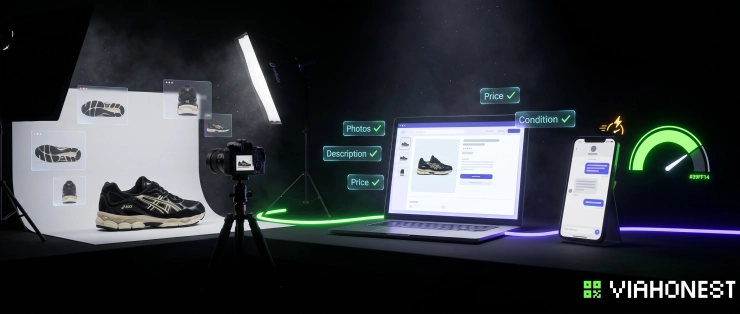
Picking the right platform is half the battle. The other half is how you actually list. The sellers who consistently outperform aren't always the ones with the best inventory. They're the ones with the cleanest process.
Photos do most of the heavy lifting. Natural light, plain background, multiple angles, close-ups of any flaws. A pair that looks dim or cluttered in photos sells for less even if it's in perfect condition. Take five minutes more, charge twenty dollars more. That's the typical exchange rate.
Titles and descriptions should be accurate and specific. Include the full model name, the colorway, the size, the condition, and any relevant detail about the box or accessories. Vague listings get ignored. Honest specific ones get bought.
Price based on real market demand, not what you wish your shoes were worth. Sold comps from the last 30 days are far more useful than asking prices on active listings. Adjust if a pair sits without bites for more than a week.
Disclose condition honestly. Hidden flaws turn into returns, disputes, and bad ratings. A small mark mentioned upfront costs you a few dollars; a small mark discovered after purchase can cost you the sale and your reputation.
Respond to buyers quickly. Most platforms reward sellers who answer messages fast with better search visibility, and it's one of the easiest edges to gain.
And over time, build a reliable seller reputation. Consistent shipping, accurate listings, and clean transactions compound. After a hundred good sales, buyers start trusting you on sight, and that trust translates directly into higher prices.
Common Mistakes Sellers Make
Most resale mistakes aren't dramatic. They're slow patterns that eat into profit over months.
Choosing a platform purely because it's popular is the most common one. Popularity doesn't tell you whether the audience matches your inventory. A platform packed with deal-hunters is the wrong place to list a $400 collector pair.
Ignoring hidden fees is the second. A platform that looks cheaper on paper can end up more expensive than its "pricier" competitor once shipping deductions and payment processing pile up.
Listing the same way on every marketplace is another. Each platform has its own search quirks, audience expectations, and pricing norms. Copy-pasting a listing across all of them leaves performance on the table everywhere.
Overpricing slow-moving pairs traps capital. If a pair has sat for three weeks without movement, the market has already told you the price is wrong. Believing it'll sell "eventually" is how closets fill up with frozen inventory.
Weak photos cost more than almost anything else on this list. A poorly lit, blurry, or cluttered photo can drop a final sale price by 15 to 25 percent on the same pair, in the same condition, on the same platform.
And finally, sellers often skip the question of how trustworthy a platform actually feels to buyers. If the buyer doesn't believe the platform will protect them, they'll lowball or walk away. That's not your fault, but it is your problem.
How ViaHonest Can Help Sneaker Sellers
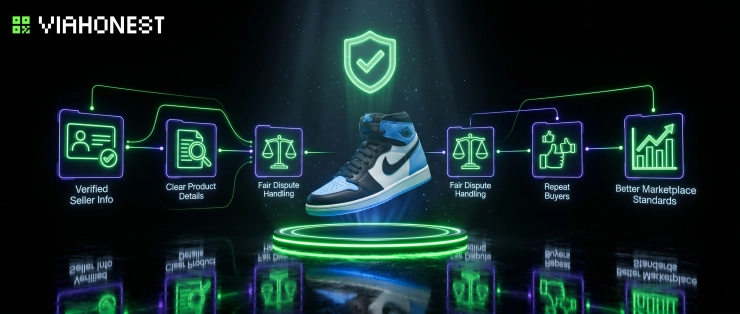
ViaHonest is built around the idea that resale markets work better when both sides have clearer information. For sneaker sellers, that translates into a few concrete advantages:
- More trust in marketplace transactions. Verified seller and product information reduces the friction that costs sellers high-intent buyers.
- Transparency between buyers and sellers. Clear signals about who you are and what you're listing help serious buyers commit faster.
- Easier product and seller evaluation. Buyers spend less time second-guessing and more time clicking buy.
- A more reliable marketplace environment. Sellers operating under transparent standards tend to see fewer disputes, fewer chargebacks, and stronger repeat business.
- Better resale standards across the board. Higher baseline trust raises the floor for everyone, which lifts margins for sellers doing things right.
If you sell sneakers and want a marketplace where good practices are actually rewarded, registering as a seller on ViaHonest takes a few minutes. And if you mostly buy, the same transparency works in your favor on the buyer side.
Conclusion
The best place to sell sneakers or shoes depends on fees, audience, protection, and the type of inventory being sold, not on which platform has the loudest marketing. A sneaker-focused site might dominate for deadstock collabs. A general marketplace might be perfect for everyday pairs. A local app might be the smartest move when you want cash today.
Smart sellers compare platforms by trust, speed, and profitability rather than chasing whichever site happens to be trending. They check fees in full, study real sold prices, take the listing seriously, and treat each transaction like part of a longer reputation arc. Done consistently, that approach is the difference between flipping a pair here and there and building a resale operation that actually scales.
If you want to operate in a marketplace where trust, transparency, and better standards are the norm rather than the exception, ViaHonest is built for exactly that. Whether you're listing your first pair or your five-hundredth, create an account today and join a community that takes safer sneaker resale seriously.