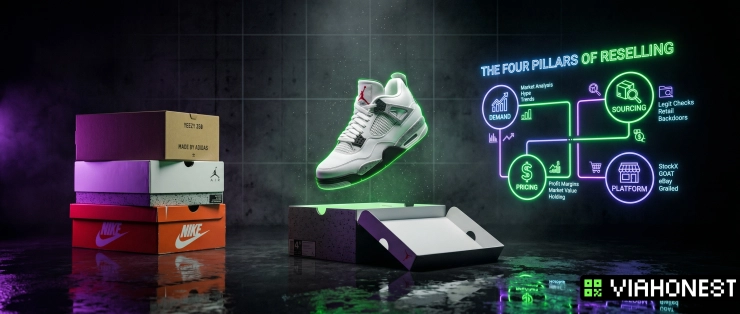
Starting sneaker reselling comes down to four things: understanding what people actually want to buy, sourcing the right pairs, pricing them based on real market data, and selling through platforms that won't burn you on fees or chargebacks. That's the short answer. The longer one is what the rest of this article is about.
A lot of newcomers walk into this assuming the game is pure hype. You snag a pair of Jordans on release day and flip them for double. Sometimes that happens. More often, you're sitting on a pair for three months because you didn't check the size demand, or you priced based on a screenshot from June when the actual market had already cooled by September. Reselling shoes can work as a side hustle and even as a full business, but the people who stick around past the first six months are usually the ones who treated it like research instead of gambling.
This guide walks through how the resale market actually behaves, where to find pairs worth buying, and how to sell sneakers without giving back your margin to fees, fakes, and slow payouts.
What Is Sneaker Reselling?
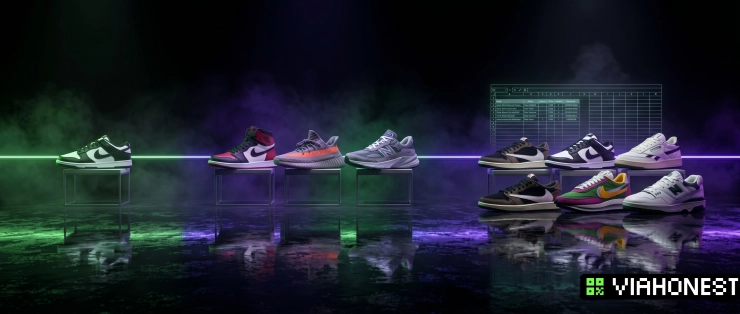
At its simplest, sneaker reselling is buying a pair of shoes at retail (or below) and selling them for more than you paid. The "more" comes from scarcity: limited drops, regional exclusives, sold-out colorways, sizes that retailers ran out of within minutes of release.
The activity sits on a spectrum. On one end is casual flipping: you got an extra pair from a raffle, you sell it, you pocket a hundred bucks, you don't do it again for two months. On the other end is a full-time sneaker business with inventory tracking, multiple sales channels, an LLC, a shipping setup in the garage, and quarterly tax filings. Most resellers live somewhere in the middle, in the side hustle zone, doing maybe 5 to 30 pairs a month for a few hundred to a few thousand in profit.
The reason this hobby pulls in beginners is that the entry bar is genuinely low. You don't need a storefront, you don't need wholesale accounts, you don't need to manufacture anything. The pairs that tend to resell consistently are Air Jordan retros, Nike Dunks during their cycles, Yeezys (which are still moving years after the brand split), the New Balance 990 series, Adidas Sambas and Gazelles during their trend windows, and almost any collab that ships in low numbers: Travis Scott, Off-White, fragment, Sacai, Aimé Leon Dore.
Why People Start Reselling Shoes
The money is the obvious draw, but it's rarely the only one.
For most beginners, sneakers are something they already pay attention to. Turning that knowledge into income feels less like starting a business and more like monetizing a hobby. A pair you'd already drive across town to grab? Now there's an upside if you bought two.
The entry cost compares favorably to almost any other reselling category. You can start with $200 and a single pair. Compare that to retail arbitrage on Amazon, where you're often locked out of brand categories, or to vintage clothing, which demands hours of sourcing for thin margins.
It scales, too. The same workflow that handles one pair handles fifty. And the selling formats are flexible. You can list on a marketplace, do consignment, sell through Instagram DMs, or move pairs at a local sneaker meetup. Different formats fit different inventory.
How to Start Sneaker Reselling
Here's the part where most guides get vague. Let's keep it concrete.
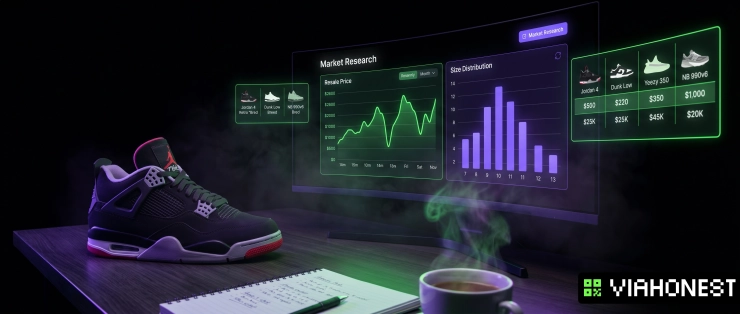
The first move is studying the market before you buy anything. Spend two weeks just watching. Pick three or four models. Say, the Jordan 4, the Dunk Low, the Yeezy 350, and the New Balance 990v6. Track their resale prices daily across sizes. You'll start to see patterns: which sizes move fast, which colorways hold value, what a fair entry price looks like.
Then figure out which brands consistently sell. Jordan, Nike, Adidas, and New Balance dominate the U.S. resale market. Inside those, certain silhouettes have years of resale data behind them. Newer brands like Hoka and Salomon have shown up in resale conversations, but they're not where beginners should be parking inventory yet. The data isn't deep enough to make confident calls.
Set a starting budget you can actually afford to lose. Most resellers who lasted started with somewhere between $500 and $2,000. Less than that, and you can only afford one or two pairs, which kills your ability to learn from variety. More than that, and beginner mistakes get expensive fast.
Decide where you'll source. SNKRS drops, outlet runs, eBay's discounted listings, local Facebook groups, estate sales. Each channel has different yields and different risks. And decide where you'll sell before you buy. This is the step most beginners skip. The best place to sell sneakers depends entirely on what you're selling. A deadstock Travis Scott pair has a different home than a lightly used pair of Sambas in a women's size. Match the pair to the platform before you commit cash to inventory.
If you want a faster way to compare listings, check seller history, and see how a pair is actually moving across the market, signing up as a buyer or seller on ViaHonest gives you that visibility from one place, whether you're sourcing your first pair or your hundredth.
How to Find Sneakers to Resell
Inventory is the part nobody warns you about. It takes the most time, by far.
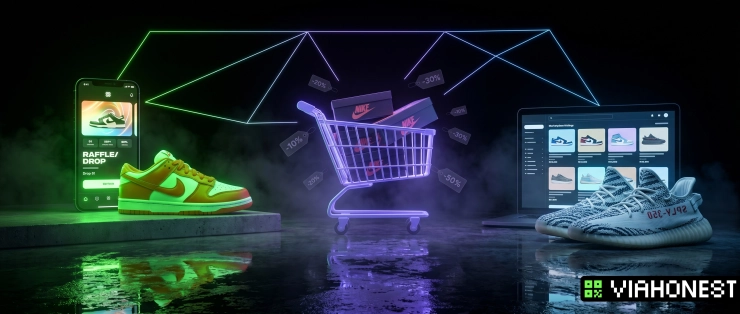
Retail drops through the SNKRS app, adidas Confirmed, the END. raffle system, and brand boutique releases are the obvious starting point. Hit rate is low, maybe 1 in 20 raffles for hyped pairs, but your cost basis is unbeatable when you win.
Outlets and discount finds are less glamorous but underrated. Nike Factory stores, adidas outlets, the clearance walls at Foot Locker, Dick's, and Hibbett. You can find Jordans at 40% off retail that still resell at retail or above. Tuesday mornings, right after restocks, tend to be the sweet spot.
Local marketplaces like Facebook Marketplace, OfferUp, and Craigslist (in some cities) are where patience pays. The trick is filtering for sellers who don't know what they have. Estate cleanouts, parents clearing out a teenage kid's closet, divorce listings. Most listings are junk. Most. The 1 in 50 that isn't can cover the whole month.
Online marketplaces, mainly eBay, still surface bargains if you search the right way. Sort by "ending soon," filter for "Buy It Now," and you'll occasionally catch a mispriced pair from someone who just wants it gone.
Deadstock pairs are unworn, in-box, often from older releases someone forgot they owned. The collector who's downsizing is the dream supplier. They usually price reasonably and they tell the truth about the condition.
Don't dismiss used sneakers either. Lightly used pairs of grail models, like an OG Jordan 1 Bred from 2013 or a worn-once Yeezy 750, can carry strong margins because deadstock versions are basically extinct.
How to Choose Pairs With Resale Potential
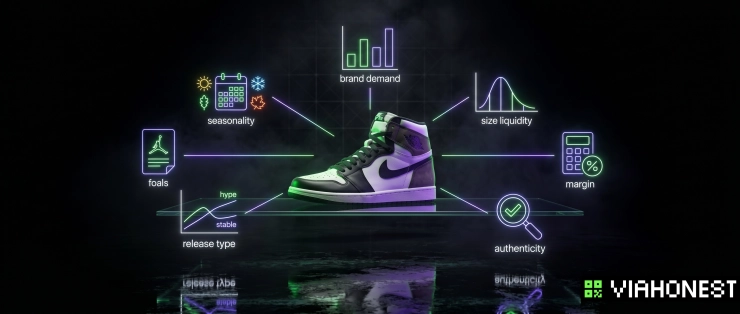
Not every limited release is a moneymaker. Six things to weigh before you swipe the card.
Brand and model demand is the foundation. Use sales history, not Instagram chatter. StockX shows the last 12 months of transactions for free. Look at sales velocity, not just price.
Size availability and liquidity matter more than people think. Men's 9 through 11 sell fastest in the U.S. market. Sizes 7 and below, and 13 and above, can sit longer but sometimes command a premium because of scarcity. Women's-exclusive sizing has its own demand curve, so research it separately.
Retail price versus resale margin is where the math gets real. A pair that retails for $200 and resells for $260 sounds good until you subtract fees, shipping, and the chance it sits unsold for two months. Aim for at least 25 to 30% net margin after everything.
Condition and authenticity come next, and the second part is non-negotiable. If you're buying used, inspect every photo. Ask for additional pictures of the insole, toebox, and outsole. Fakes are everywhere, and they've gotten good.
Limited releases versus stable demand is a strategic choice. Hyped collabs can spike and crash within weeks. General release Jordans and Dunks tend to climb slowly and hold. Mix both if you can: hype for short-term cash, GRs for long-term holds.
Finally, seasonality and trends. Boots and Gore-Tex sell in fall and winter. Low-tops and breathable mesh trainers peak in spring. Trend cycles for silhouettes like the Samba can shift fast, so pay attention to what celebrities and street-style accounts are pushing.
Best Place to Sell Sneakers
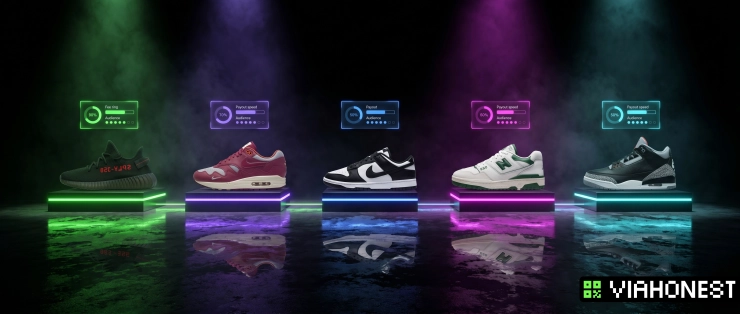
There isn't one. Anyone who tells you otherwise is selling something. The best place to sell sneakers depends on the pair, the buyer, and how fast you need the cash.
Sneaker-focused resale platforms like StockX, GOAT, and Stadium Goods are the heavyweights. They handle authentication, take a cut (usually 9 to 15% in fees plus payment processing), and give you a steady stream of buyers. Payout is fast, typically a few days after the pair clears authentication. Best for deadstock or pairs in excellent condition where you don't want to deal with negotiations.
General online marketplaces, mainly eBay, are still huge for sneakers, especially for vintage pairs, used pairs, and anything outside the StockX catalog. Fees are around 13% with the Authenticity Guarantee program. You get more pricing flexibility but also more flaky buyers and the occasional "item not as described" claim you'll need to fight.
Local selling apps and communities like OfferUp, Facebook Marketplace, and local sneaker Discord servers cut out fees entirely but require trust-building and in-person meetups. Good for clearing inventory you want gone now, or for moving pairs that don't fit the major platforms.
Social media selling on Instagram and TikTok works well if you already have an audience or if you're willing to build one. Lower fees, more direct relationships, but it's a long game and you're responsible for everything from authentication to payment processing.
Consignment stores like Flight Club or local sneaker boutiques take a higher cut (often 20%+) but handle everything for you. Useful if you're holding grails you can't be bothered to list, or if you don't want photos of your basement on the internet.
What to actually compare across platforms: fees, average payout speed, the buyer audience for your specific pair, the strength of seller protection, and how authentication is handled. A platform that's great for one model might be terrible for another.
This is also where platforms built around marketplace transparency matter. ViaHonest is designed to make seller history and listing details visible upfront, which cuts the back-and-forth on questions buyers usually have to ask. If you're trying to build a reputation as a serious seller, having that information on display tends to convert browsers into buyers faster.
How to Sell Sneakers Online Successfully
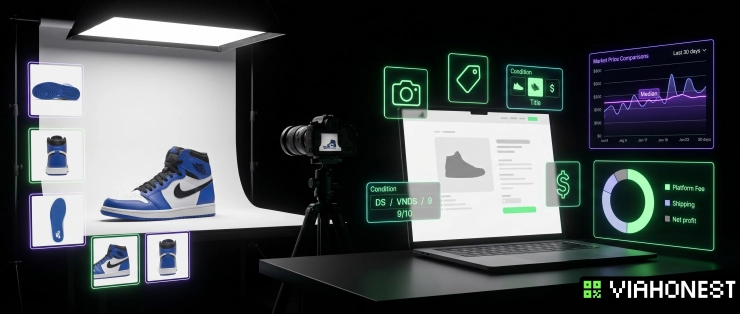
Knowing how to sell sneakers is half listing technique and half discipline.
Clear product photos do most of the work. Natural daylight, neutral background, all sides covered: top, side, heel, sole, insole, tongue tag, and the box. Eight to twelve photos is the baseline. Phone cameras are fine. Composition matters more than gear.
Honest descriptions are the second half. State the year of release, size, condition (use specific language; "deadstock with light yellowing on midsole" beats "great condition"), and any flaws. Buyers who feel surprised file disputes. Buyers who feel informed leave positive feedback.
Rate condition using the community standard: DS (deadstock, never worn), VNDS (very near deadstock, tried on indoors), 9/10, 8/10, and so on. People searching for "VNDS Jordan 1" mean it. Don't fudge the labels.
Check the market price before listing. Pull comps from the last 30 days, not the last 12 months. Pricing above the market means your pair sits. Pricing below means you left money on the table. Match the median and adjust based on your pair's actual condition.
Respond to buyers quickly. Same-day replies convert. Next-day replies often lose the sale to someone faster. And account for shipping, fees, and returns upfront. Every platform takes a cut, shipping a pair domestically runs $12 to $18 depending on service, and you need to factor it in before you set a price, not after the sale closes.
Common Mistakes Beginners Make
Most early losses come from the same handful of errors. Buying only hype pairs is the big one. Hype is volatile, and a pair that resells for $600 in week one can drop to $280 by week six. Ignoring fees and shipping costs is the second; a $100 "profit" becomes $40 after a 12% platform fee, $15 shipping, and a $5 box upgrade.
Then there's overpricing. Sentimental pricing (the "I paid X, so I should get Y" trap) doesn't move pairs. The market doesn't care what you paid. Selling without checking authenticity is the worst-case mistake, because selling a fake (even accidentally) gets accounts banned and reputations destroyed in this community. Weak photos and lazy descriptions are the easiest fix and somehow the most common problem. And investing too much too early. Start small. The fastest education is making five $40 mistakes, not one $400 mistake.
How ViaHonest Helps Sneaker Resellers
A lot of the friction in reselling shoes comes down to trust. Buyers worry about fakes. Sellers worry about chargebacks. Both sides waste time chasing information that should be visible from the start.
ViaHonest is built around closing that gap. The platform focuses on marketplace transparency, so listing data, seller activity, and verification status are surfaced clearly rather than buried under three menus. Verified seller profiles and transparent transaction histories build trust between buyers and sellers without anyone having to ask awkward questions in DMs. Comparing listings across the marketplace is straightforward, so you can size up your competition without bouncing between five tabs. Transactions are supported with payment handling and dispute resolution built in. And the overall standard for what a listing should look like (what information should be disclosed, what verification should exist) sits higher than on most general marketplaces. That matters most when you're selling pairs above the $500 mark, where buyer hesitation is highest.
For sellers, this translates to listings that convert faster because buyers don't have to dig for information. For buyers, it means less risk of buying into a deal that falls apart at delivery.
Reselling shoes starts with market research, smart sourcing, and choosing the best place to sell sneakers for each specific pair you own. That hasn't changed and probably won't.
What gets people in trouble isn't lack of access. There's more information about sneaker resale online than any one person can read. It's skipping the boring parts: pulling sales comps, checking size demand, reading actual sold listings instead of asking prices, building a clean listing template, accepting that some pairs will sit and that's part of the math.
Success in this market depends on more than hype. It depends on pricing discipline, authenticity, presentation, and the trust you build with buyers over time. Whether you're flipping a single pair next month or planning to make this your main income by next year, treating it as a real operation, with real records and real research, is what separates the resellers still in the game next year from the ones who quit after their first dead inventory.