
The honest answer most resellers won't tell you upfront is this: the best platform to resell sneakers depends entirely on what matters most to you as a seller. Fees, buyer trust, speed of sale, audience size, seller protection, payout timing. No single marketplace wins on every category, and anyone claiming otherwise is usually trying to sell you a course.
Some platforms move inventory in under 48 hours but eat into your margins. Others let you keep almost everything you earn but require you to build your own buyer base from scratch. A few specialize in authenticating rare grails, while others are better suited for clean used pairs that just need a new home. Figuring out which lane fits your inventory is half the battle, and getting it right is what separates resellers who break even from those who actually pay rent with sneaker flips.
Choosing the best place to sell sneakers isn't a small decision either. It directly shapes your profit, your risk exposure, and how easily you can build something repeatable. A bad platform choice can wipe out a 40% margin in fees and shipping mishaps, while the right one can turn a side hustle into a real business. Let's break down what actually matters when you're picking where to list.
What Makes a Good Sneaker Resale Platform?

A strong sneaker resale platform does three things well: it connects you to real buyers who are ready to spend, it protects both sides of the transaction, and it doesn't bury you in hidden costs. Anything missing one of those legs starts wobbling fast.
There's a meaningful difference between general marketplaces, sneaker-focused platforms, and local selling apps, and treating them as interchangeable is one of the most common mistakes new sellers make. General marketplaces give you reach but expect you to handle authentication, disputes, and trust signals yourself. Sneaker-focused platforms handle authentication for you and bring in buyers who already know what a deadstock pair looks like, but they typically charge for that service. Local apps skip shipping headaches entirely but cap your audience to whoever can drive to a parking lot near you.
No single platform serves every seller equally well. A reseller flipping 50 pairs a month of common Jordans has different needs than someone listing one rare Yeezy collab a quarter. The criteria that matter most when you're choosing usually come down to total fee structure (not just the headline percentage), the realistic time-to-sale for your category, how authentication is handled, payout speed, and whether the platform's dispute system actually protects sellers or treats them as guilty by default.
Why Sellers Compare Different Platforms
Smart resellers rarely commit to one marketplace. They test, measure, and rotate, because the variables shift constantly.
Fees and commissions vary wildly. Some platforms take a flat percentage, others stack listing fees, payment processing fees, and shipping markups on top of commission. Two platforms advertising a "10% seller fee" can result in very different take-home numbers once everything settles.
Buyer audiences differ too. One platform might be full of teenagers hunting hyped releases, another dominated by collectors over 30 willing to pay for vintage. If you're selling running shoes that just have life left in them, neither of those audiences is your buyer. You need a marketplace where everyday shoppers actually look.
Speed of sale and payout matter more than people realize. A pair that "sells fast" but holds your money for 14 days creates a cash flow problem if you're trying to reinvest. Authentication and trust options affect what you can list, especially for high-value pairs where buyers won't commit without third-party verification.
Shipping responsibilities and seller protection policies are the quiet deal-breakers. Some platforms refund buyers on flimsy claims and leave sellers absorbing the loss. Others investigate properly. And the gap between selling sneakers specifically versus listing in a broader shoe category often determines whether buyers find your pair at all.
Best Platforms to Resell Sneakers

Rather than naming specific competitors, let's look at the categories of platforms and what each actually does well.
Sneaker-Focused Resale Platforms
These are the dedicated marketplaces built around authentication and hype-driven inventory. They shine when you're selling sought-after releases, limited collabs, or any pair where buyers want a verified guarantee before paying $400 or more. Listings are standardized, pricing is transparent through live bid and ask data, and most of the heavy lifting around buyer trust is handled for you. The trade-off is meaningful fees and stricter standards. A pair with even slight flaws can get rejected during authentication, which is great for buyers but rough on resellers caught off guard.
General Online Marketplaces
Broad marketplaces give you massive reach and flexible listing formats. You can sell almost any sneaker condition, set your own price, write your own description, and reach buyers who might not even know they want what you're selling. The downside is that you handle most of the trust-building yourself. Photos, reviews, response time, and shipping speed all become your responsibility, and buyer protection often tilts in the buyer's favor when disputes pop up.
Local Marketplace Apps
Local apps eliminate shipping costs and most fraud risk because you meet buyers in person. For lower-priced pairs, used sneakers, or anyone testing the waters, this is often the lowest-friction entry point. The catch is reach. You're limited to your metro area, and high-value pairs are harder to move because serious collectors usually live somewhere else.
Social Media and Community-Based Selling
Selling through Instagram, TikTok, Discord communities, and Reddit threads has quietly become one of the most profitable approaches for resellers who build an audience. There are no platform fees, and you control the entire experience. But you also handle payment processing, shipping, disputes, and the very real risk of scams on both sides. It works best once you've established a reputation people trust.
Consignment Stores and Hybrid Resale Models
Physical and online consignment shops take inventory off your hands and handle the selling for you in exchange for a cut. For sellers who don't want to deal with listings, photos, or customer service, this can be worth the percentage. Hybrid models that blend marketplace listings with consignment-style authentication are growing fast, and platforms emphasizing transparency and verified seller information are reshaping what buyers expect from any resale experience.
This is where newer marketplaces focused on trust and seller accountability come in. If you've been frustrated with high fees, slow payouts, or unclear dispute outcomes elsewhere, it's worth setting up a free seller account on ViaHonest and testing how a more transparent environment changes your results.
Best Place to Sell Sneakers Online for Beginners

If you're just starting out, the best place to sell shoes isn't necessarily the one with the biggest name. It's the one where you can list a pair, understand the process, and learn from real feedback without losing money on rookie mistakes.
Beginners do best on platforms with simple listing flows. Drag-and-drop photos, suggested pricing based on recent sales, and clear shipping instructions remove most of the early confusion. Marketplaces with a built-in audience also matter more than they get credit for. You don't have time to build a following while you're still learning what your inventory is actually worth, so listing somewhere with active buyers is non-negotiable in the first few months.
Lower entry barriers (no application process, no minimum sales history, no required photo studio) let you experiment with five pairs and see what happens. That's how you learn pricing. Ease of use isn't about being lazy. It's about preserving your attention for the things that actually move the needle: sourcing better, photographing cleaner, and understanding why one pair sat for three weeks while another sold in three hours.
Best Place to Sell Shoes Based on Your Goals

The right platform changes depending on what you're optimizing for.
- For fast sales, prioritize marketplaces with high buyer traffic and instant-buy options. Auction-based or bid-driven platforms can move inventory in hours when there's demand, but you give up some price control.
- For higher profit margins, lean toward platforms with lower fees or direct social selling once you have a reputation. The math is simple: every percentage point you save in fees is a percentage point that lands in your pocket.
- For rare or collectible pairs, choose platforms with strong authentication. Collectors won't drop serious money without third-party verification, and trying to sell grails on general marketplaces usually means lower bids and more skeptical buyers.
- For used shoes in good condition, look at general marketplaces and local apps. The buyer pool here cares less about deadstock status and more about honest photos and fair pricing.
- For large resale volume, multi-platform strategies almost always beat single-platform loyalty. Listing across two or three marketplaces increases your sell-through rate, even after accounting for the time cost.
- For local in-person transactions, local apps remove shipping and authentication entirely. Just be smart about meeting spots and payment methods.
How to Choose the Best Place to Resell Shoes
When you're evaluating any platform, work through this checklist before committing inventory:
Compare total platform fees, not just the headline commission. Add up listing fees, payment processing, shipping costs the platform forces on you, and any payout fees. The real number is usually 3 to 8 percentage points higher than what's advertised.
Check buyer demand for your specific type of inventory. A platform crushing it for hyped releases might be a graveyard for clean used runners, and vice versa. Browse sold listings, not active ones, to see what's actually moving.
Review authentication and trust systems. If you're selling anything over $200, the platform's verification process matters more than its fee structure. Buyers won't pay premium prices into systems they don't trust.
Understand shipping responsibilities. Does the platform provide labels? Cover insurance? Handle lost packages? These details quietly determine whether one bad shipment wipes out a month of profit.
Evaluate payout timelines honestly. "Same day" payouts often come with fees. "Free" payouts often take a week or more. Match this to your cash flow needs.
Look at dispute and return policies from the seller's perspective. Some platforms refund buyers automatically on almost any claim. Others investigate. The difference shows up the first time you get an unfair complaint.
For sellers who want a marketplace built around transparent fees and clear dispute standards, creating a ViaHonest seller account is a low-risk way to compare how a trust-first platform handles these details.
How to Sell Sneakers More Successfully on Any Platform
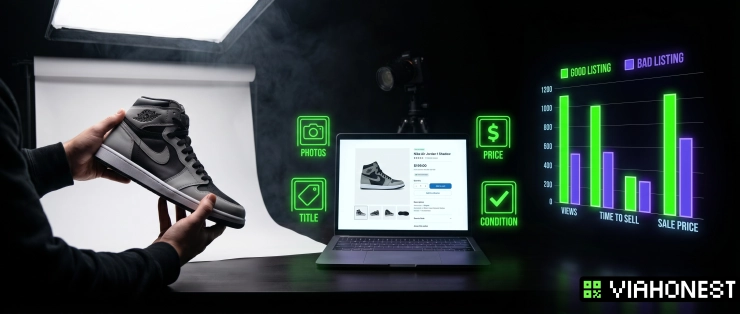
Platform choice matters, but execution matters more. The same pair listed by two different sellers can produce wildly different results.
Use clear product photos with consistent lighting and clean backgrounds. Show every angle, including the soles, insoles, tags, and any flaws. Buyers who feel they've seen everything are buyers who don't message you with questions or file disputes later.
Write accurate titles and descriptions. Include model name, colorway, size, year, and condition in the title. In the description, be specific. "Worn 3 times, no creasing, original box included" beats "great condition" every single time.
Price based on real market demand, not what you wish the pair was worth. Look at recent sold listings, not active ones. Active listings tell you what sellers hope to get; sold listings tell you what buyers actually paid.
Disclose condition honestly. Hiding a heel scuff to bump the price by $20 will cost you $80 in returns, fees, and reputation damage. Resellers who last in this business are the ones whose photos match reality.
Respond to buyers quickly. Most platforms factor response time into search ranking, and a buyer who gets a fast, professional answer is far more likely to close.
Build a reliable seller reputation slowly and protect it carefully. One unhappy buyer who feels ignored can leave a review that costs you dozens of future sales.
Common Mistakes Sellers Make
A few patterns trip up almost every reseller at some point.
Choosing a platform only because it's popular is the most common one. Popularity doesn't mean profit. The most-talked-about platform in your feed might be the worst fit for the specific inventory you're holding.
Ignoring hidden fees is the second. Sellers focus on the commission percentage and forget to count payment processing, shipping markups, return fees, and currency conversion costs. The headline rate is almost never the real rate.
Listing the same way on every marketplace doesn't work either. Each platform has its own buyer psychology, photo norms, title conventions, and pricing expectations. Copy-pasting the same listing everywhere is a guaranteed way to underperform on at least two of them.
Overpricing slow-moving pairs ties up capital you could be using to source better inventory. If a pair sits for 60 days, the market is telling you something. Listen.
Weak photos kill more listings than weak pricing. A $400 pair photographed on an unmade bed with bad lighting will sell for $300 or not at all. A $300 pair photographed cleanly will often clear $350.
Not checking how trustworthy a platform feels to buyers is the quiet killer. If buyers don't trust the marketplace, your beautifully listed pair sits no matter how good your photos are.
How ViaHonest Can Help Sneaker Sellers

ViaHonest is built around a simple premise: better resale standards benefit everyone in the transaction, and trust shouldn't be an afterthought. For sellers, that translates into a few practical advantages worth understanding before you list anywhere else.
Trust gets built into the process rather than left to chance. Verified seller information and clear product details mean buyers walk in already knowing what they're getting, which cuts down on the back-and-forth messaging that drains your time on other platforms. Transparency runs both ways too. Standardized listing practices and clear communication channels give sellers a consistent framework to work with, so you're not reinventing your approach every time you post a new pair.
Because product and seller information is easier to evaluate, buyers commit faster. Fewer questions, fewer abandoned carts, fewer cold leads. Sellers operate inside a predictable environment with rules that don't shift based on who's complaining loudest, and dispute handling stays consistent across cases. That predictability matters more than most sellers realize until they've been burned by a platform that flips decisions on a whim.
Stepping back, the broader goal is raising the bar across sneaker resale as a whole. Every transaction that closes cleanly on a trust-first marketplace pulls industry standards up a little.
Ready to list on a marketplace built for trust? Creating a ViaHonest seller account takes a few minutes and opens up a buyer base that specifically values transparency. Buyers can sign up just as easily and shop with the same standards working on their side of the deal.
Conclusion
The best place to sell sneakers or shoes always comes down to your specific situation. Fees, audience, protection, and the type of inventory you're moving each pull in different directions, and the platform that wins for one seller can be wrong for another.
What stays consistent is the framework. Compare platforms by trust, speed of sale, and real profitability instead of following whichever name is loudest in your feed this month. Test more than one. Pay attention to where your inventory actually moves and where buyers actually pay fair prices. Treat platform choice as an ongoing decision, not a one-time commitment.