If you're trying to figure out which Nike Dunks are actually worth flipping, the short answer is this: SB collaborations with real cultural weight and limited production carry the strongest resale margins, and the gap between a profitable pair and a flat one is usually wider than beginners expect. Some rare Nike Dunks have closed at the kind of numbers that used to be reserved for collectible cars and contemporary art. The most expensive dunks on record have crossed into five and even six figures, and the broader market for Dunks remains one of the most liquid corners of the entire sneaker resale economy.
The reason Dunks command this kind of attention traces back to 2020, when the SB Dunk silhouette quietly took over sneaker culture and never gave the ground back. Rare collaborations now move between $10,000 and $80,000 at high-end auctions, and the broader retail-to-resale spread on standard releases sits comfortably above what most other silhouettes deliver. This guide walks through which Nike Dunks are worth reselling right now, what actually makes a Dunk valuable beyond hype, and how to sell them in a way that protects your margins instead of giving them away to platform fees.
Why Nike Dunks Hold Strong Resale Value
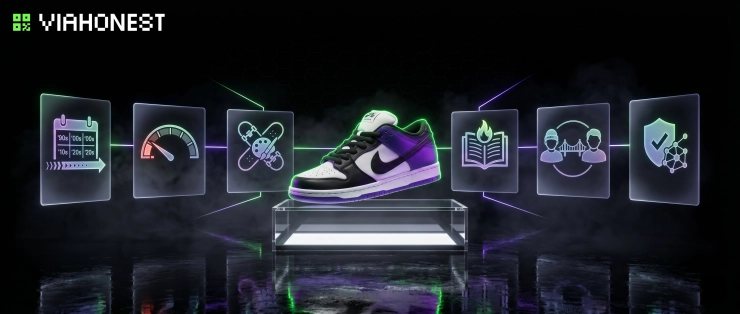
Not every Dunk is worth your money or your time. The pairs that consistently deliver resale value share a tight set of characteristics that experienced flippers learn to recognize fast:
- Cultural staying power. The Dunk silhouette has been part of skate culture for over twenty years, which means demand isn't dependent on a single moment. The pair that hyped in 2020 is still moving in 2026.
- Limited production runs. Nike doesn't mass-produce SB collaborations the way it does standard Dunk Lows. When 5,000 pairs hit the market and 100,000 people want them, the gap is your margin.
- Collaborator credibility. Drops tied to skaters, brands, and artists with real cultural standing tend to outperform pairs with weaker associations. A name without weight behind it doesn't move price.
- Storytelling and lore. Pairs with backstories (a discontinued release, a regional exclusive, an inside joke that became a colorway) attract collectors who buy for context as much as for the shoe itself.
- Cross-generational buyer pool. Dunks pull buyers from skaters in their thirties who remember the originals all the way down to teenagers discovering the silhouette through social media. That width of audience keeps prices supported.
- Aftermarket infrastructure. Verified resale channels and authentication services exist for Dunks at a level that smaller silhouettes can't match, which keeps the market liquid even when broader sneaker enthusiasm cools.
When you're evaluating any pair for resale, the question isn't whether it's a Dunk. It's whether it hits enough of the six characteristics above with real weight. Pairs that only check one or two boxes are usually the ones you see sitting on listing pages for months without selling.
Most Expensive Nike Dunks Ever (Grail List)
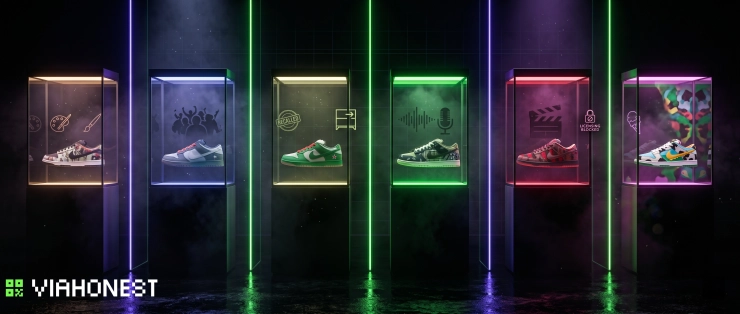
A handful of pairs sit at the top of the Dunk resale ladder, and they tell you a lot about what the market actually values. These are the grails that show up in collection videos and auction headlines, and they set the ceiling for what's possible in the silhouette.
Nike SB Dunk Low Paris (2003)
The Paris is the original blueprint for what an SB Dunk grail looks like. Produced in extremely limited numbers and featuring artwork by Bernard Buffet, only around 200 pairs ever existed, which puts it in a different scarcity tier from almost anything else on the market. The Paris has reportedly closed at $42,000 at Sotheby's in 2021, with deadstock pairs in original condition occasionally crossing higher numbers in private sales. The Paris is what people mean when they talk about the most expensive dunks in collector history.
Nike SB Dunk Low Pigeon (2005)
The Pigeon caused literal riots in New York when it released, with police closing down the Reed Space launch as crowds spilled into the streets. That cultural moment is baked into the pair's value forever. Deadstock examples have moved in the $30,000 to $50,000 range, and even worn pairs with documented provenance pull serious money. The story is half the value here, which is the reason this pair has stayed at the top of grail lists for two decades running.
Nike SB Dunk Low Heineken (2003)
Heineken pulled the colorway right after launch, which turned an already-limited release into one of the rarest Dunks in circulation. Deadstock pairs have reportedly closed in the $15,000 to $25,000 range depending on condition, and the lore around the discontinuation keeps demand strong even decades later.
Travis Scott x Nike Dunk Low
The Travis Scott Dunk is the modern grail that proved the model still works in 2020 and beyond. Limited production combined with one of the most marketable names in music turned this pair into the standard reference for what current collaboration value looks like. Pairs have closed at $1,500 to $3,000 depending on size and condition, with select sizes and friends-and-family colorways pushing significantly higher.
Nike SB Dunk Low "Freddy Krueger" (2007)
Pulled before official release due to licensing issues with the film franchise, only around 30 pairs are believed to have made it out into the wild. Authenticated pairs trade in the $25,000+ range when they appear, though appearances are rare enough that the pair is genuinely hard to source even with money in hand.
Ben & Jerry's "Chunky Dunky" (2020)
The Chunky Dunky is the more accessible grail on this list, with current resale values in the $1,500 to $4,000 range. The cultural moment around its release, combined with the genuinely fun design and the Ben & Jerry's partnership, gives it staying power that purely hype-driven pairs lack.
What ties the grail list together is a clear pattern. Genuine scarcity, real cultural moments, and stories that get retold every time the pair surfaces. These aren't pairs you're going to source at retail in 2026. But understanding what makes them valuable helps you spot the next generation of grails before they're obvious to everyone.
Best Nike Dunks to Resell Right Now
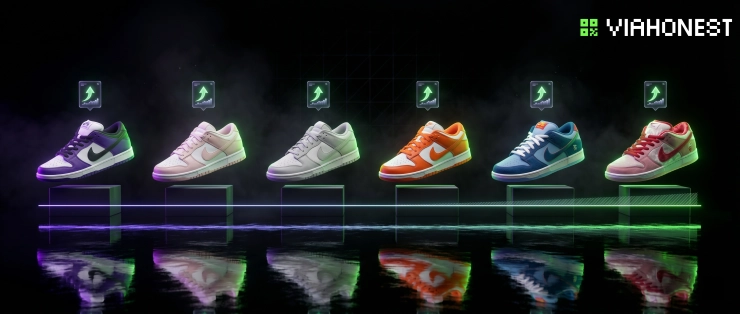
Most resellers won't be flipping six-figure grails. The realistic question is which Dunks available today carry strong enough margins to justify your time and capital. These categories of pairs consistently outperform the average release:
- Recent SB collaborations from established skaters and brands. Limited production, strong buyer pools, and resale margins typically running 100 to 300 percent above retail in the first six months after release.
- Women's exclusive Dunk Lows. Often overlooked by general resellers, which keeps competition lower while demand stays strong, especially for the more design-forward colorways.
- Regional exclusive releases. Pairs released only in specific markets create instant scarcity for US buyers. The research effort to identify these in advance pays back in stronger margins on lower competition.
- Anniversary and retro reissues of original SB colorways. Nike periodically brings back classic SB designs, and these tend to perform well because they tap into nostalgia from buyers who missed the originals.
- Collaboration sequels with strong first releases. When a partnership delivers a hit, the follow-up release usually carries momentum forward. Watching for these patterns is one of the most reliable ways to identify good upcoming flips.
- Pairs with documented production caps. When Nike explicitly limits a release rather than just calling it limited in marketing language, the scarcity is real and the resale market responds to it.
The smart move for most resellers is to focus on rare nike dunks with provable scarcity rather than chasing every drop the SNKRS app pushes. Real limited releases hold their value over time. Generic releases marketed as limited usually flatten out within months as the actual production numbers become clear.
Nike Dunk Low vs High vs SB: Which Is Better to Resell?
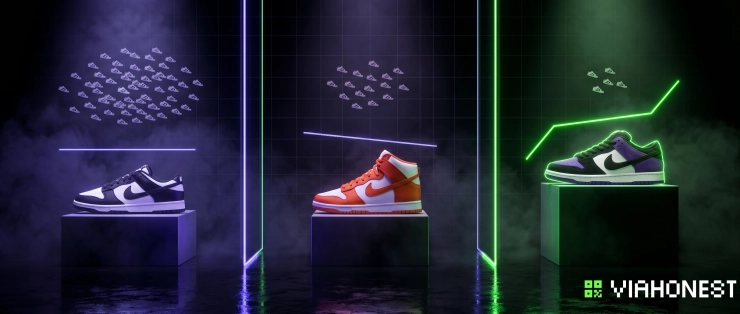
The three Dunk variants behave very differently on the resale market, and understanding the differences shapes which pairs you should actually pursue.
Nike Dunk Low
The Dunk Low is the most accessible variant and the highest in production volume. Standard colorways often sit close to retail or move at modest premiums of 20 to 50 percent. The Low becomes profitable when collaborations or genuinely limited colorways enter the market, but standard general releases rarely deliver strong margins because supply tends to keep pace with demand. For beginners, Lows are useful for learning the market without major capital risk, but the upside is capped on most pairs.
Nike Dunk High
Dunk Highs occupy a smaller slice of the resale market with thinner liquidity. Standard Highs often perform worse than Lows at the same retail price because the silhouette has narrower buyer appeal. The exception is collaboration High releases or specific retro colorways with real history, which can outperform their Low counterparts when buyers want the more distinctive silhouette.
Nike SB Dunk
SB is where the real resale action happens. SB collaborations are the source of nearly every Dunk on the grail list, and current SB releases consistently outperform standard Dunk Lows and Highs by significant margins. The downside is that SB releases are also the hardest to secure at retail, with raffle systems and limited regional availability making sourcing competitive. The trade-off is straightforward: harder to acquire, far better margins once you do.
For most resellers focused on building actual income rather than chasing trends, SB collaborations and limited colorway Lows are where the math consistently works. Highs make sense as a secondary focus or when a specific collaboration justifies the silhouette.
How to Resell Nike Dunks: Step-by-Step
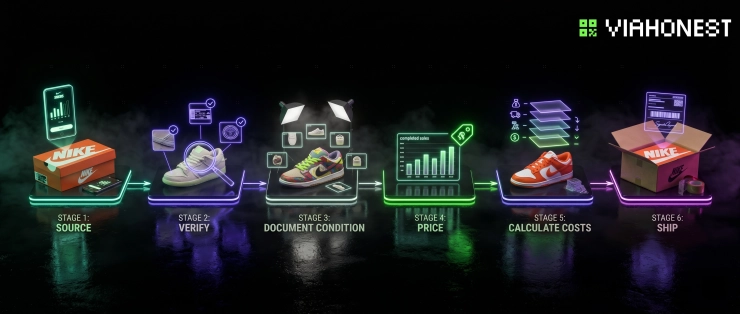
A profitable Dunk flip follows a predictable workflow. Skipping any step is where margins disappear:
Step 1: Source the pair correctly
For new releases, this means raffle entries through official channels, the SNKRS app, and authorized retailers. For older or already-released pairs, sourcing through verified secondary platforms protects you from the authenticity issues that come with informal channels. A counterfeit Dunk that you didn't catch becomes your problem the moment you list it.
Step 2: Verify everything before listing
Check the box label, the inside tag, the stitching quality, the stamp placement on the sole, and the weight of the pair against verified references. Compare against high-resolution photos of authenticated pairs in the same colorway. Dunks are one of the more counterfeited silhouettes in the market, and the fakes get more convincing every year.
Step 3: Document condition with brutal honesty
Photograph the box, the inside, the soles, every angle of the upper, and any flaws no matter how minor. Buyers paying premium prices on rare pairs scrutinize listings carefully, and a flaw they discover after purchase becomes a return or a dispute. Honest documentation closes more sales than polished marketing copy.
Step 4: Price based on completed sales
Look at what pairs in your exact size and condition actually sold for over the last 30 days, not what active listings are asking. The gap between asked and paid on Dunks can run 20 to 40 percent. Pricing based on hopeful asks instead of real closes is the single fastest way to end up holding inventory for months.
Step 5: Factor in every cost before deciding to list
Platform fees. Payment processing. Shipping with insurance and tracking. Taxes if applicable. State sales tax compliance if you're crossing meaningful volume. The pair that looks like a $400 profit at the sticker price might net $260 after every cost is accounted for, which changes whether the flip was worth your time at all.
Step 6: Ship with protection that matches the value
Use the original box, wrap it in a shipping box, include any extras the pair came with, and use signature-required tracked shipping for anything above $200. Saving twelve dollars on shipping is meaningless if a package vanishes en route on a $1,500 pair.
If you want to handle this entire workflow inside a platform built around verification rather than after-the-fact authentication, registering as a seller on ViaHonest gives you a structured environment where authenticity, provenance, and secure transactions are built into the listing itself. That setup is particularly valuable for higher-priced Dunks where buyer trust is the bottleneck between an interested viewer and an actual sale.
Best Platforms to Resell Nike Dunks
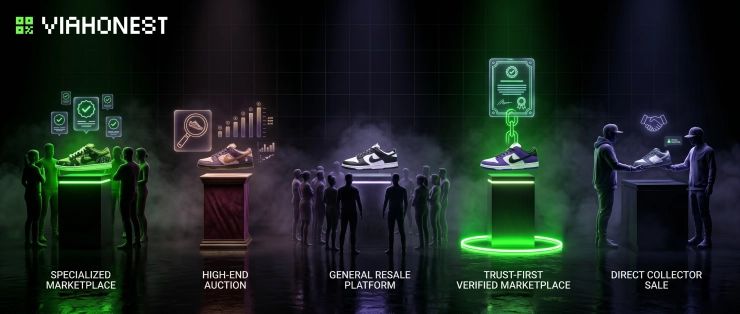
Where you list a pair affects your final profit, your sell-through speed, and how much trust you can establish with serious buyers. Most experienced Dunk resellers use multiple types of platforms, matching the pair to the audience most likely to convert on it.
- Specialized sneaker marketplaces. Built around sneaker audiences, with their own authentication processes that protect both sides. Fees tend to be higher in exchange for faster sales on hype pairs and strong buyer trust on collaborations.
- High-end auction platforms. For grail-tier Dunks with documented provenance, traditional auction channels still set the ceiling for what serious collectors will pay. The bidding format works in your favor when the pair has genuine scarcity.
- General resale platforms. Wider audiences but more competition and weaker buyer trust around authenticity. These work better for less hype-dependent pairs where the lower fees outweigh the slower sell time.
- Trust-first marketplaces with built-in verification. Newer platforms designed around verified listings and on-chain ownership records are increasingly relevant for higher-value Dunks, especially when buyers are paying premium prices and want to know exactly what they're getting.
- Direct sales to known collectors. For very rare pairs, direct relationships with serious buyers can deliver the best prices with zero platform fees. The catch is that this only works once you've built genuine credibility in the collector community, which takes years.
The pattern that works long-term is matching the platform to the pair. A modern collaboration with strong hype might sell fastest on a specialized marketplace. A grail with real scarcity might do better at auction. A standard SB Low with steady demand might be the easier candidate for a trust-first platform with lower fees and verified provenance built into the transaction.
For buyers chasing rare Nike Dunks without rolling the dice on authenticity, registering on ViaHonest as a buyer gives access to listings backed by verification at the listing level rather than after the fact. That's a genuine difference when you're paying four figures for a pair you haven't held in your hands.
How ViaHonest Helps Nike Dunk Resellers
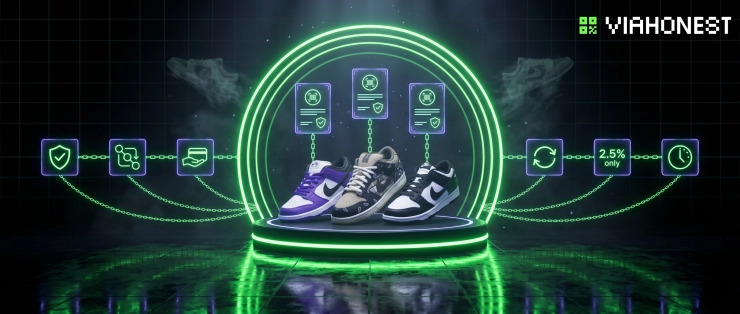
Most of the friction in Dunk resale traces back to the same root problem: uncertainty on both sides of the transaction. Buyers worry about counterfeits in a market saturated with high-quality fakes. Sellers worry about chargebacks and disputes that drain accounts even on legitimate sales. ViaHonest was built specifically to remove that uncertainty by layering verification and provenance tracking directly into the listing itself, not as an afterthought.
Here's what that translates to for Dunk resellers in practice:
- Every listed pair can carry verified authenticity, which lets sellers command premium prices and gives buyers confidence to pay them.
- Ownership history is documented on-chain. Buyers know exactly who owned the pair, when, and how it was stored across previous transactions.
- Secure transaction flows protect both sides through structured payment handling that significantly reduces chargeback risk on high-value pairs.
- Resale royalties give original sellers a percentage of every future resale. For pairs that appreciate over years, this turns a one-time sale into ongoing income.
- Straightforward registration with no listing fees. The platform takes a 2.5 percent fee only after a sale actually closes, which keeps the cost structure transparent.
- Limited mint mechanics for collaboration drops, useful for resellers who also work with designers or smaller brands releasing capped editions alongside their main resale activity.
Whether you're flipping your first SB collaboration or running a sustained Dunk resale operation, creating a ViaHonest account gives you tools designed for the specific friction points that hurt margins on this category. Verified authenticity. Provenance that holds up. Transactions that don't unwind three weeks after they close.
Conclusion
The best Nike Dunks for resale come down to a consistent pattern that's stayed stable for over two decades: SB collaborations with real cultural weight, production runs that were genuinely capped, and provenance that holds up under scrutiny. Whether you're sourcing the next generation of grails or flipping current collaboration releases for working margins, the framework is the same. Real scarcity beats marketed scarcity. Documented provenance beats good photos. Stories that get retold over years beat hype that fades within months.
Before you commit money to any pair, run the same checklist every time. Retail price versus realistic resale markup. The size you're buying and how it specifically moves in this colorway. The pair's condition and how it photographs. The platform you'll list on and what its fees will actually take out of your final number. The ownership history if you're buying secondhand. These factors decide whether a pair is one of the best sneakers to resell in your specific situation or just another flat listing eating closet space.
When you're ready to sell Dunks with verified ownership built into the listing, and earn on every future resale of the pair, register on ViaHonest. Sellers get a platform built around the kind of trust that lets premium pairs move at premium prices. Buyers get access to authenticated listings without the guesswork that defines most of the secondary market. Either side of the transaction, the result is fewer surprises and more confident decisions on pairs where the dollar amounts make confidence actually worth something.