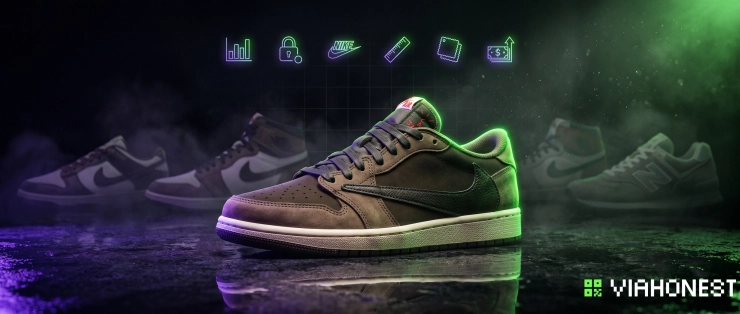
Sneaker reselling has quietly turned into one of the more accessible side hustles in the US. You don't need a warehouse, a degree in fashion, or a network of dealers. What you do need is a clear sense of which pairs actually carry resale value, because most sneakers, even the ones with a hype build-up, don't. The best sneakers to resell tend to share a short list of traits: they're tied to a recognizable brand, the supply was capped from day one, and there's a real audience of buyers waiting on the other side ready to pay above retail.
This guide walks through which sneakers to resell, how to read a pair's resale potential before you spend a dollar, and how to resell sneakers online without burning weeks on listings that never close. It's written for people who are either thinking about flipping their first pair or who've sold a few and want to stop guessing. By the end you'll have a working framework for picking pairs, pricing them, and choosing where to sell.
What Are the Best Sneakers to Resell?
Strip away the noise and a resellable sneaker is just a shoe you can buy at retail (or below market) and sell at a higher price to someone who couldn't get the pair themselves. That's the entire business model. The interesting question is what makes one pair flip for $400 over retail while a near-identical model from the same brand sits unsold for months.
Profit on any given pair depends on six factors that interact with each other. Demand is the obvious one: how many people genuinely want this pair right now. Scarcity matters almost as much, because limited releases and regional exclusives create the gap between supply and demand that resale prices fill. Brand recognition determines how wide the buyer pool actually is. Size affects price in ways beginners underestimate, since the most common men's sizes (US 9 through 11) tend to sit at average resale, while smaller and larger sizes sometimes spike. Condition decides whether you're selling a $500 pair or a $200 pair. And the platform you choose can quietly take 10 to 20 percent off your final number through fees and shipping.
Pick a pair that scores well across most of those six factors and you've got something worth listing. Miss on two or more and the math usually stops working.
Why Some Sneakers Are Good for Resale
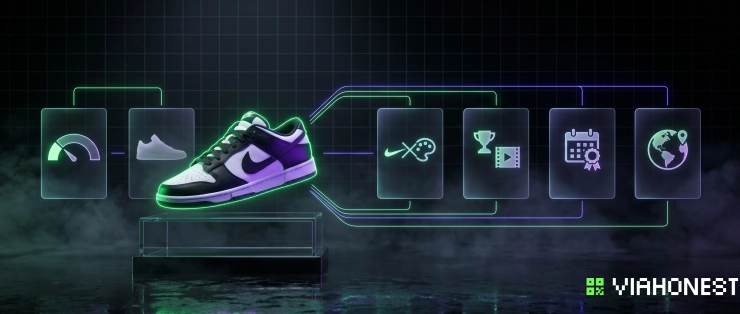
Not every sneaker can be flipped at a profit. The pairs that consistently work for resellers tend to check several of these boxes:
- Limited production runs. When a brand releases 5,000 pairs of a model into a market where 50,000 people want them, the gap is the resale margin.
- Recognizable silhouettes. The Air Jordan 1, Dunk Low, and 550 silhouettes carry name recognition that lets buyers pull the trigger without having to research what they're buying.
- Collaborations with artists, designers, or brands. A standard release becomes a collectible the moment a known name attaches their stamp to it.
- Cultural moments. Pairs worn by athletes during defining games, or featured in films and music videos, hold value long after the original release.
- Anniversaries and retro releases. Sneakers tied to a specific year or commemorative event create a built-in story that drives long-term demand.
- Regional exclusives. A pair released only in Japan or Europe automatically commands resale attention from US buyers who couldn't access the drop.
When you're evaluating sneakers to resell, the goal isn't to find a pair that hits all six. It's to find pairs that hit three or four of them with real weight, because that combination is what drives sustained buyer interest after the initial launch hype fades.
Best Types of Sneakers to Resell
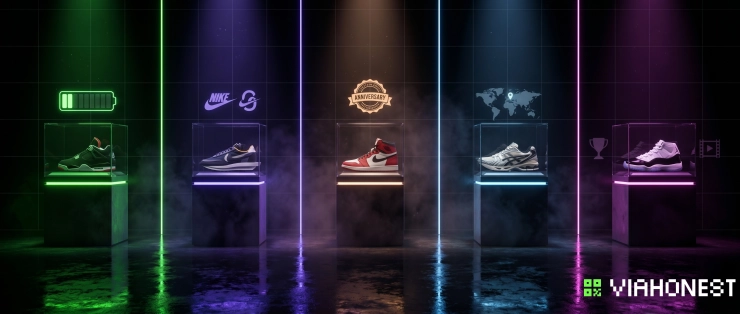
Some categories of sneakers consistently outperform others on the resale market. Knowing which categories carry the strongest margins saves you from chasing pairs that look exciting but don't actually move.
Limited Edition Releases
Limited drops are the backbone of sneaker resale. When a brand explicitly caps production, the resulting scarcity does the marketing work for you. These releases typically sell out within minutes of going live, which means buyers who missed the queue have nowhere to go except the resale market. Air Jordan limited colorways and Nike SB collaborations fall into this category, and they've been the bread and butter of profitable resellers for over a decade.
Collaborations and Designer Partnerships
When a major sneaker brand partners with an outside designer, artist, or fashion label, the resulting pair carries cultural weight that ordinary releases just can't match. Travis Scott collaborations with Nike, Dior partnerships, and Off-White co- designs have all delivered resale multiples that turn a single pair into rent money. The catch is that these drops are also the hardest to secure at retail, since competition for the original release is intense.
Retro and Anniversary Releases
Brands routinely reissue classic silhouettes to mark anniversaries or revive a colorway from a specific era. These retro releases tap into nostalgia among buyers who couldn't afford the original drop or missed it entirely. Anniversary editions of the Air Jordan 1, classic Air Max colorways, and retro Adidas Originals all perform well on the secondary market, especially when the original release year is significant to the broader sneaker culture.
Regional Exclusives
Pairs released only in specific countries or markets create instant scarcity for buyers everywhere else. A model released exclusively through Asian retailers, for example, builds demand in the US that the resale market is the only way to satisfy. These pairs require more research to identify in advance but tend to hold their value longer than standard global releases.
Pairs Tied to Cultural Moments
Sneakers worn during championship games, featured in music videos, or associated with a specific cultural milestone often gain value years after their original release. A pair worn by a notable athlete during a memorable performance can spike in price every time that moment gets referenced. These are harder to predict, but they reward resellers who pay attention to what's happening in sports, music, and film.
Best Sneakers to Resell for Beginners
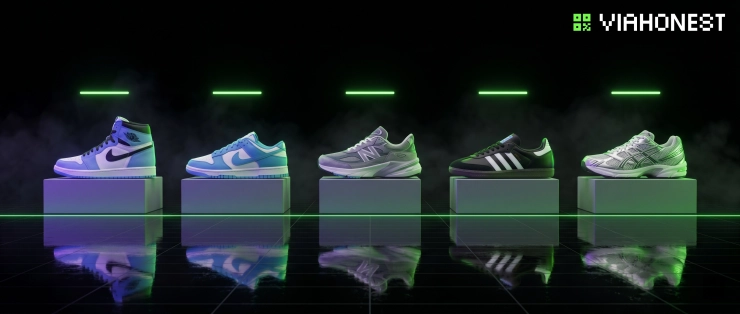
If you're new to reselling, the smart move isn't to chase the rarest, highest-margin pairs. It's to start with models that have predictable demand, reliable resale prices, and enough trading volume that you can actually move the pair quickly. Beginners should focus on these categories:
- Air Jordan 1 retro colorways. Consistent demand across years, well- documented resale prices, and a buyer pool large enough to absorb new listings without long wait times.
- Nike Dunk Low standard colorways. Lower entry prices and steady turnover make these accessible for first-time resellers who don't want to tie up large amounts of capital.
- New Balance 550 and 990 series. Strong adult buyer base, less volatile pricing than hype-driven releases, and easier to source at retail than limited drops.
- Adidas Samba and Gazelle classics. The lifestyle category these sit in has grown steadily, and the silhouettes have name recognition that translates to consistent buyer interest.
- ASICS GEL-1130 and GEL-Kayano series. Newer to the resale conversation but increasingly popular among style-focused buyers, with retail prices that leave room for healthy margins.
The advantage of starting with these categories is that you can build experience reading the market without exposing yourself to the swings of hyper-limited releases, where one mistake on size or condition can wipe out a month of profit. Once you've handled fifteen or twenty pairs in this range, you'll have a better sense of which more limited drops are worth pursuing.
How to Choose Sneakers to Resell
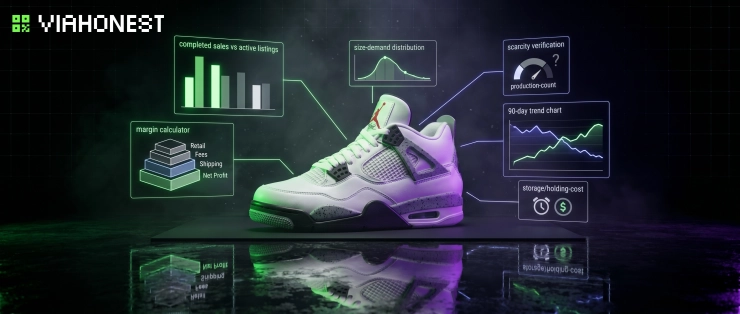
Picking the right pair is where most beginner resellers either build a sustainable income or quietly lose money. Use this checklist before you commit to any purchase:
- Verify current resale prices on actual completed sales, not active listings. Active listings show what sellers hope to get. Completed sales show what buyers actually paid.
- Calculate your real profit after platform fees, shipping, and any taxes. A pair that flips for $100 over retail can easily net only $40 once everything is taken out.
- Check size demand. The same model in a US 11 might sell in days, while a US 7 sits for months at a lower price. Know your audience before you buy.
- Confirm the release has genuine scarcity. Brand marketing often calls a release "limited" when production was actually in the hundreds of thousands.
- Look at how the pair is trending over a 90-day window. A pair that peaked three months ago and has been declining since is usually a worse bet than a pair quietly climbing in value.
- Factor in storage and time. Holding inventory has a real cost, even if it's just opportunity cost on the capital you've tied up in pairs sitting in a closet.
Treating each potential purchase as a small investment decision rather than a gut call is what separates resellers who survive past their first year from those who don't.
How to Resell Sneakers Online
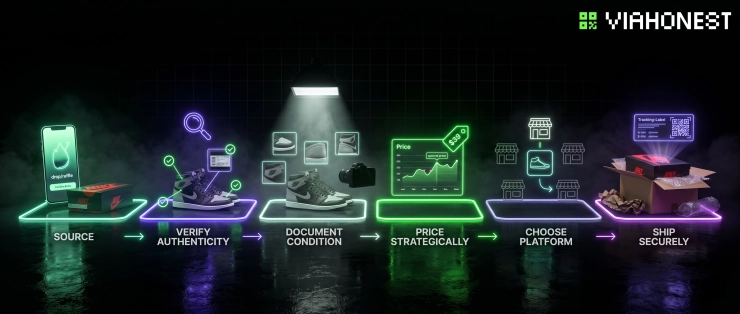
Knowing how to resell sneakers online is a process, not a single decision. Here's the practical workflow that consistent resellers tend to follow:
Step 1: Source the pair
This usually happens through brand release apps (Nike SNKRS being the most well-known), official retailer raffles, and through verified secondary platforms when you missed the initial drop. Sourcing through unofficial channels is risky because of authenticity issues, which become your problem the moment you try to resell.
Step 2: Verify authenticity
Before listing any pair, especially one you sourced second-hand, confirm the shoes are real. Check the box label, the inside tag, the stitching, and the placement of logos against verified reference photos. A pair you sell as genuine that turns out to be fake will cost you the sale, the platform's trust, and potentially your account.
Step 3: Document condition honestly
Take clear photos in natural light. Capture the box, the inside, the soles, and any flaws. Resellers who hide damage might close one sale, but they generate returns, disputes, and negative reviews that damage long-term earnings. Honest documentation actually pulls in more buyers because it removes uncertainty.
Step 4: Price strategically
Set your price based on the recent completed sales for that exact pair, size, and condition. Underpricing leaves money on the table. Overpricing leaves the listing sitting until you cut the price anyway, often below what you would've gotten by pricing correctly the first time.
Step 5: Choose the right platform
Different platforms attract different buyers, and the fee structures vary widely. The platform decision affects your profit as much as the sourcing decision, so it's worth taking seriously rather than defaulting to the first platform you've heard of.
Step 6: Ship securely
Use the original box, wrap it in a shipping box (never ship in just the original box), include any extras like spare laces or hangtags, and use tracked shipping for anything over $100. The cost of a few extra dollars in shipping protection is nothing compared to a lost package dispute.
If you want to streamline this whole process inside a single trusted environment, registering on ViaHonest gives sellers a place to list pairs with verified authenticity built into the system, which removes one of the biggest sources of friction for both sides of the transaction.
Best Online Sneaker Marketplaces
The platform you list on affects your final profit, your shipping requirements, your authentication process, and how quickly the pair actually sells. Most resellers eventually use more than one platform, matching the pair to the audience that's most likely to buy it.
- Specialized sneaker marketplaces. These platforms attract the most focused buyer audiences and usually run their own authentication processes, which protects both sides. Fees tend to be higher, but the trade-off is faster sales on hype-driven pairs.
- General resale platforms. Wider audiences mean potentially more buyers, but also more competition and less buyer trust around authenticity. These work better for less hype-dependent pairs where authentication concerns are lower.
- Trust-first marketplaces with verification. Newer platforms built around verified listings and provenance tracking are increasingly attractive for higher-value pairs, since buyers pay premium prices when they're confident in what they're buying.
- Direct sales through social media. Useful for building a personal brand and avoiding platform fees, but without buyer protection, the risk of scams runs in both directions. Most resellers reserve this for repeat customers they already trust.
- Local pickup options. For higher-value pairs, meeting locally avoids shipping risk entirely. The downside is geographic limitation and the time investment of meeting in person.
The best resellers don't pick one platform forever. They match the platform to the pair, the buyer audience, and the urgency of the sale. A hype-driven release might sell fastest on a specialized marketplace, while a steady seller like an Air Jordan 1 retro might do just as well on a trust-first platform with lower fees.
For buyers looking to purchase authentic pairs without rolling the dice on a fake, registering on ViaHonest as a buyer gives you access to listings backed by verification, which is genuinely useful when you're paying premium prices for limited drops where counterfeits are common.
Common Mistakes When Choosing Sneakers to Resell
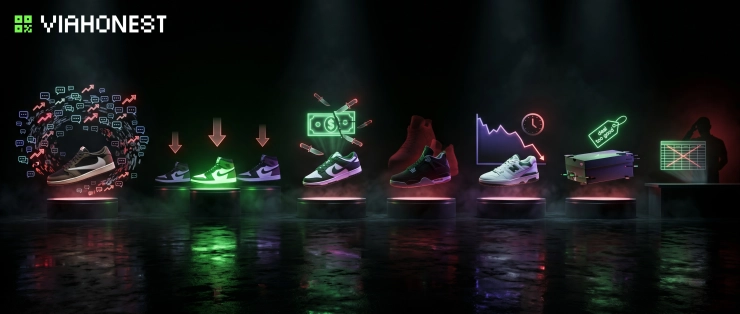
Even experienced resellers fall into the same traps. Watching for these saves you from the kind of losses that take months to earn back:
- Buying based on hype alone. A pair that's trending on social media this week might be flat by the time you actually receive it. Trend-based buying without checking actual completed sales is gambling, not reselling.
- Ignoring size demand. Buying the same pair in every size assuming they'll all sell at similar prices is a common beginner error. Some sizes move quickly at strong margins. Others sit for months at break-even.
- Underestimating platform fees. A 10 percent platform fee plus shipping plus payment processing can easily eat 20 percent of your sale price. If you didn't calculate that before buying, your margins were never as good as you thought.
- Skipping authentication. Selling a pair that turns out to be fake costs you the sale, often gets you banned from the platform, and can lead to chargebacks that drain your account.
- Holding pairs too long. Sneaker resale values typically peak shortly after release, then drift downward over 6 to 12 months. Holding hoping for a future spike usually means accepting a lower price later than you could've gotten now.
- Buying counterfeits accidentally. Sourcing pairs from sellers without verified track records is one of the fastest ways to lose money in this business. The deal that looks too good usually is.
- Not tracking your own performance. Resellers who don't keep records of what they paid, what they sold for, fees, and shipping costs have no way of knowing whether they're actually profitable. Many discover after a year that they've been losing money on volume.
How ViaHonest Can Help Sneaker Buyers and Resellers
Most of the friction in sneaker resale comes from the same source: uncertainty. Buyers worry about counterfeits. Sellers worry about chargebacks and payment disputes. Both sides worry about whether the other side will actually follow through. ViaHonest was built specifically to remove that uncertainty by layering verification and provenance tracking onto the transaction itself.
Here's what that looks like in practice for sneaker resale:
- Every listed pair can carry verifiable authenticity information, which gives buyers confidence and lets sellers command stronger prices.
- Ownership history is documented, so buyers know exactly who they're purchasing from and what condition the pair has been in across owners.
- Secure transactions protect both sides through structured payment flows that reduce the chargeback risk that haunts traditional marketplaces.
- Resale royalties let original sellers earn a percentage when a pair changes hands again, which is useful for pairs that appreciate over time.
- Registration is straightforward, with no listing fees and a transaction fee that only applies after a sale actually closes.
Whether you're a buyer hunting for an authenticated pair, or a reseller looking for a more reliable place to list, creating a ViaHonest account gives you tools designed specifically for high-value resale where trust is the bottleneck.
Conclusion
The best sneakers to resell come down to a short list of characteristics that don't change much from one release cycle to the next: strong genuine demand, supply that's actually capped rather than just marketed as limited, a brand the buyer pool already recognizes, and a clear resale margin once you've subtracted every fee and cost. Pairs that hit those four notes consistently outperform pairs that look exciting on launch day but fade within weeks.
Before you commit money to any pair, run the numbers honestly. Retail price, projected resale price, platform fees, shipping costs, your specific size and its demand profile, the pair's actual condition, and how real the demand looks based on completed sales rather than wishful active listings. Resellers who skip that math don't last long in this market. The ones who do it consistently for every purchase are the ones who turn a hobby into a sustainable side income.
For both new and experienced resellers, ViaHonest offers a way to verify information, document provenance, and complete transactions with the kind of confidence that makes a real difference on higher-value pairs. Use it to check what you're buying and to list what you're selling, and you'll make more informed decisions across every step of the resale process.