Limited edition prints are one of the best ways for artists, photographers, and designers to earn real money from their work. They scale better than originals, they appeal to a wider price range, and they let serious collectors and casual fans both own something from your practice. The catch is that the same qualities that make prints commercially powerful also make them an irresistible target for copycats. The moment your work starts selling, someone is screenshotting it, reprinting it, and listing the result on a dropshipping store for a fraction of your price. In 2026, this problem has gone from occasional annoyance to a structural threat for any creator selling prints online.
Limited edition prints are reproductions of original artwork produced in a fixed, declared quantity, each one signed and numbered by the artist, with the print run permanently closed once sold out. Their value depends entirely on scarcity, authenticity, and the artist's reputation. Copycats undermine all three by flooding the market with unauthorized reproductions, eroding trust, confusing buyers, and dragging down prices on legitimate work. Protecting limited editions in 2026 requires a layered approach that combines authenticity infrastructure, smart edition management, legal basics, and platform-level enforcement.
This guide walks through how copycats actually operate, why traditional protection methods fall short, what artists can do to defend their work, and how a platform like ViaHonest builds verification and brand protection into every print sale so legitimate artists can compete without spending their lives chasing forgeries.
What Makes a Limited Edition Print Actually Limited
Before diving into protection, it is worth being precise about what you are protecting. A real limited edition has four properties.
It has a fixed, declared edition size that does not grow after the fact. Each print is hand-signed and individually numbered, typically in the format 12/50, where the first number identifies that specific print and the second confirms the total edition. It is documented with authenticity records that tie each numbered print to the artist. The print run is permanently closed when the edition sells out, with no future reprints, no "second editions," and no quietly added artist proofs that double the supply.
When any of those properties fails, the edition is not really limited. It becomes an open-ended commercial product wearing the costume of scarcity. Copycats exploit this confusion constantly, selling unsigned reproductions next to your real signed prints and counting on buyers not knowing the difference.
How Copycats Actually Operate in 2026
The threat is not theoretical. Understanding how the copycat economy works is the first step in defending against it.
Screenshot and Reprint
The lowest-effort version is also the most common. A copycat saves a high-resolution image from your shop, your Instagram, or a press feature, then uploads it to a print-on-demand service. Within hours they have listings on multiple marketplaces selling unauthorized reproductions, often at a quarter of your price. Buyers who do not know your work assume they are getting a legitimate print.
Listing Hijack
On large marketplaces, copycats sometimes attach themselves to your existing listing, claiming to sell the same product. Buyers who search for your work end up purchasing from a copycat without realizing the original listing was hijacked. The marketplace algorithm routes orders to whoever has the lowest price or fastest shipping, which is rarely you.
Subtle Variations
More sophisticated copycats change just enough to claim it is "inspired by" rather than copied. They shift colors slightly, crop differently, or change one element. These cases are harder to fight legally because the line between inspiration and infringement becomes a fact-by-fact argument. They are no less damaging commercially.
Edition Inflation
This one is especially insidious because it sometimes happens through the original artist's own behavior. A "limited edition of 50" quietly becomes 50 plus 10 artist proofs, then a second printing for a museum show, then a smaller "open edition" version of the same image. Each addition erodes the original edition's value. Copycats are not always external. Sometimes the danger is failing to enforce scarcity on yourself.
Counterfeit Authentication
The most damaging form of copycat work comes with fake signatures and fake certificates. A reproduction printed on the right paper, signed in the right corner with a convincing forgery, accompanied by a paper certificate that looks legitimate, can fool buyers, gift recipients, and sometimes even resale platforms. This is where the failure of paper-based authentication becomes a direct threat to working artists.
The Drawbacks of Traditional Print Protection
- Watermarks degrade the visual quality of work shared online
- Low-resolution previews discourage engagement and reduce reach
- Paper certificates are trivial to forge with modern printing
- DMCA takedown notices are slow and platform-dependent
- Trademark and copyright lawsuits are expensive and rarely worth it for individual prints
- Hand-numbering is easy to fake without verifiable records
- Edition documentation in spreadsheets gets lost or contested
Why Traditional Defenses Are Not Enough Anymore
Most of the standard advice for protecting prints comes from a pre-internet world. Watermark your images, register your copyrights, file takedown notices, hire a lawyer if it gets serious. None of this is wrong. None of it is sufficient either.
The volume problem is the biggest issue. A single mid-tier artist can have their work reproduced on dozens of unauthorized listings within weeks of a successful release. Filing takedown notices on each one is a part-time job that pulls you away from making art. Most platforms respond slowly when they respond at all, and the copycat is often back up under a new seller name within days.
The verification problem is the second issue. Even when buyers want to support the real artist, they often cannot tell which listing is authentic. They search your name, see fifteen listings, compare prices, and pick one. If the cheapest listing is a copycat, that is where the sale goes. Paper certificates do not help here because buyers are choosing before any certificate enters the picture.
The legal problem is the third issue. Copyright and trademark law work, but slowly and expensively. For a print selling at one hundred dollars, no individual lawsuit makes financial sense. The legal system protects work that is being copied at scale by large institutions. It does not protect work being copied one print at a time by hundreds of small actors.
The real answer is to make verification and brand protection so easy for legitimate buyers that copycats become commercially unviable.
What Actually Protects Limited Editions in 2026
A working defense combines several layers, none of which alone is sufficient.
Verified Digital Authentication
Each print in an edition gets a unique digital authenticity record tied to the artist's verified account. Buyers can verify the print in seconds before they pay. Copycats cannot replicate this because they do not control the platform's verification system. This is the foundation that everything else builds on.
Tracked Edition Sizes
The platform maintains the record of how many prints have been issued and how many remain in the edition. The artist cannot inflate the edition after the fact, and copycats cannot claim a print number that does not exist. Buyers can see exactly where each print sits in the run.
Embedded Identifiers
Many artists now embed NFC chips, micro-QR codes, or specialized inks into the back of each signed print. These survive framing, link to the digital authenticity record, and let any buyer or future owner verify the piece with a phone scan. The verification path runs from physical object to verified digital record to artist account, with no paper certificate that can be lost or faked.
Brand-Owned Listings
Selling on a creator-first platform means your listings carry your verified profile, your brand identity, and your authenticity infrastructure together. Buyers searching for your work see your shop, not a sea of unauthorized listings competing on price.
Active Edition Documentation
Even with platform tracking, smart artists keep their own clear records of every print sold, including buyer details where possible, the date of sale, and the print number. This makes future disputes easier to resolve and supports any legal action that does become necessary.
Public Communication About Authenticity
Educate your audience. Most copycats survive because buyers do not know how to verify. A pinned post on your profile, a section on your shop, and a sentence in every product description explaining how to verify a real print of yours costs you nothing and shifts the market toward your authentic listings.
How the Layers Compare on Effectiveness
The clearest way to see how the protection layers stack up is to think about what each one actually defends against.
Watermarks and low-res previews mostly defend against casual screenshot theft. They do not stop a determined copycat who can find your work in high resolution through press features, exhibitions, or buyer photos. The cost is that they make your work less shareable, which hurts marketing.
Paper certificates defend against nothing meaningful in 2026. They look authoritative, they are easy to forge, and they cannot be verified remotely. They function as souvenirs, not security.
Copyright registration defends against large-scale commercial infringement and gives you legal standing if a case is worth pursuing. It does almost nothing against the small, fast, scattered copying that dominates online today.
Trademark protection defends your brand name and identity but not the artwork itself. It is useful for stopping copycats from using your name to sell their reproductions, but does not stop them from selling unauthorized prints under their own name.
DMCA takedowns defend against specific listings on platforms that comply with US law. They are reactive, slow, and require constant monitoring. Effective for known infringers, useless for the broader market.
Verified digital authentication defends against the underlying problem of buyer confusion. By making it trivial for buyers to confirm authenticity, it routes purchase intent toward legitimate listings before any takedown is even needed.
Embedded physical identifiers defend the secondary market by letting any future owner verify a print's authenticity decades after the original sale.
Brand-owned platform listings defend by consolidating buyer trust. When fans know exactly where to find your real work, copycats lose their main advantage of being indistinguishable from authentic listings.
The combination of the last three is what actually works in 2026. The first four are supplements, not solutions.
How Modern Platforms Build Protection Into the Sale
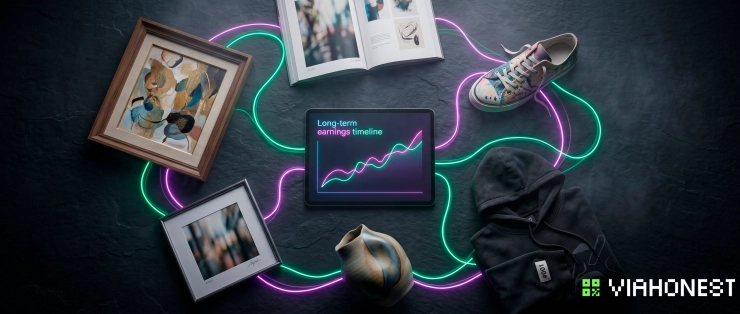
The shift that matters most is that protection used to be the artist's job, done separately from selling. Now it is becoming a property of the platform itself. When a creator lists a print on a platform built for verified sellers, authenticity infrastructure, edition tracking, and brand consolidation come included.
Platforms like ViaHonest bake brand protection into the default experience. Each artist has a verified profile that buyers can identify. Each print gets a unique digital record. Edition sizes are platform-tracked and cannot be inflated after the fact. Buyer-facing verification is one tap, not a phone call to the artist's gallery.
Why This Approach Matters for Artists
- Every print you sell carries built-in authentication from the moment it ships
- Edition sizes are tracked by the platform, removing any temptation or accusation of inflation
- Your verified profile becomes the authoritative source for buyers searching your work
- Copycats cannot replicate the verification layer regardless of how good their reproduction looks
- Time spent chasing infringers can go back into making new work
- Provenance follows each print into the secondary market automatically
Why It Matters for Collectors
- Confidence that the print they are buying is authentic and properly numbered
- One-tap verification from physical object to artist account
- Protection of resale value because authenticity travels with the work
- Clear support for the actual artist rather than a copycat operation
- Easier insurance, appraisal, and estate planning for collected work
If you have been losing sales to copycats while building your reputation, there is a way to take the floor away from them. Start selling on ViaHonest and list your next limited edition with built-in authentication and brand-owned verification. Copycats lose their main advantage the moment your buyers can confirm authenticity before they pay.
How to Structure a Limited Edition the Right Way
Beyond platform protection, the way you structure the edition itself matters. The strongest editions follow a few consistent rules.
Declare the Edition Size Publicly Before Sale
State the total edition size clearly in the listing, in your announcement, and in your authenticity records. Do not leave it ambiguous. Buyers should know whether they are looking at an edition of 25 or 250 before they decide.
Include All Variants in the Edition Count
If you produce 10 prints plus 2 artist proofs, the edition is 12, not 10. Declaring this upfront prevents future disputes and protects buyer trust. Hidden proofs are one of the easiest ways for artists to accidentally damage their own market.
Number Each Print Individually
Every print gets a unique number. Not "limited" without a number, not "one of many." A specific print number signed by you, recorded by the platform, and traceable to a buyer.
Close the Edition Permanently
When the run sells out, do not reprint. Do not release a "second edition" with different colors. Do not quietly add prints later. The integrity of the closed edition is what makes future editions credible.
Document Everything
Keep your own records of every print sold, even if the platform also tracks them. Redundancy protects you against platform changes, account issues, and future disputes.
Common Sizes for Print Editions
Different categories tend to settle on different edition sizes, and choosing the right scale affects both pricing power and protection strategy.
- 5 to 25 prints for high-value originals reproduced as fine art editions
- 25 to 100 prints for mid-market signed and numbered photography
- 100 to 250 prints for accessible art prints from established creators
- 250 to 500 prints for high-volume creator merch and tour prints
- Open editions for promotional or community-focused releases
The smaller the edition, the more important authentication becomes, because each print carries more value and is a bigger target for forgery. Larger editions need less individual protection but rely more on brand consolidation to keep copycats from polluting the market.
Legal Basics Every Print Artist Should Cover
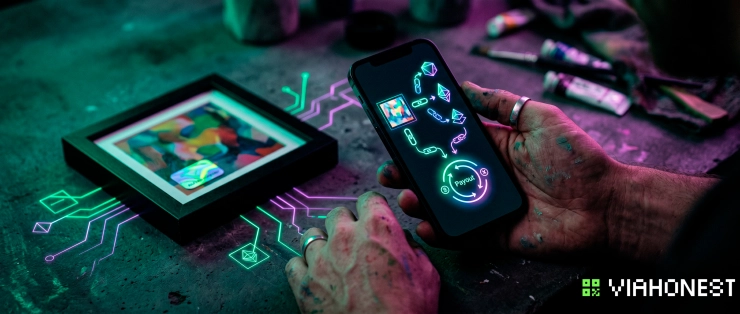
Platform protection is the front line, but a few legal basics still matter for the cases that escalate.
Register Your Copyrights
In the US, registering copyrights with the US Copyright Office is inexpensive and gives you stronger legal standing in infringement cases. You can register groups of works together to reduce cost. Registration is not required to own the copyright, but it is required to claim statutory damages in federal court.
Consider Trademark for Your Name and Brand
If you sell consistently under a recognizable name or brand, trademark protection makes it harder for copycats to use your identity to sell their reproductions. This is especially valuable for artists with distinctive brand identities or recognizable signatures.
Keep DMCA Takedown Templates Ready
Most major platforms have a DMCA takedown process. Having a template ready cuts the time per infringement from hours to minutes. For repeat infringers on the same platform, escalating to platform trust and safety teams is often more effective than individual takedowns.
Document Infringement Carefully
Screenshots, URLs, timestamps, and any communication with the infringer all become important if a case ever escalates. Keep a folder. Most cases never escalate, but the ones that do are far easier to handle with clean documentation.
Know When to Hire Help
For most individual infringements, legal action is not financially worthwhile. For systematic infringement at scale, an IP attorney can be transformative. The dividing line is usually whether the infringement is hurting your business meaningfully or just annoying you.
For a deeper look at how platform-level protection ties into authenticity and creator identity, the About ViaHonest page goes into more detail.
Who Is Already Doing This
We will be publishing detailed case studies soon on artists and creators protecting their print editions across categories:
- Independent illustrators running successful limited drops with built-in verification
- Photographers managing signed editions across hundreds of collectors
- Streetwear and sneaker artists protecting brand identity from copycat operations
- Digital artists releasing physical edition prints with embedded authentication
- Mixed-media creators using NFC tags to verify work decades after sale
If you want to be one of the first stories featured on the blog, launch your first drop with built-in authenticity and brand protection, then tag the brand. Artists who adopt protection infrastructure early tend to be the ones whose editions hold value longest.
Frequently Asked Questions
What is the difference between a limited edition and an open edition print?
A limited edition has a fixed, declared quantity that does not grow once announced. Each print is typically numbered. An open edition has no fixed cap and can be reprinted indefinitely. Limited editions hold value through scarcity. Open editions are sold as accessible reproductions without scarcity-based pricing.
Can I legally stop someone from selling unauthorized prints of my work?
Yes, in most cases. Copyright law gives you the exclusive right to reproduce your work. Enforcement varies by jurisdiction and platform, but DMCA takedowns, marketplace policies, and copyright registration all give you tools to act against unauthorized reproductions.
How does ViaHonest help protect my prints from copycats?
Each print listed on the platform gets a verified digital authentication record tied to your artist account. Edition sizes are tracked at the platform level, buyers can verify authenticity in seconds before purchasing, and your verified profile becomes the authoritative source for your work. Copycats cannot replicate the verification layer regardless of how convincing their reproduction looks.
Do I need to register copyright for every print I make?
Not strictly. Copyright exists automatically when you create the work. Registration becomes important if you want to claim statutory damages in federal court. You can register groups of works together to keep costs reasonable.
Should I watermark my work online?
It depends on your priorities. Watermarks reduce casual screenshot theft but also reduce shareability and visual quality. Many artists now skip watermarks in favor of platform-level authentication and accept some unauthorized reproduction as a cost of broader reach.
How do I handle a copycat selling fake prints of my work?
Document the infringement, file a DMCA takedown with the platform, alert your audience publicly without sharing the copycat's link, and consider legal action only if the scale justifies it. For platform-verified sellers, often the most effective response is simply pointing buyers toward verified channels.
Can I run a limited edition across multiple platforms?
Yes, but the edition size and numbering should be consistent across all platforms. Each print should still be unique within the total edition, and you should keep authoritative records of where each numbered print was sold.
What about NFC chips and QR codes on physical prints?
Both work well for tying physical prints to digital authentication records. NFC chips are slightly more durable and harder to fake, but QR codes are cheaper and easier to apply. Either way, the chip or code links to the same digital record that the platform maintains.