For most of the modern era, fine art has had a clear identity. A painting was paint on canvas. A sculpture was bronze or marble or steel. A print was a sheet of paper signed and numbered in pencil. The object you bought was the object you owned. In 2026, that clean division has finally collapsed. A growing share of fine art sales now involve work that exists in two forms at once: a physical object you can hang on your wall, and a digital record that proves what it is, who made it, who has owned it, and what it is worth. This hybrid format has a name. It is called phygital, and it is reshaping the economics of the fine art market faster than most collectors and artists realize.
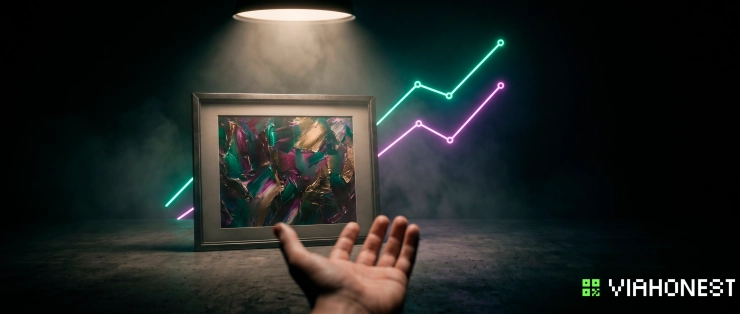
Phygital art is artwork that combines a physical object with a tied digital component, typically a verified authentication record, a smart contract, an NFC chip, or a blockchain entry that establishes provenance and enables features like resale royalties and instant verification. Unlike purely digital art, which exists only as a file, phygital pieces preserve the experience of owning a physical work while adding the verification, traceability, and economic infrastructure that traditional fine art has always lacked. The shift is reshaping how art is sold, how it appreciates, how royalties flow back to artists, and how collectors protect long-term value.
This guide breaks down what phygital actually means in practice, where the technology is already transforming the fine art market, what artists and collectors should understand about both formats, and how a platform like ViaHonest lets artists release work that bridges both worlds without sacrificing the qualities that made physical art valuable in the first place.
What Phygital Art Actually Is
The term gets thrown around loosely, so it helps to draw clean lines. A piece is phygital when three conditions are met.
It exists as a physical object that can be displayed, handled, shipped, and owned in the traditional sense. A painting, a sculpture, a print, a photograph, a designed object, or any other tangible work qualifies.
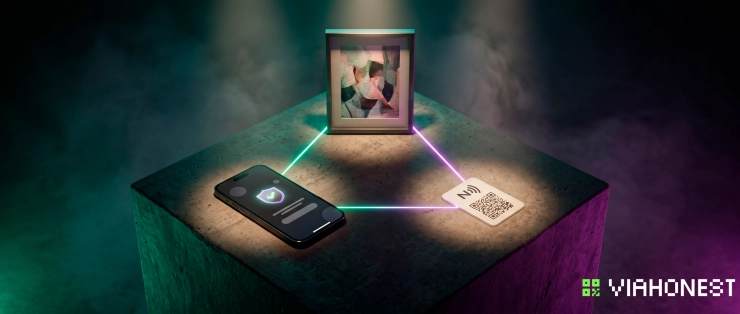
It has a tied digital component that is more than just documentation. The digital piece typically includes an authentication record, a provenance trail, ownership transfer mechanics, and often a smart contract that handles royalties or other automated functions.
The physical and digital components are bound together. Scanning a chip, reading a code, or verifying through a platform account connects the physical object to its digital record. The two cannot be cleanly separated without breaking the value of either.
When all three conditions are met, the work behaves differently in the market than purely physical or purely digital art. It captures the emotional and experiential value of physical ownership while gaining the verification and economic features that digital systems make possible.
What Phygital Is Not
- It is not the same as buying a digital file with a printed copy. The components must be bound together with verification.
- It is not just art with a paper certificate. Phygital requires a digital component with functional authentication infrastructure.
- It is not necessarily blockchain-based. Many phygital systems use platform-verified records without blockchain anchoring.
- It is not a replacement for physical art. It is an evolution that preserves physicality while adding digital functionality.
- It is not exclusively contemporary. Older works can be retroactively converted to phygital format through proper authentication processes.
Why the Shift Is Happening Now
Three developments converged in the early 2020s to make phygital art commercially practical at scale.
Authentication infrastructure became reliable. Early digital authentication systems were clunky, expensive, and required collectors to understand technology that most did not want to learn. Modern verification runs invisibly through standard platform accounts, NFC chip scans, and one-tap verification flows. The technology became boring enough to be useful.
Smart contracts matured. The mechanisms for automatically enforcing resale royalties, tracking ownership transfers, and updating provenance records moved from experimental to operational. Collectors and artists no longer needed to understand cryptocurrency or blockchain to benefit from the underlying economic features.
The fine art market acknowledged its problems. Forgery, lost paper certificates, broken provenance trails, and the gap between gallery economics and artist outcomes had become impossible to ignore. The traditional infrastructure of the fine art market was breaking down precisely as digital alternatives were maturing.
The combination produced a moment where artists, collectors, and platforms all had reason to embrace the new format simultaneously. Phygital stopped being experimental and started becoming standard for serious work entering the market.
How Physical and Phygital Compare Across the Real Decisions
The clearest way to see what changed is to walk through how each format performs on the practical questions that determine value.
Authentication
A purely physical work depends on paper certificates, expert opinions, and provenance records that can be lost, forged, or contested over time. Verification typically requires specialists and can take weeks. A phygital work carries verified authentication that pulls up in seconds with a phone scan. Forgery resistance is structural rather than reputational. This single difference accounts for much of the value premium phygital pieces command.
Provenance Tracking
Physical art's ownership history depends on whatever documentation gets preserved across decades, often poorly. Gaps accumulate, witnesses die, paper trails dissolve. Phygital provenance updates automatically with each transfer and persists in tamper-resistant form. The difference is between a chain that erodes over time and one that strengthens.
Resale Royalties
Under traditional US law and the first sale doctrine, physical art generates zero royalties to the artist on resale. The painting that appreciates over decades pays the artist nothing on its subsequent transactions. Phygital art with smart contract enforcement can automatically route a percentage of each resale to the original artist, creating ongoing income that traditional formats simply cannot.
Insurance and Storage
Physical art requires environmental controls, security, climate management, and specialized insurance based on documentation that depends on the same fragile paper trails. Phygital art benefits from persistent digital authentication that makes insurance underwriting easier and claims resolution faster, while the physical component still requires standard care.
Display and Experience
Physical art lives in space, catches light, ages, weathers, and creates the in-person experience that has defined fine art for centuries. Phygital art preserves all of this because the physical component is still physical. The digital layer adds functionality without subtracting from the experience.
Resale Liquidity
Physical art's resale process can be slow, expensive, and dependent on specialist auctioneers or galleries. Phygital art can move through platforms that handle authentication, payment, and provenance transfer in days rather than months, while still supporting traditional channels for collectors who prefer them.
Generational Transfer
Physical art passing to heirs often arrives with weakened documentation and authentication gaps that reduce its value. Phygital art transfers with intact digital provenance, easier estate planning, and preserved authentication that does not depend on heirs finding the right folder of paperwork.
The pattern is consistent across categories. Phygital wins on infrastructure, verification, and economic features while physical art retains every advantage that depends on the object itself, which the phygital format preserves anyway.
The Drawbacks of Pure Physical Art in 2026
- Authentication depends on paper certificates that can be lost or forged
- Provenance records degrade over generations
- No mechanism for artists to capture resale appreciation
- Insurance and appraisal require expensive specialist review
- Forgery detection is reactive rather than preventive
- Documentation typically lives separately from the work
- Buyer trust requires reputation rather than verifiable systems
- Estate planning is complicated by fragile paper documentation
Where Phygital Still Has Limits
The same honesty applies here. Phygital art is not a universal answer.
- Some collectors resist any digital component on philosophical grounds
- Platform dependence raises questions about long-term record persistence
- Standards are still fragmenting across different verification systems
- Integration with traditional fine art institutions remains uneven
- Older works can be converted retroactively but with documentation gaps
- Technical literacy requirements, while declining, still exist
- The category is new enough that some price discovery remains in progress
How Tech Is Reshaping Specific Parts of the Market
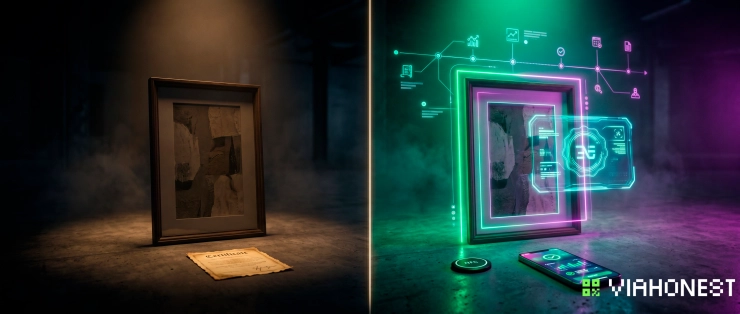
The phygital shift affects different segments of the fine art market in different ways. Some categories are transforming faster than others.
Limited Edition Prints
This is where phygital adoption has moved fastest. Each numbered print can carry its own authentication record, edition sizes are platform-tracked, and forgery becomes structurally harder. Artists can release editions with confidence that secondary market sales will respect their numbering and that authentication will travel with each print.
Photography Editions
Signed and numbered photography benefits enormously from phygital infrastructure because the authentication problem is acute for the format. Reproductions are easy to produce, and traditional certificates have been particularly vulnerable to forgery. Phygital photography releases solve this cleanly.
Original Paintings and Drawings
Higher-value original work is moving more slowly but steadily. Established artists are increasingly releasing new originals with NFC chips embedded in stretchers or frames, linking each piece to a verified digital record from the moment it leaves the studio.
Sculpture and Three-Dimensional Work
The phygital shift fits sculpture particularly well because the physical object lends itself to embedded identifiers that survive handling and transport. Verification chips placed in non-visible areas link the object to its digital record without affecting appearance.
Mixed Media and Installation Art
Complex works with multiple components benefit from digital documentation that tracks how the piece is meant to be assembled, displayed, and conserved. The phygital record becomes a functional part of the work's long-term existence, not just its provenance.
Streetwear, Sneakers, and Designer Objects
Categories that blur the line between art and product have embraced phygital authentication aggressively because counterfeiting has been an enormous problem. Verification chips on limited drops have become standard, and the resale markets have organized around the assumption that pieces can be authenticated digitally.
Vintage and Historical Work
This category is the slowest to adopt phygital infrastructure because retroactive authentication is harder than starting clean. Some collectors and dealers are working backward through significant collections, adding digital verification to pieces with strong existing provenance, but the work is gradual.
What Modern Platforms Are Building
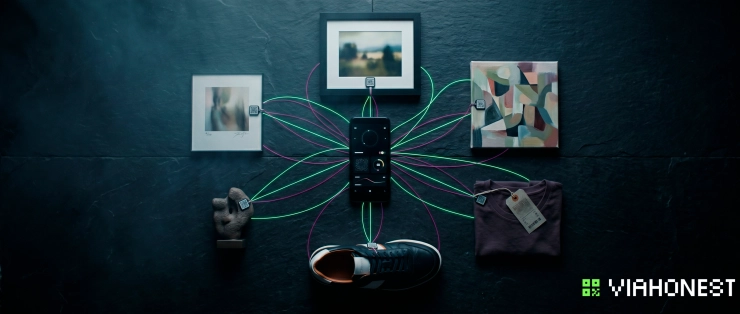
The deeper shift in 2026 is that phygital functionality is no longer a separate product offering. It is becoming the default architecture of platforms built for serious art sales. When a piece enters the market through a creator-first platform with verified seller profiles, the phygital infrastructure comes included rather than added.
Platforms like ViaHonest treat phygital as standard. Each artist has a verified profile that buyers can identify. Each piece can carry authentication, embedded identifiers, and platform-tracked provenance. Resale royalties can be set at the listing level and enforced automatically. Verification happens in seconds rather than weeks.
Why This Matters for Artists
- Work enters the market with infrastructure that traditional formats lack
- Resale royalties become a structural feature of every piece sold
- Forgery resistance is built in rather than bolted on
- Provenance grows stronger over time rather than degrading
- Career value compounds because authentication persists across decades
- Estate planning becomes meaningful because digital records survive generational transfer
Why It Matters for Collectors
- Verification in seconds rather than weeks of specialist consultation
- Stronger resale value because authentication travels with the work
- Easier insurance, appraisal, and estate planning across the collection
- Protection against forgery through structural verification
- Clear ownership history for every piece acquired through verified channels
If you have been creating or collecting fine art under the old infrastructure, there is finally a way to lock in the value that paper documentation has been quietly losing. Start selling on ViaHonest and release your next piece with built-in phygital authentication, or book a free demo to see how the verification infrastructure protects existing collections. Real authentication, structural royalties, every piece.
What Artists Should Do as the Shift Continues
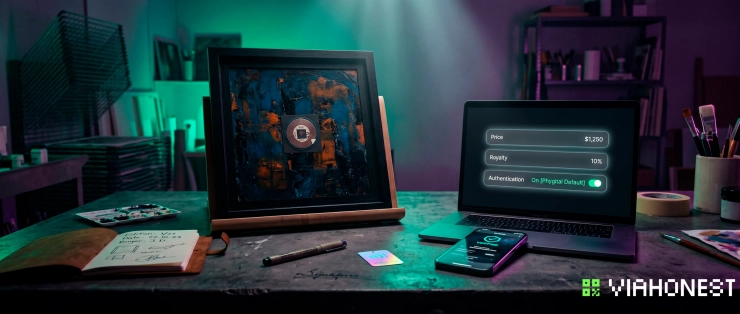
The transition from pure physical to phygital is not happening uniformly across the market. Artists who position themselves thoughtfully through the transition can build careers that compound advantages that legacy artists do not have.
Start Releasing New Work With Verification Built In
For every new piece entering the market, default to digital authentication tied to your verified account. This costs essentially nothing extra on modern platforms and creates value that accumulates across your entire output over time.
Embed Physical Identifiers Where Appropriate
For higher-value work, NFC chips or specialized inks linked to your digital records create a permanent verification path that survives framing, restoration, and decades of ownership changes. The cost per chip is minimal compared to the protection.
Set Resale Royalties Thoughtfully
The decision about resale royalty percentages affects your long-term income meaningfully. Most working artists settle between 5 and 10 percent, but the right number depends on your market position, the typical resale velocity of your work, and your relationships with primary buyers.
Maintain Backup Documentation
Even on platforms that handle provenance automatically, keep your own records of every sale. Redundancy protects you against platform changes and creates a backstop if any verification system needs to be re-established.
Educate Your Collectors
Many collectors are still navigating the transition to phygital. Explaining how authentication works on your pieces, what they should expect at resale, and how royalties function helps build the long-term market for your work and earns collector loyalty.
Bridge Both Worlds for Older Work
For pieces you have sold in the past that may resell at meaningful prices, consider creating digital authentication records that reference the original sale. This is not a substitute for the original documentation but provides a verifiable digital anchor that survives if paper is lost.
What Collectors Should Do Through the Transition
The shift affects collectors differently depending on what they already own and what they plan to acquire next.
Audit Existing Holdings
Pull together documentation for every piece you own. Identify which pieces have strong provenance and which have gaps. The work with thinner documentation is where you have the most to lose if the market continues moving toward verified phygital standards.
Upgrade Documentation Where Possible
For significant pieces with weak documentation, consider obtaining current authentication letters from artists or estates when available, current condition reports from qualified conservators, and any forensic analysis appropriate to the piece's value. Some platforms allow retroactive registration of pieces with verified existing provenance.
Demand Phygital on New Acquisitions
For new purchases, make verified digital authentication a non-negotiable condition. Sellers who cannot provide it are operating in older infrastructure that no longer offers adequate protection, regardless of their reputation.
Maintain Your Own Records
Even on platforms that track ownership automatically, document your acquisitions clearly including dates, prices, sources, and any due diligence performed. Your records become provenance for the next owner.
Insure Accurately
Talk to your art insurance provider about how digital authentication affects coverage and claims. Modern policies increasingly recognize phygital provenance as supporting documentation, and pieces with strong verification trails are easier to insure at full value.
For a deeper look at how platform-level phygital infrastructure changes the economics of buying and selling art, the About ViaHonest page goes into the underlying philosophy.
Common Misconceptions About Phygital Art
A few patterns of misunderstanding regularly appear in discussions of phygital art. Clearing them up helps both artists and collectors navigate the transition.
Phygital Is Not the Same as NFT
NFTs are typically purely digital tokens representing ownership of digital files. Phygital art is physical art with a tied digital authentication component. The categories overlap in some implementations but are distinct in important ways. Buying a phygital painting means buying a painting that hangs on your wall, not just a digital file.
Phygital Does Not Require Crypto
Many phygital systems use platform-based verification without involving cryptocurrency. Buyers can purchase, own, and verify phygital art using standard payment methods without ever interacting with crypto wallets or blockchain interfaces.
Phygital Is Not Less Authentic
Some traditionalists argue that adding digital infrastructure to fine art somehow dilutes its purity. The opposite is closer to the truth. Phygital authentication makes forgery harder and provenance stronger, which protects the integrity of the physical object that already mattered.
Phygital Is Not Only for New Work
Existing physical art can be retroactively registered with phygital authentication systems, though the process involves verifying current ownership and provenance. The transition does not require collectors to start over from zero.
Phygital Is Not a Fad
The pattern of authentication, provenance, and resale royalties moving from paper to digital infrastructure is a structural shift in how fine art markets operate, not a passing trend. The artists and collectors who adopt early are positioning their work for the next several decades.
Who Is Already Doing This
We will be publishing detailed case studies soon on artists and collectors building phygital practices across categories:
- Independent painters releasing new originals with embedded NFC authentication
- Photographers managing signed editions with platform-tracked provenance
- Sneaker and streetwear designers building verified drops at scale
- Mixed-media artists integrating digital provenance into installation work
- Private collectors upgrading documentation across decades of acquisitions
If you want to be one of the first stories featured on the blog, launch your first drop with phygital authentication and tag the brand. The artists and collectors who move early through this transition tend to be the ones who shape how it develops.
Frequently Asked Questions
Is phygital art the same as digital art or NFTs?
No. Digital art and NFTs exist only as files or tokens. Phygital art is physical work combined with a verified digital authentication component. You own a real object, with the digital layer providing verification, provenance, and royalty functions that traditional certificates cannot.
Does buying phygital art require cryptocurrency?
Most phygital platforms support standard payment methods. Some implementations use blockchain for record persistence, but buyers typically do not need to interact with crypto wallets or exchanges to purchase, own, or verify phygital art.
How does ViaHonest support phygital art releases?
Each piece listed on the platform can carry verified digital authentication tied to the artist's verified account. Embedded identifier integration, platform-tracked provenance, and automated resale royalty enforcement come included as standard features rather than separate add-ons.
Can I convert my existing physical art to phygital format?
Yes, in many cases. Retroactive registration involves verifying current ownership, documenting existing provenance, and creating a digital authentication record tied to the physical piece. The process works best for pieces with strong existing documentation.
Do phygital pieces actually sell for more than purely physical equivalents?
Often yes, particularly for resale, where the verification advantage compounds. The premium varies by category and market segment, but the structural reasons for phygital pieces to command better prices are consistent: stronger authentication, persistent provenance, and royalty enforcement that buyers and artists both value.
What happens to the digital component if the platform shuts down?
The strongest phygital systems either anchor records to public infrastructure that persists independently or provide exportable proofs that owners can maintain. Before committing significant value to any system, verify how the digital records would survive platform changes.
Are major auction houses and galleries adopting phygital?
Adoption is uneven but growing. Some major institutions have integrated phygital infrastructure for specific sales and categories. Others are watching the transition more cautiously. The pattern suggests broader adoption is coming as standards stabilize.
How does phygital affect resale royalties under US law?
Phygital infrastructure typically enforces resale royalties through platform terms of service rather than US copyright law, which does not include a statutory resale right. This means royalties work when sales happen through systems that honor the original terms, which is increasingly most channels for serious work.