Buying fake products on marketplaces can often be avoided if shoppers know the main warning signs before ordering. In practice, learning how to identify fake products comes down to a repeatable habit: slow down for two minutes, verify the seller, sanity-check the price, and read the listing like an auditor - not like a fan. This guide shows how to spot a fake early, so you can avoid fake products before they ever reach your doorstep.
Most counterfeit listings look convincing at first - but they usually reveal themselves through pricing, seller behavior, reviews, product details, or delivery information. That “convincing” effect is not accidental: counterfeiters routinely borrow authentic product photos and design a storefront that feels legitimate, and many shoppers only realize the problem after receiving the item.
This topic matters because counterfeits are not just a money issue. In many product categories, fake or substandard goods can create real health and safety risks - especially when items are worn, ingested, applied to skin, used around children, or relied on for protection (think toys, cosmetics, batteries/chargers, safety equipment, and medicines).
What are fake products
In consumer terms, “fake products” typically include items made to appear legitimate (often by copying branding, labels, or distinctive design) even though they were manufactured and sold without the brand owner’s authorization. The U.S. framework often focuses on whether a trademark is being used without authorization in a way likely to confuse consumers about source.
A useful way to separate common terms:
Counterfeit products are designed to pass as the real product and commonly involve unauthorized use of trademarks. Under U.S. law, a “counterfeit mark” is tied to a “spurious” mark that is “identical with, or substantially indistinguishable from” a registered mark (among other requirements).
Knockoffs (often called “dupes”) are look-alikes that mimic the style, but are not exact replicas and typically do not use the original brand’s trademark or logo - though the practical and legal line can still get messy depending on how the item is marketed.
Replicas is a marketing word sellers may use to normalize what is effectively a counterfeit or a trademark-infringing copy. Even when a listing admits it is a “replica,” it can still be illegal and still be unsafe - so buyers shouldn’t treat disclosure as a safety guarantee.
Unauthorized goods (often called “gray market” or “parallel imports”) are different: they can be genuine products, but sold through distribution channels not authorized by the manufacturer for that market. They may come with different warranties, labeling, or compliance features than the “official” domestic version - so “not counterfeit” does not always mean “no risk.”
Fake products are common on large online marketplaces because scale and speed are the point: third-party sellers can set up attractive storefronts quickly, listings can be replicated and re-posted, and cross-border fulfillment plus small-parcel shipping makes detection harder. U.S. government materials discussing the counterfeit problem emphasize that rapid e-commerce growth and third-party marketplaces have facilitated online trafficking in counterfeits and increased the risk that consumers will unknowingly buy them.
As for what gets faked most often, the pattern is consistent: items that are popular, high-margin, or easy to mimic at first glance. Commonly counterfeited categories include apparel and footwear, jewelry and bags, personal care products and cosmetics, electronics and parts, toys, and even foods and medications.
Why fake products are a serious problem
The most obvious impact is financial: you pay for a brand-name item and receive something you didn’t intend to buy, often with lower quality and no meaningful warranty support. Policy and enforcement documents treat counterfeiting as a major harm to legitimate businesses and consumers - large enough that the U.S. government publishes recurring assessments of markets where counterfeit goods are reportedly widespread.
The more urgent issue is safety. Counterfeits can bypass the testing, certification, and compliance expectations that legitimate suppliers must meet; that gap is why public policy research on “dangerous fakes” specifically links counterfeits to elevated health and safety risks in sectors like automotive parts, electronics, safety equipment, prescription drugs, and cosmetics.
Real-world safety alerts show this is not theoretical. For example, a U.S. consumer safety warning about knockoff toys described risks like choking hazards from small parts and urged consumers to stop using the fakes immediately and buy only from reputable sellers.
Health risks can be severe when the product enters the body. The U.S. Food and Drug Administration warns that counterfeit medicines may contain the wrong ingredients, too much or too little active ingredient, or no active ingredient - turning treatment into guesswork. The agency also highlights high-risk patterns such as unsafe online pharmacies offering deep discounts and operating outside U.S. licensing safeguards.
Counterfeiting is also a trust-and-governance problem: it undermines legitimate markets and can fuel broader illicit networks. International analysis of counterfeit trade emphasizes that illicit trade in counterfeits threatens public safety and economic stability, and that e-commerce growth can further complicate enforcement as counterfeiters adapt their tactics.
Finally, fake reviews and manipulated ratings can amplify the entire problem by making risky listings look socially “verified.” That is one reason the Federal Trade Commission took the unusual step of issuing a final rule targeting fake reviews and testimonials - recognizing that deceptive review practices “pollute the marketplace” and cost consumers time and money.
How to identify fake products before you buy
The most practical approach is to treat every higher-risk marketplace purchase as a short investigation. U.S. consumer guidance recommends shopping around, checking sellers and products, reading descriptions closely, and keeping records so you can contest issues later.
Price triangulation is the fastest first filter. Consumer-facing anti-counterfeit guidance flags “too good to be true” pricing as a primary indicator: if the price is far below normal retail - with no credible reason like a verified refurb program or a known closeout retailer - assume elevated risk.
Next, read the listing as if you were trying to disprove it. Official guidance encourages buyers to examine the full product description (not just the headline), watch for condition words (“refurbished,” “close-out,” “vintage”), and be cautious when expensive brand-name items show up at bargain prices, since they could be counterfeit or stolen.
Photos and product details deserve special skepticism. Counterfeiters often use authentic-looking images (sometimes pulled directly from a brand owner’s site), which means the photo can be “real” even when the shipped item is not. Good buyers look for consistency: model numbers, exact bundle contents, packaging details, warranty language, and regulatory marks that match how the real brand presents the product.
Reviews can help, but only if you read them critically. The FTC advises checking reviews across multiple sources and not relying on star ratings alone because some reviews and ratings are fake or misleading. The agency also provides concrete heuristics: review bursts over a short period, “single-purpose” reviewer accounts, and patterns that feel manufactured should reduce trust, not increase it.
A simple pre-checklist that fits in two minutes:
- Compare the price to multiple reputable sellers and to the brand’s normal pricing patterns.
- Confirm the seller type: brand owner, authorized retailer/reseller, or unknown third-party.
- Look for complete, internally consistent product information (model number, specs, included items).
- Scan for listings that “explain away” missing proof with vague lines like “OEM-quality,” “factory direct,” or “same as authentic.”
- Read reviews for patterns that suggest manipulation rather than genuine use.
- Check return, refund, and shipping terms before you pay (and screenshot them if the purchase is high stakes).
How to spot a fake through main red flags
The goal here is not to become a professional authenticator. It’s to recognize patterns that correlate strongly with counterfeits and then choose a safer route - different seller, different platform, or buying direct.
One major red flag is an implausible discount paired with urgency. Anti-counterfeit consumer materials repeatedly emphasize that “too good to be true” pricing is common in counterfeit sales, and counterfeiters may price only slightly below normal to look credible - so “only 20% off” is not a guarantee of authenticity either.
Another red flag is a listing that is high on persuasion and low on verifiable details. Signs include missing model numbers, duplicated text across multiple brands, mismatched photos (different packaging in different images), or descriptions that avoid clear statements about warranty and origin. The reason to care is simple: official consumer guidance relies on detail consistency (manufacturer/model, full description, and terms) as part of safe online shopping.
Shipping and delivery signals can also matter. Research on the misuse of e-commerce for counterfeits shows that small parcels and postal channels are heavily used in the trade of counterfeits linked to online transactions, reflecting how counterfeiters exploit high-volume, low-scrutiny delivery flows. If a “domestic” listing actually ships internationally, or if tracking looks unusual or inconsistent with the claimed origin, treat that as a risk increase.
Finally, don’t ignore review manipulation. The FTC’s consumer review rule and related guidance exist because fake reviews and testimonials are common enough to distort consumer decision-making, and because it can be “nearly impossible” to tell a real review from a deceptive one just by intuition. When a listing depends heavily on social proof but has weak seller transparency, assume higher odds you are looking at a manufactured reputation.
Check the seller before buying
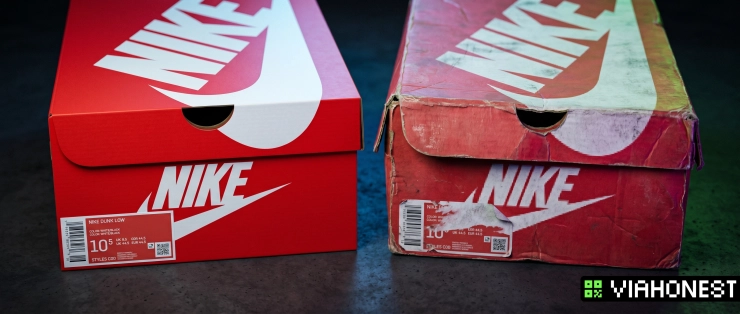
Seller verification matters because, in marketplaces, the seller is often the real “product,” and the item is the proof. That is why U.S. policy has moved toward requiring more transparency from high-volume third-party sellers: the INFORM Consumers Act is explicitly designed to deter stolen, counterfeit, or unsafe items by requiring marketplaces to disclose certain seller contact information and provide a way to report suspicious activity.
As a buyer, you want to identify which of these three situations you’re in:
Official store: the brand itself is the seller. This is typically the lowest counterfeit risk path (though not automatically the lowest price).
Authorized reseller/retailer: a third party approved by the brand to sell genuine goods. Many anti-counterfeit checklists recommend buying from authorized channels, especially for products where safety, warranty, and after-sales support matter.
Unknown third-party seller: the highest-variance category. Some are legitimate small businesses; others are “storefronts” built to blend in. Government and policy discussions explicitly note how e-commerce enables counterfeiters to establish attractive storefronts that compete with legitimate businesses.
To check a seller’s history, start with what the platform gives you, then validate outside the platform:
Look for seller transparency signals (name, business address or at least state/country, working contact method). These are exactly the kinds of details the INFORM Consumers Act is meant to surface for many high-volume sellers.
Check whether the seller has a meaningful track record: consistent catalog, stable branding, and review history over time (not a sudden burst). The FTC explicitly recommends looking at a variety of sources and considering reviewer history because ratings can be manipulated.
Search for an external digital footprint. The FTC’s online shopping guidance suggests searching the company or product name plus words like “complaint” or “scam” to learn from other people’s experiences. A total absence of footprint - no independent mentions, no support pages, no verifiable presence - doesn’t prove fraud, but it should raise your caution level, especially for high-ticket or safety-related goods.
Categories where you should be extra careful
Some categories deserve a “higher bar” because the downside is not just disappointment - it can be injury, poisoning, fire, or catastrophic failure. Research on dangerous counterfeits and public safety alerts consistently concentrate on a familiar list: automotive parts, electronics (especially batteries/chargers), safety equipment, prescription drugs, cosmetics, and products aimed at children.
For these categories, the safest shopping strategy is often channel-based, not deal-based: buy directly from the brand owner or an authorized retailer, and treat “unknown third-party + deep discount” as a reason to walk away. That “place” principle (buy from brand owners/authorized retailers rather than unknown third parties) is explicitly emphasized in U.S. anti-counterfeit consumer materials.
What to Do If You Bought a Fake Product
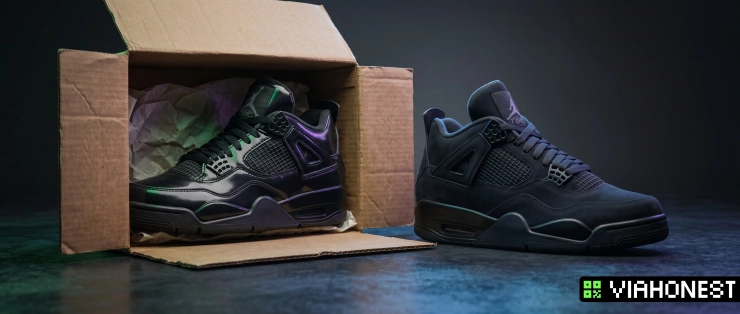
If you think you bought a fake product, prioritize safety and documentation first, then pursue remedies:
Stop using the item if there’s any safety risk (children’s products, electrical items, skincare/cosmetics, anything ingested or injected). Public safety warnings about knockoffs often explicitly instruct consumers to stop using the product immediately.
Document everything: screenshots of the listing, seller name and URL, order confirmation, packaging photos, serial numbers/labels, and any communication. The FTC recommends keeping records of online purchases (receipts, emails) so you can hold sellers to promises and dispute issues.
Use the platform’s process: request a refund/return and clearly state the item appears counterfeit. If the seller or platform fails to resolve it, U.S. government guidance points consumers to state consumer protection offices, state attorneys general, and the FTC for scams and suspicious activity.
Report category-specific risks to the right agency:
- For unsafe consumer products, report to SaferProducts.gov, which exists to collect reports of harm or potential harm and can support investigations, recalls, or other actions.
- For suspicious or counterfeit medicines, report through FDA channels; the FDA explicitly treats counterfeit medicine as potentially harmful and provides reporting pathways.
If you paid by credit card and the seller refuses to fix the problem, consider disputing the charge. FTC guidance highlights credit cards as a safer payment method for online buying and notes disputing charges when items don’t arrive; while counterfeit disputes vary by situation, the core principle is the same: use payment protections when a merchant fails to deliver what was promised.
How ViaHonest can help buyers and sellers avoid fake products
Most “anti-counterfeit advice” is detective work. The deeper fix is marketplace design that makes authenticity easier to verify before money changes hands.
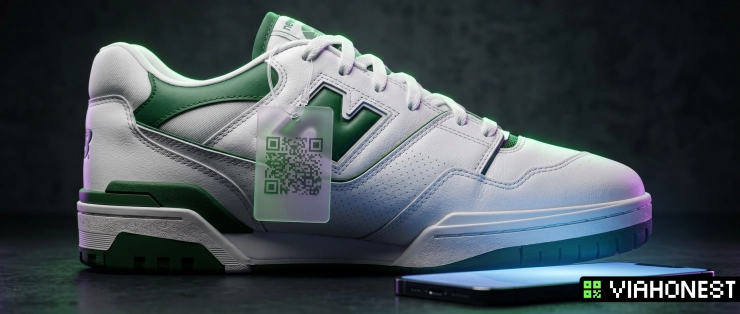
ViaHonest frames its approach around product identity and traceability: tokenization plus QR codes are used to create a unique digital identity for each physical item, enabling verification of origin, authenticity, and ownership history. The platform’s own materials position this as a way to “bridge” physical goods and digital technologies so buyers can make informed decisions with more context than a typical marketplace listing provides.
For buyers, that matters because many counterfeit problems are information problems. If you can verify provenance (and not just read a persuasive description), you reduce reliance on signals that are frequently manipulated - like perfect photos and inflated reviews. This point aligns with broader public enforcement logic: transparency about sellers and products is a key deterrent lever in modern marketplace policy.
ViaHonest also offers a dedicated authenticator app experience where a buyer can scan a product’s QR code to verify provenance on the Polygon blockchain; the iOS listing emphasizes that this app is designed for discovery and verification (not transactions), which is important for setting correct expectations.
For sellers, the same infrastructure can become a competitive advantage: ViaHonest’s seller-facing materials describe listing a product so it receives a unique on-chain token certificate linked to the physical object and QR code, allowing the buyer to scan and verify authenticity. The platform also describes multiple sign-up methods (including MetaMask and social login) and positions its marketplace as enabling trusted resale and transparency.
This is where a “native” registration transition makes sense (without turning your shopping life into a constant investigation). If you’re a seller who wants to compete on trust - not just price - registering on ViaHonest can let you attach verifiable authenticity and history to the item itself, not just the listing text. And if you’re a buyer who wants fewer counterfeit headaches, creating a ViaHonest account and using QR-based verification for eligible goods can shift you from “guessing” to “checking.”
Common mistakes buyers make (and how to avoid them) tend to be predictable:
They treat price as the only signal. Official anti-counterfeit guidance explicitly flags price as a core warning sign and urges buyers to compare against typical authentic pricing.
They trust star ratings without reading patterns. The FTC cautions that fake reviews exist and recommends checking multiple sources and reviewer history.
They skip the seller check. U.S. policy and consumer guidance increasingly emphasize seller transparency and reporting mechanisms because seller identity is central to deterring counterfeits.
They underestimate safety stakes in “boring” categories (chargers, batteries, car parts, protective gear). Research on dangerous fakes explicitly highlights these as high-risk areas.
They don’t document listings and terms. The FTC recommends keeping purchase records so you can enforce promises and resolve problems.
Conclusion
In the end, avoiding fake products starts with checking the seller, price, reviews, and product details before buying. If you’ve been trying to learn how to identify fake products (and truly internalize how to spot a fake) without turning every purchase into a research project, the highest-leverage move is choosing environments where trust and transparency are built into the marketplace itself. That is the core promise ViaHonest makes: better standards where authenticity can be verified, not merely claimed - so fewer people end up paying for fake products when they wanted the real thing.