Retail is the sale of goods or services directly to the end customer for personal use. In plain language, retail meaning is "the last mile of commerce"- the moment a product (or a service) meets the person who will actually use it.
Retail may look different today than it did 20 years ago-think mobile checkout, same-day delivery, or buy online/pick up in store-but the core job hasn't changed: make it easy for customers to find, evaluate, pay for, and receive what they need. In the U.S. Bureau of Labor Statistics sector definitions, retail is described as the final step in distribution, organized around selling merchandise in small quantities to the general public (and supported by services incidental to the sale).
That "final step" is why retail remains the backbone of trade. The National Retail Federation describes retail as the nation's largest private-sector employer and estimates the sector contributes $5.3 trillion to annual GDP while supporting more than one in four jobs (55 million working Americans). Meanwhile, digital commerce keeps growing, but it still represents only a portion of total activity: the U.S. Census Bureau estimated that e-commerce accounted for 16.4% of total retail sales in the third quarter of 2025.
So whether you're building a brand, running a side hustle, or just trying to understand how modern marketplaces work, retail is the piece of the economy that translates "products exist" into "products are actually bought."
What Is Retail? Simple Definition
Retail is a business activity (and an industry) built around selling merchandise or services to the public-typically in smaller quantities-without substantially transforming the product. Official industry definitions emphasize "retailing merchandise, generally without transformation" and the idea that retail is the final step in the distribution of merchandise.
This is why retail is best understood as a system, not a single transaction. Behind every "Add to Cart" or checkout counter is a set of decisions about assortment, pricing, placement, fulfillment, and customer support. Strong retail turns those decisions into an experience that feels effortless.
Retail vs. wholesale vs. manufacturing
Retail sits at a different point in the supply chain than wholesale and manufacturing:
- Manufacturing focuses on the mechanical, physical, or chemical transformation of materials into new products.
- Wholesale is an intermediate distribution step, where businesses are organized to sell (or arrange sale of) goods to other businesses, often operating from warehouses or offices rather than consumer-facing storefronts.
- Retail is organized around selling to the general public/end consumer in smaller quantities, including store and nonstore formats.
A helpful mental model: manufacturing wins on process and production quality; wholesale wins on distribution relationships and logistics; retail wins on consumer trust, convenience, and experience.
Retail Stores and Retailers
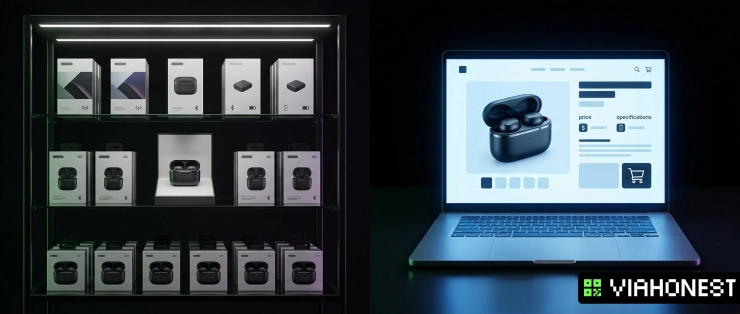
When people ask what is a retail store, they usually mean a fixed, customer-facing place where shoppers can browse and buy (a boutique, grocery store, pharmacy, or big-box store). In industry terms, store retailers operate fixed point-of-sale locations designed to attract walk-in customers, while nonstore retailers reach customers through other methods (for example, electronic channels, catalogs, or direct-response advertising).
Even if a brand started online, many eventually open physical locations because stores can reduce customer hesitation ("Can I try it?"), strengthen brand presence, and support convenient fulfillment options like pickup and in-person returns.
Brick-and-mortar vs. online retail
A physical store can deliver immediacy and experience: customers can touch products, try sizes, and walk out with what they bought. Online retail wins on convenience, selection depth, and "anytime shopping."
But there's also a cost trade-off. Stores often involve higher fixed costs (rent, staffing), while e-commerce tends to carry higher variable costs (shipping, returns, customer acquisition). The better question isn't "Which channel is best?"-it's "Which mix matches my customer and unit economics?"
In reality, the market is not "either/or." The United States continues to have a large majority of retail sales occurring outside of e-commerce, even as online keeps gaining share: the U.S. Census Bureau put e-commerce at 16.4% of total retail sales in Q3 2025.
Who is a retailer
A retailer is the business (or person) that sells directly to the end customer. Retailers can be global chains, regional brands, or one-person microbusinesses-what unites them is the role they play as the final link between distribution and personal use.
Retail Examples and Types of Retail
Everyday examples you see every day
If you're looking for quick retail examples, think about the last five purchases you made. Chances are most were retail. Here are a few common patterns, with short explanations and retailer examples:
- Grocery & everyday essentials. Supermarkets, specialty grocers, and convenience stores-businesses that win on repeat trips, tight inventory discipline, and fast checkout.
- Specialty retail. Niche stores (running shoes, skincare, musical instruments) that compete through expertise, service, and a curated assortment.
- Big-box and mass merchants. Large-format retailers that compete through scale, price, and breadth of selection.
- E-commerce marketplaces and DTC brands. Online-first retailers that depend on product discovery, trust signals (content, reviews), and fulfillment performance.
- Service retail. Salons, fitness studios, and repair shops that "sell" outcomes and expertise as much as (or more than) physical goods.
These formats map back to the industry idea that retail includes both store and nonstore approaches, built to serve the general public.
Types of retail
"Types of retail" can be organized in two useful ways: by channel and by business model.
By channel - Store retail (single-location, chain, franchise, pop-up)
- Nonstore retail (e-commerce, catalog, subscription, marketplaces)
By business model - Discount and off-price
- Specialty / category-focused
- Department stores and general merchandise
- Direct-to-consumer (DTC)
- Secondhand and resale
- Experiential retail (events, demos, communities)
There's also a third lens that matters in 2026: trust architecture. Some categories (collectibles, limited drops, luxury resale, electronics) carry higher fraud and authenticity risk than everyday consumables. The higher the risk, the more a retailer must invest in verification, clear policies, and transparent transaction flows to protect both sides of the sale.
How Retail Works
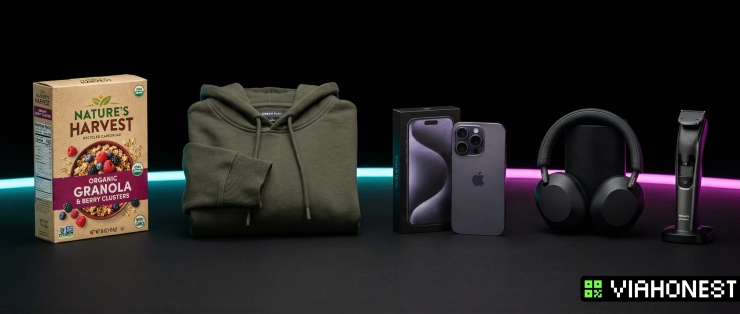
Retail looks simple from the outside ("a customer buys a product"), but strong retail is an operating loop-a repeatable system that turns attention into purchases and purchases into loyalty.
- Choose a customer and a promise. The sharpest retailers start with a clear target segment and value proposition. If you're brainstorming niche market ideas, focus on problems customers repeatedly pay to solve (speed, convenience, authenticity, fit, gifting), not just interests.
- Source or create inventory. Retailers buy from manufacturers, brands, or wholesalers-or they produce goods themselves. In practice, the winning focus is consistent quality, predictable lead times, and defensible margins.
- Plan inventory and cash flow. Retail is inventory + timing. Too much stock ties up cash; too little stock loses sales and trust. Great retailers forecast demand, set reorder points, and build "safety stock" rules that match their supply chain constraints.
- Price for margin, not for ego. Pricing has to cover cost of goods, marketing, operations, shrink, and returns-then leave profit. Many retailers use "good/better/best" tiers to serve different budgets without racing to the bottom.
- Merchandise the offer. In stores, this means layout, signage, displays, and staff knowledge. Online, it usually means product pages, photography, search, and discovery/recommendations.
- Acquire demand. Modern acquisition is a blend of search, social, email/SMS, partnerships, and community. What matters is not "what's trendy," but what you can repeat profitably after the first hype wave.
- Convert at checkout. Fast payment, clear shipping/returns, and trust signals reduce friction. Mobile matters because a large share of online transactions now happens on smartphones (including during peak holiday periods).
- Fulfill & support. Shipping speed and accuracy are part of the product. Post-purchase support (updates, chat, easy returns) is a retention engine.
- Learn and iterate. Retail is a feedback loop: track sell-through, returns, customer lifetime value, and repeat rate; adjust assortment and messaging accordingly.
If you want one "retail dashboard" to watch, start with these basics: gross margin, inventory turnover, conversion rate, return rate, and repeat purchase rate. Those numbers tell you whether you're building a sustainable machine-or only generating short-term revenue.
Retail vs Wholesale
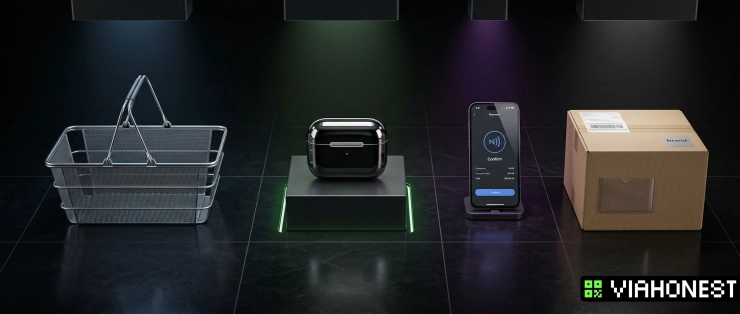
Retail vs wholesale: what's the difference
Below is a practical comparison of retail and wholesale. The two models can coexist in one company, but they require different economics and capabilities.
| Dimension | Retail | Wholesale |
|---|---|---|
| Primary customer | End consumer | Other businesses (retailers, institutions, industrial users) |
| Typical order size | Small quantities | Large lots / bulk |
| Pricing | Higher per unit; customer pays for convenience, service, experience | Lower per unit; buyer expects volume discounts |
| Brand building | Often direct-to-consumer marketing, store experience, community | Often trade relationships, account management, distribution reach |
| Operations | Merchandising, customer service, returns, last-mile fulfillment | Warehousing, logistics, B2B sales processes, long-standing client relationships |
| Where it happens | Stores, websites, marketplaces, direct selling | Warehouses, offices; limited consumer-facing display |
One more nuance: wholesale can be a growth lever when it gives your product more shelf presence, but it can also dilute brand control and compress margins. Retail gives you more control over customer experience and customer data, but it demands stronger marketing and fulfillment execution.
Modern Retail Trends

Retail is evolving quickly, but the changes aren't random. Most trends are responses to three forces: higher customer expectations, tighter margins, and new technology.
- Omnichannel as the default. Shopping journeys are no longer linear. Research on Gen Z shoppers highlights an "omni-shopping" pattern that blends digital discovery with strong in-store purchasing habits.
- Mobile-first shopping moments. In recent holiday reporting, smartphones accounted for the majority of online transactions-making page speed, checkout UX, and mobile payment reliability revenue-critical.
- AI-assisted discovery and research. Recent data sources report sharp increases in traffic to retail sites coming from generative AI tools-an indicator that shoppers are experimenting with AI as a "deal finder" and product research assistant.
- Value-seeking behavior and smarter trade-offs. Consumer research has described younger shoppers as highly deal-oriented and more willing to switch brands, balancing price with emotional value ("this feels worth it").
- Resale goes mainstream. Retail and consumer industry reporting points to brands building in-house resale channels to capture the growing resale market and appeal to sustainability-minded customers.
- Trust, authenticity, and provenance. As e-commerce expands, so do fraud and counterfeit risks, pushing the market toward more verification and transparent ownership history-especially for collectibles, limited drops, and higher-value goods.
- Gen Z as a long-term growth driver. Consumer intelligence research projects Gen Z's spending power could grow to $12T by 2030-another reason retailers are redesigning experiences, pricing, and trust signals around the expectations of this cohort.
How ViaHonest Supports Modern Retail Businesses
Modern retail needs trust infrastructure as much as it needs marketing. ViaHonest positions itself as a marketplace centered on authenticity, transparent provenance, and safer transactions-especially relevant in categories where verification matters.
For sellers, ViaHonest highlights:
- Low-friction onboarding: registration automatically creates a secure wallet, and listing is positioned as a quick upload flow.
- Predictable listing economics. Listing is free, with a flat 2.5% service fee after a successful sale.
- Proof of authenticity linked to the physical item. The platform describes minting a unique token certificate tied to the item and a QR code, so a buyer can scan and see an on-chain verification page.
- Escrow-style protection. A flow where funds are released after confirmation, designed to protect both sides of the transaction.
- Royalties on resale. Sellers can set a royalty percentage that is automatically paid out on secondary sales.
- Built for modern drops and communities. ViaHonest also frames the marketplace around drops, limited mint mechanics, and persistent reputation signals (public storefront, reviews).
These elements are described in ViaHonest's own product positioning and FAQs for sellers.
For buyers, the value proposition is straightforward: browse, buy, and verify-especially when authenticity (and not just price) is the deciding factor.
If you're selling goods, register as a seller so you can list products and build a storefront that's designed to carry your reputation forward. If you're shopping, creating a buyer account helps you purchase with clearer provenance and verification-useful when you're buying something you plan to keep, gift, or resell later.
Conclusion
Retail is still the "final mile" of commerce: what is retail is, at its core, selling directly to the end customer, typically in small quantities. Retail can happen in a physical store, online, or (most commonly now) across both channels in an omnichannel journey.
The future of retail will keep moving toward digital convenience and integrated experiences-but also toward higher trust and clearer verification in the categories where it matters most. If you understand the fundamentals and align them with modern tools, the retail meaning becomes simple: help customers buy with confidence, wherever they are.