The phrase "art business" used to make most artists uncomfortable. Making art and running a business felt like opposing skills, and treating creative work as commerce felt like a betrayal of why you started making things in the first place. In 2026, the artists who treat their practice as a business are the ones who get to keep making art. The ones who do not usually end up doing something else for a living within five years. This is not because commerce has corrupted art. It is because the infrastructure, platforms, and tools that support working artists have matured to the point where running a serious practice without business thinking leaves enormous amounts of money and opportunity on the table. The artists who learn the business side early are the ones whose careers compound rather than stalling out.
Starting an art business means treating your creative practice as a structured commercial activity with revenue streams, operating expenses, customer relationships, marketing, legal protections, and growth strategies. It applies whether you are selling original paintings, prints, digital art, sculpture, photography, or any combination, and whether you operate from a dedicated studio or from your kitchen table. The fundamentals are the same. Successful art businesses in 2026 combine clear positioning, intentional pricing, multiple revenue streams, smart use of platforms and infrastructure, disciplined record-keeping, and patient audience-building. The artists who get these elements right can build sustainable full-time practices. The ones who skip them usually plateau at hobby-level income regardless of how talented they are.
This guide walks through the practical steps of starting an art business in 2026, what most beginners get wrong, how to handle the legal and financial basics without becoming an accountant yourself, and how a platform like ViaHonest lets new art businesses launch with authentication, payment, and selling infrastructure that previous generations of artists had to build from scratch.
What Starting an Art Business Actually Means
Before going into the steps, it helps to be precise about what changes when you treat your art as a business rather than as a hobby or a side income.
A hobby produces art when you feel like it, sells occasionally when someone asks, and treats income as a pleasant surprise. There is nothing wrong with this, but it will not produce a sustainable practice.
A side income produces art with some commercial intent, sells through one or two channels, and generates supplemental money that does not need to support full living costs. Many artists stay here permanently and that can be a good choice.
A business produces art with intentional commercial structure, sells through multiple channels, generates income that needs to actually pay bills or support meaningful financial goals, and treats time, money, and effort as resources to be managed rather than spent without tracking. The decision to operate as a business changes what success looks like and what discipline the practice requires.
The Drawbacks of Treating Art Like a Hobby When You Want It to Be a Business
- Income remains inconsistent and unpredictable
- Tax obligations become surprises rather than planned costs
- Pricing tends to be too low because it is not calculated against real costs
- Marketing effort is sporadic and produces inconsistent results
- Legal structure is missing when problems arise
- Revenue streams stay limited because new channels never get developed
- Cash flow management is absent, leading to feast-and-famine patterns
- Career progression stalls because nothing is being measured or improved
Why 2026 Is a Good Time to Start
A few structural changes have made starting an art business more accessible than it was even five years ago.
Platform infrastructure does work that artists used to handle themselves. Authentication, payment processing, shipping integration, and even basic accounting now exist in forms that solo artists can use without specialized expertise. The fixed overhead of running an art business has dropped significantly.
Audiences can be built directly through social platforms. Reaching potential collectors no longer requires gallery representation, mailing list rentals, or expensive PR. The same tools that everyone uses for personal social media can reach buyers when used intentionally.
Multiple revenue streams have become normal. Combining original sales, prints, commissions, licensing, and merchandise was once seen as scattered. In 2026, it is recognized as the practical structure for most working artists. The expectation that an artist would have only one income source is outdated.
Authentication and provenance infrastructure protects new artists. Forgery and unauthorized reproduction used to be problems that only established artists could afford to fight. Modern platform-level authentication protects emerging artists from the start, preserving the value of editions and originals as careers develop.
Tax and legal information is more accessible. What used to require expensive consultation can now be researched and understood through online resources, though specific situations still benefit from professional advice.
The Trade-Offs of Starting Now
The same dynamics that make starting easier also mean more artists are starting. Competition for attention is significant. The infrastructure costs are lower but the work of standing out is harder. Realistic expectations matter. The artists who treat the first two years as building rather than earning typically have stronger long-term outcomes than those who expect immediate substantial income.
Step 1: Decide What Kind of Art Business You Are Building
Before any practical setup, the most important decision is what kind of art business you actually want to run. Different models support different lifestyles, different revenue scales, and different creative practices.
Commission-Based Practice
You produce work primarily for clients who commission specific pieces. Income is project-based with negotiated fees. The work is responsive to client needs rather than entirely self-directed.
This model works well for artists who enjoy collaborative work, can manage client relationships, and want predictable income from confirmed projects. It works less well for artists who want maximum creative control or who struggle with deadlines tied to other people's expectations.
Original Work Sales
You produce one-of-a-kind pieces for sale to collectors. Income comes from individual sales of higher-value original work. The practice supports your most ambitious creative output.
This model works well for artists with strong visions for their own work and the patience to build collector relationships over years. It works less well for artists who need consistent monthly income or who produce slowly.
Editions and Print Sales
You produce limited or open editions of prints, photographs, or other reproducible work. Income comes from volume sales at accessible price points. The work reaches broader audiences than original-only sales allow.
This model works well for artists whose work translates effectively to reproduction and who want to combine accessible buyers with serious collectors. It works less well for artists whose work loses essential qualities in reproduction.
Licensing and Commercial Use
You license your work for use by businesses, publishers, manufacturers, or other commercial parties. Income comes from licensing fees and ongoing royalties.
This model works well for artists whose work fits commercial applications and who can negotiate terms that protect long-term value. It works less well for artists who want full control over how their work is used.
Teaching and Educational Content
You produce educational content alongside your creative work, including courses, tutorials, books, or workshops. Income comes from selling your knowledge as well as your art.
This model works well for artists who enjoy teaching and have developed expertise worth sharing. It works less well for introverted artists or those whose practice does not translate clearly into teachable techniques.
Hybrid Practices
Most working artists in 2026 combine several of these models rather than committing to just one. The mix shifts over time based on what is working, what the market wants, and what the artist enjoys. Starting with one or two primary streams and adding others as the business matures is usually more sustainable than trying to operate every model at once.
Step 2: Set Up the Legal Foundation
The legal structure of your art business affects taxes, liability, contracts, and your ability to deal with serious clients and platforms. The specifics vary by jurisdiction and situation, but a few fundamentals apply broadly.
Choose a Business Structure
In the US, most artists start as sole proprietors, which requires no formal setup but provides no liability protection. As the business grows, many transition to a limited liability company (LLC) that separates personal assets from business liabilities. The LLC also enables clearer accounting and can simplify some tax situations.
For artists in other countries, the specific structures differ but the principle holds. A simple structure works at the start. A more formal structure becomes valuable as income and complexity grow.
Register Your Business Name
If you operate under a name different from your legal name, registering that name (a "doing business as" or DBA registration) creates clear public connection between you and the business name. This becomes important for receiving payments, opening business bank accounts, and signing contracts.
Get a Business Bank Account
Mixing personal and business finances is one of the most common early mistakes. A dedicated business bank account, even if it is initially just a separate personal account labeled as business use, dramatically simplifies tracking, taxes, and the overall sense of running a serious operation.
Understand Your Tax Obligations
Self-employment income, including art sales, is taxable. Depending on volume and jurisdiction, you may need to file quarterly estimated taxes, collect and remit sales tax, and report income that platforms or clients have reported separately. The penalties for ignoring these obligations grow over time, so addressing them early saves significant pain later.
Consider Basic Contracts and Terms
Even small commissions benefit from written agreements that specify what is being delivered, when, for how much, and under what terms. For higher-value work, more formal contracts protect both sides. Many artists use template contracts as starting points and adapt them to specific situations.
Address Copyright Basics
Your art is automatically protected by copyright the moment you create it. Registration with the US Copyright Office (or your local equivalent) provides stronger legal standing for infringement cases. For artists producing significant amounts of original work, batch registration of multiple pieces keeps costs reasonable.
Step 3: Build the Operational Infrastructure
A working art business needs systems that handle the practical work of producing, selling, and shipping art. Setting these up before you need them prevents the crises that derail many new businesses.
Studio or Workspace
For artists starting from home, the workspace does not need to be elaborate, but it does need to be functional and consistent. A dedicated area, even a corner of a room, separates work from non-work and supports the focus needed for sustained creative output. Good lighting matters for both creating work and photographing it. Storage for finished pieces, supplies, and shipping materials should be planned from the start rather than improvised.
Documentation and Photography
Every piece you create should be photographed before it leaves your studio. The photos serve as inventory records, marketing material, authentication references, and protection against disputes about what was shipped. Natural light from a north-facing window works for most work, though dedicated lighting setups improve consistency for higher-volume artists.
Inventory Management
Even a small art business benefits from tracking what exists, what has sold, what is on consignment, and what is in progress. A simple spreadsheet works initially. As volume grows, dedicated inventory software becomes worth the investment. The artists who skip this step regularly lose track of editions, forget what is where, and create authentication problems that affect future sales.
Shipping and Packaging Systems
Handling shipping yourself initially is fine, but a few decisions matter from the start. Standard packaging materials in common sizes. Reliable shipping carriers with online label generation. Insurance for higher-value pieces. Tracking on everything. Professional presentation matters even at small scale because it shapes how collectors perceive your operation.
Customer Communication Channels
A dedicated business email address keeps personal and business correspondence separate. Social media accounts under your professional name. A simple way to share your portfolio and current available work. None of this needs to be elaborate. All of it needs to be consistent.
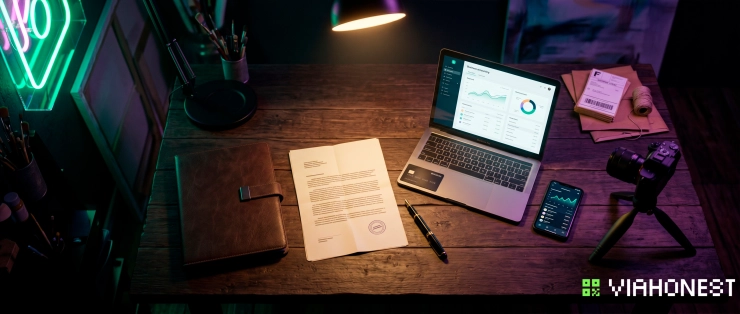
Basic Accounting System
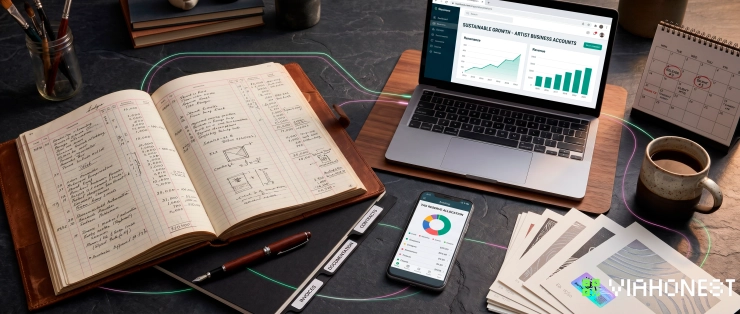
Track every sale and every expense from the first day. Bookkeeping software designed for small businesses makes this manageable without an accountant. The discipline of recording everything prevents tax problems, supports business decisions with real data, and reveals patterns that help the business grow.
Step 4: Develop Your Offerings and Pricing
What you sell and what you charge are the most important strategic decisions in your business. Getting these right takes longer than most beginners expect.
Define Your Core Offerings
Most new art businesses benefit from starting with three to five distinct offerings rather than trying to sell everything at once. A typical mix might include accessible open edition prints at $50 to $150, limited edition prints with verified authentication at $200 to $800, smaller original works at $400 to $1,500, larger or premium originals at $1,500 and above, and commissions with clear scope and pricing structure.
The exact mix depends on what you produce, what your audience values, and what supports the income you actually need. Starting with fewer offerings and adding more as the business matures usually produces better outcomes than launching with everything at once.
Research Comparable Sales
Before pricing anything, research what comparable work by artists at similar career stages is selling for. Auction databases, marketplace sale histories, and gallery listings give you baselines. Your prices should sit within the realistic range for your category, with adjustments for your specific position.
Account for All Costs
Materials, platform fees, payment processing, shipping, packaging, your time, taxes, and indirect costs like studio rent or software subscriptions all reduce your net per sale. A piece that lists at $500 might net you $300 after everything is calculated. Build that into your minimum acceptable price rather than discovering it after sales.
Price for Sustainability
The price that lets you make this piece is not enough. The price needs to let you make the next piece, and the next, and reinvest in the business, and pay for the time when you are not directly producing. Artists who price only for the current piece systematically underprice their work and burn out.
Resist Underpricing Yourself Into Trouble
The temptation to price low to drive sales is strong but usually counterproductive. Low prices train your audience to expect low prices, attract buyers who do not value the work properly, and make raising prices later difficult. Better to start at sustainable prices and find the smaller audience that values the work than to chase volume at unsustainable rates.
Step 5: Build Your Audience and Brand
A working art business needs an audience. Building one takes years, not months, and the artists who treat audience-building as a structural part of their practice rather than an afterthought have dramatically better outcomes.
Establish Consistent Visual and Verbal Identity
Your social media presence, website if you have one, packaging, communication style, and visual presentation should all feel like they come from the same person. Consistency builds recognition, and recognition builds trust. The specifics matter less than the consistency.
Choose Platforms Where Your Audience Actually Spends Time
Different art categories have different platform dynamics. Visual artists tend to do well on Instagram and TikTok. Photographers benefit from platforms with high image quality. Specific niches have specific communities. Spending time on platforms where your work fits the format and audience produces dramatically better results than spreading across every available platform.
Show Your Process and Your Practice
Finished work is the destination, but most audiences engage more with process, behind-the-scenes content, and the working artist's life than with polished promotional images. Time-lapse videos, studio tours, work-in-progress shots, and casual sharing of what you are working on build the parasocial relationships that turn viewers into buyers over time.
Build an Email List From the Beginning
Social platforms can change algorithms or shut down. An email list is the only audience you fully own. Add a signup option wherever you have presence. Send useful or interesting content regularly, not just sales pitches. The list builds slowly but becomes increasingly valuable over time.
Develop Relationships With Existing Buyers
Repeat buyers are dramatically more profitable than first-time buyers. Treat every transaction as the start of a potential ongoing relationship. Personal follow-ups, occasional updates on new work, and recognition of collectors who support you build the foundation that sustains long careers.
Avoid Platform Concentration Risk
Building your entire audience on one platform creates vulnerability if that platform changes its rules or your account encounters problems. Spreading across two or three platforms, even with primary focus on one, reduces this risk significantly.

Step 6: Choose Where to Actually Sell
The platforms where you sell determine how much of each transaction you keep and what infrastructure supports your work. The choices have changed significantly in recent years.
Your Own Website
Selling through your own website gives you maximum control and maximum responsibility. You handle authentication, payment processing, shipping, customer service, and marketing. Commission rates are minimal but the operational burden is significant. This makes sense for established artists with consistent demand but is often too much overhead for new businesses.
Generic Marketplaces
Large general marketplaces offer reach but charge significant fees, often impose category competition, and provide limited authentication infrastructure. They can work for accessible work at lower price points but tend to commoditize art in ways that work against careers building toward higher prices.
Creator-First Platforms
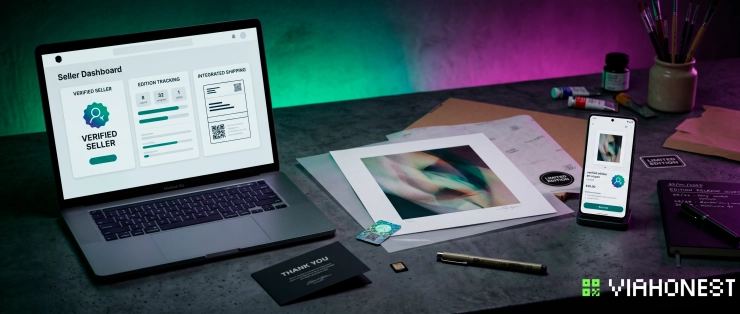
Newer platforms built around verified seller profiles, integrated authentication, fair commission rates, and creator-focused features fit emerging art businesses better than generic alternatives. The infrastructure handles work that solo artists would otherwise need to build themselves while preserving the higher-value buyer relationships that careers need.
Galleries and Traditional Channels
Physical and online galleries can extend reach to collectors and institutions you cannot reach directly but typically take 30 to 50 percent of sales. For some career paths this is worthwhile. For others, the economics no longer make sense. The decision depends on your specific situation rather than on general rules.
Multiple Channels for Different Purposes
Most working artists use multiple channels for different parts of their business. Accessible prints through one channel. Limited editions through another. Direct sales to collectors through email. Commissions through your own systems. The mix balances reach, control, and economics across the work you actually produce.
If you are starting an art business and the infrastructure question feels overwhelming, there is a way to get the operational support without giving up the economics. Start selling on ViaHonest with verified authentication, fair commission rates, integrated shipping, and a buyer base that values creator-led practices. The infrastructure that art businesses used to have to build themselves is now built in.
Step 7: Plan Your Finances Beyond the Next Sale
Cash flow management separates art businesses that survive from those that fail. The pattern of feast-and-famine income is real, and the artists who plan for it manage through downturns while those who do not eventually run out of runway.
Build Reserves Before You Need Them
The first profit from your business should not all go into your personal account. Building reserves that cover several months of expenses provides the cushion that lets you weather slow periods, fund larger projects, and make decisions from a position of stability rather than desperation.
Plan for Taxes From Every Sale
Self-employment income is taxable, and the temptation to spend the full sale amount before tax obligations come due is real and dangerous. Setting aside 25 to 30 percent of net income for taxes from each sale, in a separate account if helpful, prevents the year-end crisis that destroys many small businesses.
Track Income and Expenses Religiously
The discipline of recording everything pays off in tax preparation, business decisions, and the basic awareness of what is actually working. The artists who do this consistently know things about their business that those who do not record cannot know.
Reinvest Strategically
Some profit should stay in the business to fund growth. New equipment, marketing investments, professional services, and inventory build-outs all support future income. Withdrawing every dollar as personal income stalls growth. Reinvesting too much delays the personal benefits that sustain motivation. Finding the balance is part of running the business.
Separate Personal and Business Finances
The clearer the separation, the easier everything becomes. Business expenses through business accounts. Personal expenses through personal accounts. Salary or owner draws transferred deliberately rather than money flowing back and forth without tracking.
Step 8: Protect Your Work and Your Business
A few protective measures matter more than most new businesses realize. Setting them up early prevents serious problems later.
Use Authentication Infrastructure From the Start
Selling work without verified authentication exposes you to forgery, unauthorized reproduction, and disputes that damage your reputation as your career develops. Platform-level authentication for editions and originals, even when the work is modestly priced, builds the verification foundation that protects long-term value.
Document Everything
Photos of every piece. Records of every sale. Communication with every client. Receipts for every business expense. The discipline of documentation prevents problems when disputes arise and supports tax preparation, insurance claims, and business analysis.
Get Appropriate Insurance
Studio insurance, business liability coverage, and shipping insurance all become important at different stages. The costs are modest. The protection against catastrophic loss is significant.
Use Written Agreements
Commissions, licensing deals, gallery relationships, and significant sales all benefit from written agreements. Template contracts adapted to specific situations work for most cases. Higher-value or more complex arrangements justify professional legal review.
Plan for the Unexpected
What happens if you cannot work for a period? What happens if a major client disappears? What happens if a platform you rely on shuts down? Thinking through these scenarios in advance, even briefly, identifies vulnerabilities you can address before they become crises.
For a deeper look at how platform-level authentication and verification protect new art businesses, the About ViaHonest page goes into the underlying philosophy.
Common Mistakes That Sink New Art Businesses
A few patterns regularly destroy new art businesses in the first two years. Avoiding them is most of what separates the artists who build sustainable practices from those who quit.
Pricing Defensively Instead of Strategically
Setting prices low because you assume no one will pay more is a self-fulfilling prophecy. The buyers who would pay more move past underpriced work because the price signals problems with quality or seriousness.
Treating Marketing as Optional
Many new art businesses produce excellent work and assume buyers will appear. They will not. Marketing is structural work that needs consistent attention, not something to do when sales slow down.
Mixing Personal and Business Finances
The damage from financial commingling appears slowly but compounds. Untangling it later is far harder than separating from the start.
Skipping the Legal and Tax Foundation
Operating without proper structure, registration, or tax planning creates problems that get worse over time. Addressing them early is straightforward. Addressing them after years of growth is expensive and stressful.
Spreading Across Too Many Platforms
Trying to maintain presence on every social platform, every marketplace, and every channel divides attention without building meaningful audience anywhere. Focused effort on two or three channels typically outperforms scattered presence across ten.
Underestimating How Long Building Takes
Most successful art businesses take two to five years to reach sustainable full-time income. Artists who expect faster results often quit before they would have succeeded. Realistic patience is one of the most important business assets.
Falling Behind on Documentation
Inventory tracking, sales records, photographic documentation, and financial records all feel optional until something goes wrong. By then it is usually too late to recover what was not documented.
Building Without Authentication Infrastructure
Selling originals and editions without verified authentication systems leaves long-term value on the table and creates problems as the business grows. The cost of building this in from the start is essentially zero on modern platforms. The cost of adding it retroactively is significant.
Who Is Already Doing This
We will be publishing detailed case studies soon on artists building successful businesses across categories:
- Independent painters running full-time practices from home studios
- Digital illustrators scaling through limited edition releases and licensing
- Photographers building businesses around signed editions and commissions
- Sculptors and mixed-media artists combining gallery and direct sales
- Multidisciplinary creators running businesses across multiple art forms
If you want to be one of the first stories featured on the blog, launch your first drop and tag the brand. Artists who set up their businesses with proper infrastructure from the start often have insights worth sharing with others entering the field.
Frequently Asked Questions
How much money do I need to start an art business?
Less than most people expect. The basic legal setup, business accounts, and platform fees can total under a few hundred dollars. The larger investments are in equipment and supplies for your specific medium, and in time spent building audience and inventory before significant income arrives. Many successful art businesses started with under $1,000 in setup costs.
Can I really start an art business from home?
Yes, and most working artists do. Dedicated studio space outside the home becomes worthwhile as the business scales but is rarely necessary at the start. A consistent workspace at home, even a small one, works for the majority of art businesses. The key is consistency and separation rather than scale of space.
How long until I can make a living from my art business?
For most artists, two to five years of focused work to reach sustainable full-time income. Some reach it faster. Some take longer. The artists who build steadily across multiple revenue streams, treat the practice as a real business from the start, and have realistic patience typically reach sustainability more reliably than those expecting immediate results.
How does ViaHonest help new art businesses?
The platform combines verified seller profiles, built-in authentication for editions and originals, fair commission rates, integrated shipping, and a buyer base that values creator-led practices. For new art businesses, this means more of each sale stays with you, the operational burden is significantly reduced, and the authentication infrastructure that protects long-term value is built in rather than requiring separate effort.
Do I need a business license to start an art business?
This depends on your jurisdiction and specific situation. Many places require basic business registration for commercial activity beyond casual sales. Some require sales tax collection. Some have specific requirements for home-based businesses. Checking local requirements is worth a few hours of research early rather than discovering obligations later.
Should I quit my day job to focus on my art business?
Almost certainly not at the start. Most successful art businesses start as side practices while the artist maintains other income. The transition to full-time happens gradually as the business proves it can support the artist's needs. Quitting before the business is ready creates financial pressure that often damages the work itself.
What is the difference between selling art as a hobby and running an art business?
The legal distinction matters for taxes. The practical distinction matters for outcomes. A hobby produces art when you feel like it and sells occasionally. A business operates with structure, intentional commercial activity, and the discipline that produces consistent results. The same person can produce identical work in either mode. The mode shapes whether the work becomes a sustainable career.
How do I handle the business side without losing my creative practice?
This is the question every working artist navigates. The answer is usually about systems and time-blocking rather than willpower. Dedicating specific times to business activities and other times to creative work prevents either from consuming the other. The artists who manage this well treat business work as a structural part of being an artist rather than as an unwanted intrusion on the real work.
Start Now. Build Steadily. Trust the Compounding.
Starting an art business in 2026 is more accessible than it has ever been, and also more competitive than it used to be. The combination of mature platform infrastructure, accessible audience-building tools, and growing buyer acceptance of creator-led practices has opened the door to anyone willing to learn the business side of art. The same dynamics that lowered the barrier to entry mean the artists who succeed are the ones who treat the business as a real practice, not an afterthought to making.
Start with what you have. Choose the business model that fits your work and your life. Set up the legal and operational foundation early. Build your audience patiently across two or three focused channels. Use platforms that handle the infrastructure work so you can focus on producing. Track everything. Reinvest strategically. Trust that the compounding of consistent effort over years produces results that the first six months cannot predict.
If you have been making art and wondering whether you could turn it into a real business, this is the moment to set up the foundation. Start selling on ViaHonest and launch with verified authentication, fair commission economics, integrated shipping, and the buyer infrastructure that art businesses used to have to build themselves. Book a free demo to see exactly how the selling tools work for new art businesses, or launch your first drop and begin building the verified track record that turns occasional sales into a sustainable practice.
Make the art. Run the business. Both. Neither replaces the other. The artists who understand that early are the ones whose practices will still be running ten years from now.