Digital art has finally outgrown its identity crisis. For years, artists working in Procreate, Photoshop, Blender, or any other digital tool faced the same uncomfortable question from buyers and galleries: is this even real art? In 2026, that conversation is over. Digital art commands serious prices, builds devoted collectors, supports full-time careers, and increasingly drives the conversation in contemporary work. What has not caught up, for many artists, is the practical knowledge of how to actually turn that work into income. Making digital art is one skill. Selling it is an entirely different one, and most artists figure out the selling part the slow and expensive way.
Selling digital art means converting your creative output into income through online channels that include print-on-demand reproductions, limited edition prints, original digital files, NFT and phygital releases, licensing deals, commissioned work, and direct sales to your audience. The market for digital art has grown into a multibillion-dollar segment serving everyone from casual buyers looking for affordable prints to serious collectors acquiring verified original works. Successful selling in 2026 depends on choosing the right mix of channels, structuring your offerings to support both volume sales and high-value collectors, and using platforms that handle authentication, payment, and shipping so you can focus on actually making work.
This guide walks through the practical ways to sell digital art today, how to structure your offerings for different buyer segments, what most artists get wrong about pricing, and how a platform like ViaHonest lets digital artists release work that combines the reach of online distribution with the authentication and economics that traditional digital sales channels often lack.
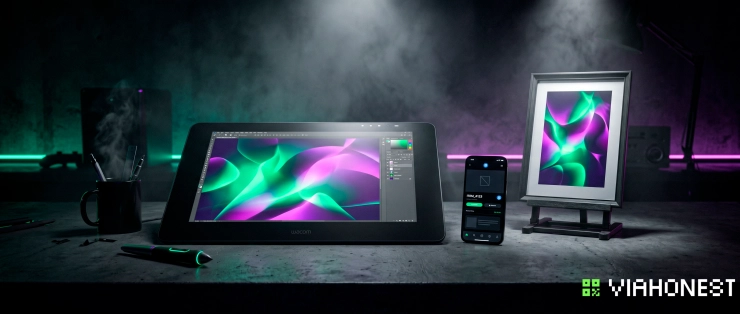
What Selling Digital Art Actually Means in 2026
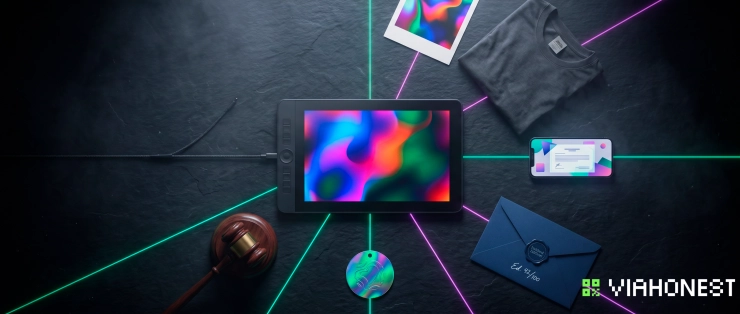
The phrase covers more ground than most people realize. A digital artist in 2026 might be selling any combination of the following, often at the same time.
Print-on-demand reproductions of original digital files, produced and shipped by third-party services when each order comes in. These are typically open editions sold at accessible prices.
Limited edition prints with declared edition sizes, signed and numbered by the artist, produced and authenticated through verified channels. These bridge digital creation with traditional fine art collecting practices.
Original digital files sold to a single buyer, sometimes with associated rights and sometimes as pure ownership of the file. The market for these has matured significantly with verification infrastructure.
Phygital editions that combine physical prints with digital authentication records, smart contracts, and embedded verification chips. This category has grown rapidly as authentication technology has improved.
Licensing deals that let businesses, publishers, or other creators use your work for specific purposes in exchange for fees or royalties.
Commissioned work produced specifically for individual clients, businesses, or institutions. This includes everything from personalized portraits to large-scale commercial illustrations.
Merchandise and product extensions that translate your art onto clothing, accessories, home goods, or other products through licensing or direct production.
Original digital art for screens including animated work, generative pieces, and interactive art designed for display on dedicated screens in homes or commercial spaces.
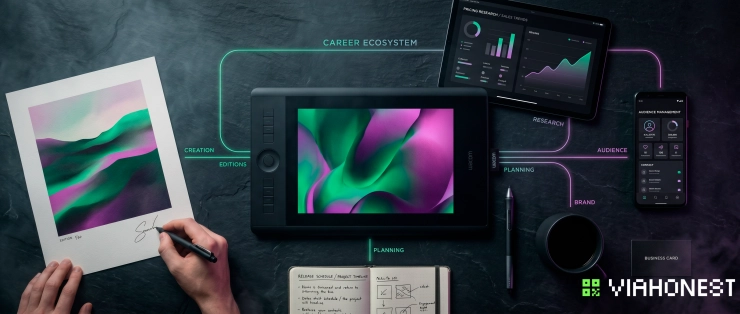
The artists who build sustainable careers usually combine several of these revenue streams rather than relying on any single one. The mix depends on the work, the audience, and the artist's preferences.
The Drawbacks of How Most Digital Artists Currently Sell
- Print-on-demand commissions eat 30 to 70 percent of each sale
- Platforms with poor authentication leave work vulnerable to copycats
- Generic marketplaces compete on price rather than on artist value
- Social media reach does not translate cleanly into sales without proper infrastructure
- Limited editions sold without verification lose their scarcity value over time
- Licensing deals signed without proper terms can give away long-term value
- Payment cycles on some platforms run 30 to 90 days, hurting cash flow
- Many artists undervalue their work because they cannot find clear pricing benchmarks
Why 2026 Is Different for Digital Artists
Three structural shifts have changed the economics of selling digital art in ways that benefit working artists.
Authentication infrastructure matured. Digital art used to suffer from a verification problem that physical art did not have. Anyone could screenshot a file. Anyone could claim a print was limited. In 2026, verified digital authentication, embedded NFC chips, and platform-tracked provenance solve this. Limited edition digital art now has the same authentication infrastructure as fine art originals, which means buyers will pay accordingly.
Creator-first platforms changed commission economics. Traditional print-on-demand services often take half or more of the sale price, leaving artists with thin margins. Newer platforms built around verified creator sales charge significantly less, leaving more of each sale with the artist who made the work.
Buyer expectations evolved. Collectors who once dismissed digital art now accept it as a legitimate category worth serious investment. The aesthetic categories are stable, the secondary markets have organized, and the resale infrastructure exists. Digital artists in 2026 can build careers with the same long-term value capture as traditional fine artists, which was not really true a decade ago.
The combination produced a moment where artists, platforms, and collectors all have reason to engage with digital art as a serious category. The artists who position themselves well through this transition are building careers with structural advantages that previous generations of digital artists did not have access to.
The Main Ways to Sell Digital Art
The practical channels for selling digital art each have their own economics, audience, and best-fit use cases. Understanding the differences lets you choose where to focus rather than spreading yourself thin across every option.
Print-on-Demand Services
Print-on-demand platforms handle production and shipping for each order as it comes in. The artist uploads files, sets prices, and earns the margin between the platform's production cost and the retail price. The model is convenient because no inventory is required and the artist never touches a print, but commissions are typically high and the artist often has limited control over print quality, packaging, and the buyer relationship.
This channel works well for open editions, accessible price points, and reaching casual buyers who want art for their walls without thinking deeply about collecting. It works poorly for serious collectors, limited editions, or work where authentication matters.
Verified Marketplaces
Creator-first marketplaces let artists list limited editions and original works with built-in authentication, verified seller profiles, and tracked provenance. Commissions are typically lower than print-on-demand, and the work entering the market carries the verification infrastructure that supports higher prices and stronger resale value.
This channel works well for limited editions, signed and numbered work, original digital pieces, and any work where authentication and provenance matter to buyers. It is increasingly the central channel for digital artists who want to build sustainable careers.
Direct Sales Through Your Audience
Selling directly to followers through social media, email newsletters, and your own shop captures the largest share of each sale because no middleman is involved. The work is in driving the traffic and handling the logistics yourself, including authentication, payment processing, and shipping.
This channel works well for artists with engaged audiences who already trust them and want to support the work directly. It works less well for reaching new buyers or for handling the operational complexity at scale.
Licensing and Commercial Work
Licensing your art to businesses for commercial use, or producing commissioned work for clients, generates revenue without selling individual pieces. The structure includes one-time licensing fees, ongoing royalty arrangements, work-for-hire commissions, and exclusive vs nonexclusive use terms.
This channel works well for artists whose work fits commercial applications and who can negotiate terms that protect long-term value. It works poorly for artists who lack experience with licensing contracts or who give away rights too cheaply.
NFT and Phygital Releases
Releasing work with blockchain-based authentication, smart contract royalties, and digital ownership features has matured significantly since the early speculation cycles. Modern releases focus less on speculation and more on functional features like persistent provenance, automated resale royalties, and verifiable scarcity.
This channel works well for artists with audiences comfortable with digital ownership and for work that benefits from programmable economic features. It is most powerful when combined with physical components in phygital format rather than as purely digital releases.
Auction Sales
For higher-value digital art, online auctions can produce competitive bidding that pushes prices above expectations. Major auction houses have established digital art categories with serious results, and specialized digital art auctions have built dedicated buyer bases.
This channel works well for established artists with strong markets and pieces that benefit from auction dynamics. It works poorly for emerging artists, accessible price points, or work that needs steady ongoing sales rather than periodic high-value transactions.
How to Structure Your Offerings Across Price Points
The artists who build sustainable income usually structure their offerings as a pyramid, with accessible work at the base, mid-tier pieces in the middle, and premium offerings at the top. The exact mix varies by artist and category, but the principle is consistent.
At the Base: Accessible Open Editions
Open edition prints at lower price points, typically $25 to $150, serve buyers who want your work for their walls without thinking deeply about collecting. These pieces are usually fulfilled through print-on-demand or in-house production, sold continuously without scarcity, and aimed at maximum reach.
The role of this tier is volume sales, audience expansion, and introducing new buyers to your work. Many will return later for higher-tier purchases as their relationship with your art deepens.
In the Middle: Signed and Numbered Limited Editions
Limited edition prints at mid-tier prices, typically $200 to $1,500, with declared edition sizes between 25 and 250 prints. Each is signed, numbered, and ideally carries verified digital authentication. These pieces appeal to serious buyers and emerging collectors who want pieces with documented scarcity and resale potential.
The role of this tier is income consistency and building collector relationships. The work establishes that you operate at a level where edition discipline, authentication, and provenance matter.
At the Top: Original Works and Premium Editions
Original digital files sold to a single buyer, very small edition releases under 25 pieces, or premium phygital editions at higher price points, typically $1,500 to $10,000 and above. These pieces appeal to serious collectors and institutional buyers who want significant work with strong authentication and ongoing value.
The role of this tier is establishing market position, building gallery and institutional relationships, and capturing the value of your strongest work. Even artists with modest audiences can support premium tier sales if the work, authentication, and presentation are strong.
Supporting Layers: Commissions, Licensing, and Merchandise
Commissioned work and licensing deals add revenue streams that do not compete with your main artistic output. Merchandise and product extensions translate your visual identity onto products that buyers can engage with at different price points.
These layers work best when they support the central artistic practice rather than dominating it. Artists who become primarily commission machines often find it difficult to maintain the creative output that built their audience in the first place.

How to Price Digital Art
Pricing is where most digital artists make the largest mistakes. Underpricing destroys the perceived value of your work and trains your audience to expect bargain prices. Overpricing limits sales and erodes credibility. The middle ground is narrower than it looks.
Research What Comparable Work Sells For
Before pricing anything, research recent sale prices for similar work by artists at your career stage. Auction results, marketplace sale histories, and gallery listings give you baselines. Your prices should sit within the realistic range for your category, with adjustments based on your specific market position.
Account for All Costs and Fees
Platform commission, payment processing, production costs for prints, shipping materials, your time on customer service, and applicable taxes all reduce your net per sale. A piece that lists at $300 might net you $180 after everything is calculated. Build that into your minimum acceptable price.
Price Tiered Editions Strategically
Limited editions typically follow a predictable pricing curve. Early prints in the edition might sell at one price, with prices increasing as the edition sells through. The first 25 prints of an edition of 100 might be priced at $200, the next 50 at $250, and the final 25 at $300. This rewards early collectors and supports steady sales.
Adjust Over Time as Your Market Develops
Your prices should rise as your audience grows, your work matures, and your market position strengthens. Holding prices flat for years signals stagnation. Raising prices too quickly without supporting demand signals desperation. Most working artists adjust prices on new releases rather than reprice existing inventory.
Resist the Race to the Bottom
When other artists in your category price aggressively low, the temptation to match grows. Resist it. Buyers in serious collecting categories often associate price with quality, and the cheapest work usually attracts the riskiest buyers. Pricing slightly above the floor positions you better than chasing it.
If your digital art sales feel like they should be performing better than they are, the gap is often in the infrastructure rather than the work itself. Start selling on ViaHonest with built-in authentication, fair commission rates, and a buyer base that values verified digital art. The math finally works in your favor.
How to Drive Sales to Your Digital Art
Listing work is the easy part. Driving traffic to your listings is where most digital artists struggle, and where the difference between modest and substantial income gets made.
Use Short-Form Video as Your Main Marketing Channel
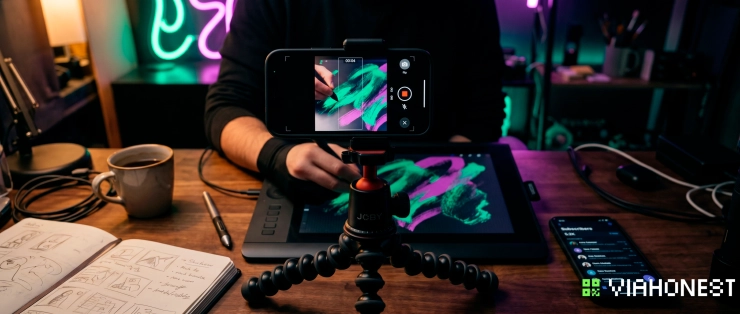
Process videos showing how a piece comes together, time-lapse documentation, behind-the-scenes glimpses of your studio setup, and quick walkthroughs of finished work all outperform polished promotional content on TikTok, Instagram Reels, and YouTube Shorts. The algorithm rewards consistency and personality more than production value.
The structure that consistently works: show the finished piece in the first second, then show how you got there in the next ten, and end with a clear line about where to buy. Repeat across different pieces, different times of day, and different platforms.
Build an Email List Early
Social media platforms can change algorithms overnight. An email list is the only audience you fully own. Add a signup link to your shop, your social bios, and any other channel where your audience finds you. Offer something small in exchange for signups, like early access to new releases or a free desktop wallpaper.
Release Work as Drops Rather Than Continuous Inventory
Limited time releases with clear announcement, promotion, and launch windows generate dramatically more attention than always-on inventory. Even small drops of 10 to 50 pieces, promoted for a week beforehand, will outsell the same pieces sitting in your shop for six months.
Engage With Your Audience Directly
Reply to comments. Send personal thank-you messages to early buyers. Repost user-generated content showing your work displayed in collectors' homes. The parasocial trust that turns viewers into buyers builds through consistent direct engagement, not through polished marketing campaigns.
Cross-Promote Strategically
Collaborate with other digital artists in your category for cross-promotion that introduces both audiences to each other. Guest appearances on creator podcasts, joint releases with complementary artists, and shoutouts among friends all expand reach without paid acquisition costs.
Leverage Your Existing Buyers
Repeat buyers are dramatically more profitable than first-time buyers. Maintain relationships with previous collectors through occasional updates, early access to new work, and personalized communication. Many sustainable digital art careers are built on relatively small numbers of repeat collectors rather than on continuous new buyer acquisition.
How to Handle Authentication and Licensing
Two operational areas separate digital artists who build sustainable careers from those who get stuck. Authentication protects the value of what you sell. Licensing protects the long-term economics of your work being used elsewhere.
Authentication for Digital Work
For limited editions, authentication should be built into the release through platform infrastructure, digital records tied to your verified account, and ideally embedded identifiers on physical prints. The authentication should travel with each piece into the secondary market automatically.
For commissioned and licensed work, the authentication of the original digital file matters less than the documentation of the rights granted to the buyer or licensee. Clear contracts that specify what they can and cannot do with the work protect your long-term value.
For NFT and phygital releases, authentication is structurally built into the format, but the underlying smart contracts and platform infrastructure determine whether the authentication actually persists across time and platform changes.
Licensing Terms That Protect You
Licensing contracts deserve careful attention even when the immediate fee feels appealing. The categories that matter most are exclusivity, duration, scope of use, modification rights, attribution, and termination conditions.
Exclusive licenses prevent you from licensing the same work to anyone else, which can be appropriate for high-value deals but devastating if the fee is low. Nonexclusive licenses preserve your ability to license the same work multiple times.
Duration should be specified clearly. A perpetual license gives the licensee rights forever. A time-limited license expires and requires renewal or new fees.
Scope of use should be narrow rather than broad. A license for "use in marketing materials" is dramatically different from "any commercial use in perpetuity."
Modification rights determine whether the licensee can alter your work. Without restrictions, your work can be cropped, recolored, or otherwise changed in ways that may damage your reputation.
Attribution requirements matter for portfolio building and ongoing recognition. Without attribution requirements, your work may be used widely without anyone knowing it is yours.
Avoid Work-for-Hire Without Understanding It
Work-for-hire arrangements transfer copyright to the client entirely, meaning you lose all future rights to the work. These can be appropriate when the fee fully compensates for the loss of long-term value, but artists often sign work-for-hire contracts without realizing what they are giving up.
How Modern Platforms Are Reshaping Digital Art Sales
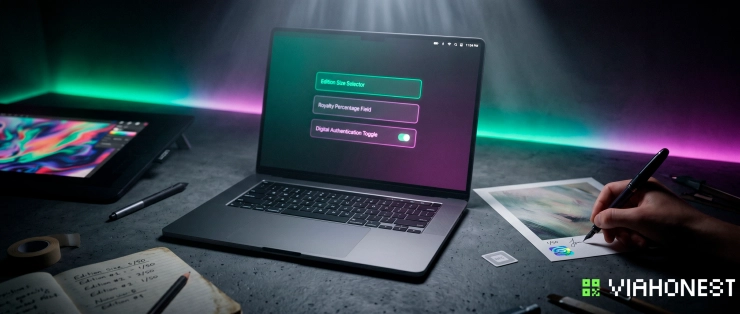
The deeper shift in 2026 is that the operational infrastructure for selling digital art has matured significantly. Older platforms required artists to handle authentication, payment, shipping, and provenance separately, often through patched-together solutions. Modern creator-first platforms bundle this infrastructure into the listing flow itself.
Platforms like ViaHonest treat digital art sales as a structural category rather than an afterthought. Each artist has a verified profile that buyers can identify. Each piece can carry digital authentication tied to that verified account. Limited editions are platform-tracked rather than artist-managed. Payment runs through systems that protect both sides. The infrastructure handles what used to take significant operational effort.
Why This Matters for Digital Artists
- Limited editions hold their scarcity value through platform-level tracking
- Authentication travels with each piece into the secondary market
- Resale royalties can route automatically when pieces change hands
- Cash flow improves because payouts arrive in days rather than months
- Forgery resistance is structural rather than reputational
- Career value compounds because each transaction adds to your verified history
- Buyers will pay more for verified work than for unverified equivalents
Why It Matters for Collectors of Digital Art
- Verification in seconds rather than weeks of research
- Confidence that limited editions are actually limited
- Stronger resale value because authentication persists
- Easier insurance and appraisal based on platform-verified records
- Direct relationships with artists rather than platform intermediation
For a deeper look at how platform-level infrastructure changes the economics of selling digital art, the About ViaHonest page goes into the underlying philosophy.
Common Mistakes Digital Artists Make
A few patterns regularly limit the income of digital artists who could be earning significantly more. Avoiding them is most of what separates artists who scale successfully from those who plateau.
Selling Only Through Print-on-Demand
Relying entirely on print-on-demand caps your income at the margin those platforms leave you after their commission. The artists who scale combine print-on-demand for accessible work with limited editions, originals, and direct sales for higher-value work.
Not Releasing Limited Editions
Pure open editions sold continuously through print-on-demand leave a major income category unaddressed. Limited editions with verified authentication serve buyers willing to pay significantly more for documented scarcity and ongoing value. Not offering them limits your career economics.
Pricing Defensively Rather Than Strategically
Setting prices low because you assume buyers will not pay more is a self-fulfilling prophecy. The buyers who would pay more for verified, well-positioned work move past underpriced listings because the price signals problems with the work itself.
Skipping Authentication
Releasing limited editions without verifiable authentication undermines their value over time. The work that sold as 1/50 cannot prove it was actually one of fifty if the edition sizes were never platform-tracked. Authentication is not optional for serious editions.
Ignoring the Buyer Relationship
Treating each sale as a one-time transaction rather than the start of a potential relationship leaves enormous value unrealized. Repeat buyers drive sustainable careers. Building those relationships requires intentional effort from the first sale forward.
Spreading Across Too Many Platforms
Trying to maintain presence on every available platform divides attention without building meaningful audience anywhere. Focused effort on two or three platforms typically outperforms scattered presence across ten.
Underestimating Marketing Time
Most digital artists significantly underestimate how much time effective marketing takes. The artists who succeed treat marketing as a structural part of their practice, not as an afterthought squeezed in around the creative work.
Who Is Already Doing This Well
We will be publishing detailed case studies soon on digital artists building sustainable practices across categories:
- Independent illustrators running successful limited edition releases
- 3D artists releasing phygital editions with embedded authentication
- Generative artists managing on-chain and physical components together
- Digital photographers transitioning to limited edition physical sales
- Animation and motion artists building licensing and commission practices
If you want to be one of the first stories featured on the blog, launch your first drop on built-in authentication and tag the brand. Digital artists who adopt verification infrastructure early tend to be the ones whose careers scale through the next decade.
Frequently Asked Questions
Can I really make a living selling digital art online?
Yes, many artists do, though the path varies. Sustainable income usually combines multiple revenue streams including limited editions, prints, commissions, licensing, and direct sales rather than relying on any single channel. The artists who succeed typically build for three to five years before reaching consistent full-time income.
What is the difference between selling digital art and selling NFTs?
Selling digital art is the broader category that includes prints, limited editions, originals, licensing, and any commercial use of digital creative work. NFTs are one specific format within that category, involving blockchain-based ownership tokens. NFTs can be useful for certain types of releases but are not required for selling digital art successfully.
How does ViaHonest help me sell digital art?
The platform combines verified seller profiles, built-in authentication for limited editions, fair commission rates, integrated shipping for physical prints, and a buyer base that values verified work. For digital artists, this means more of each sale stays with you, your editions hold their scarcity value, and buyers will pay closer to true market value because they can verify what they are buying.
Should I start with print-on-demand or limited editions?
Most digital artists benefit from offering both. Print-on-demand serves the accessible price point and reaches casual buyers. Limited editions serve serious collectors and emerging collectors at higher price points. Starting with only one limits your audience and your income potential. The two complement each other rather than competing.
How do I price my first limited edition?
Research what artists at a similar career stage are pricing comparable editions at. For first editions from emerging artists, the typical range is $150 to $400 per print for editions between 50 and 150 prints. Pricing too low signals lack of confidence. Pricing too high without supporting market position limits sales. The middle is narrower than it looks.
Do I need a website to sell digital art?
Not necessarily. Many successful digital artists sell entirely through verified platforms without running their own websites. A platform shop provides the storefront, authentication, payment processing, and shipping infrastructure that a website would otherwise require you to build separately. Websites become more useful as your operation scales and you want to consolidate brand presence.
How do I handle copyright and licensing?
For limited editions and original work sold to individual buyers, you retain copyright unless the contract specifies otherwise. For commissioned work and licensing deals, the contract terms determine what rights transfer. Always have clear written agreements for commercial and commissioned work. Consider consulting with an attorney for higher-value licensing deals.
What about taxes on digital art income?
Digital art income is taxable like any other business income. Depending on volume and jurisdiction, you may need to register as a business, collect sales tax, and pay quarterly estimated taxes. Speak with an accountant familiar with creative income before this becomes a problem.
Start With What You Have. Build the Infrastructure Around It.
Selling digital art online in 2026 is more accessible than it has ever been, and also more competitive than it used to be. The combination of mature authentication infrastructure, creator-first platform economics, and buyer acceptance of digital art as a serious category has opened the door to anyone willing to learn the channels and put in the work. The same dynamics that lowered the barrier to entry mean the artists who succeed are the ones who treat selling as a real practice, not an afterthought to making.
Start with the work you already have. Identify which pieces fit which channels. Build a base of accessible open editions, a middle tier of limited editions with verified authentication, and a top tier of original or premium phygital releases. Drive traffic through short-form video, build relationships with the buyers you already have, and reinvest patiently rather than chasing every new platform or trend. The digital artists who build sustainable careers through the next decade will not be the ones with the largest audiences. They will be the ones with the right infrastructure and the patience to grow it.
If you have been making digital art and wondering how to actually turn it into consistent income, this is the moment to upgrade where and how you sell. Start selling on ViaHonest and release your next piece with built-in authentication, fair commission economics, and verified buyer infrastructure from the first listing forward. Book a free demo to see exactly how the digital art selling tools work, or launch your first drop and begin building the verified track record that turns one good sale into a real career.
The art is yours. The market is finally ready for it.