Most artists who fail to make a living from their work do not fail because their art is not good enough. They fail because nobody knows about it. The harsh reality of the art market in 2026 is that quality alone has never been less sufficient. The artists earning real income are not necessarily the most talented in their categories. They are the ones who treat promotion as a structural part of their practice rather than an afterthought to creating. This is not a betrayal of the work. It is what makes the work reach the people who would actually value it if they knew it existed. The good news is that the tools for reaching those people have never been more accessible. The hard news is that using those tools effectively takes consistent work that most artists underestimate.
Promoting your art online means building visibility, audience, and demand for your work through digital channels including social media, email, content creation, search optimization, collaborations, and direct outreach. The goal is not just to be seen but to be seen by the specific people who would buy your work, support your career, and become long-term collectors. Effective art promotion in 2026 combines short-form video, consistent posting, authentic storytelling, email list building, smart use of platforms, and the kind of patient relationship-building that turns casual viewers into committed buyers. The artists who get this right reach sustainable income. The ones who do not usually stay stuck at the same level for years regardless of how much they create.
This guide walks through the practical strategies that actually work for art promotion today, what most artists get wrong about marketing themselves, how to handle the tension between creative practice and commercial visibility, and how a platform like ViaHonest gives artists the selling infrastructure that turns promotional effort into actual income rather than just engagement metrics.
Why Art Promotion Looks Different Now
The promotional landscape for artists has shifted dramatically over the past decade, and the shifts keep happening. Understanding what has changed shapes which strategies actually work today.
Gallery gatekeeping has lost most of its power. Twenty years ago, getting into the right gallery was the only path to a serious art career for most artists. The gallery promoted you, and you painted. In 2026, gallery representation is one option among many, and many of the most successful working artists have built audiences directly without traditional gallery support. The promotional work that used to be done by galleries now falls to artists themselves, but the tools to do it are accessible in ways that were impossible before.
Social media platforms have matured into actual sales channels. Early social media for artists was about visibility, with sales happening elsewhere. Today, platforms like Instagram and TikTok directly drive purchases, integrate with shop tools, and serve as the primary discovery channel for younger collectors. The line between "marketing" and "selling" has blurred significantly.
Short-form video has replaced static images as the dominant format. This shift matters more than most artists recognize. The same image that performed well on Instagram in 2018 reaches a fraction of the audience in 2026. Video showing process, transformation, finished work in context, or the artist's voice consistently outperforms polished static images by significant margins.
Audiences expect to know the artist, not just see the art. The parasocial relationships between creators and audiences have become the foundation of how art sells online. Anonymous artists with great work face an uphill battle. Artists who share their voice, process, life, and perspective build the trust that turns viewers into buyers.
Email has become more valuable, not less. As social platforms became more algorithmically uncertain, direct email contact has emerged as the most reliable channel for artists to reach their actual audience. Building an email list is no longer optional for serious art careers.
The Drawbacks of Outdated Promotional Approaches
- Polished static images alone no longer drive meaningful reach
- Sporadic posting produces inconsistent results regardless of quality
- Anonymous artist personas struggle to build the trust required for sales
- Single-platform strategies create dangerous vulnerability to algorithm changes
- Pure self-promotion without value creation gets filtered out by audiences
- Generic art-account posting style produces generic results
- Avoiding personal voice limits the relationship-building that drives sales
- Treating promotion as occasional effort rather than structural practice produces marginal results
What Effective Art Promotion Actually Looks Like
Before going into specific tactics, it helps to understand the principles that distinguish promotion that works from promotion that does not. A few patterns hold across categories and career stages.
Consistency beats intensity. Posting three times a week for two years outperforms posting fifteen times a week for two months. The algorithms reward patterns. Audiences develop expectations. The compounding effect of sustained presence produces results that bursts of effort cannot match.
Process beats product. Counterintuitively, content showing how work is made consistently outperforms content showing finished work. Viewers engage more deeply with the human story of creation than with polished finished images. This is true across categories from traditional painting to digital illustration to sculpture.
Voice beats production value. Artists who share their actual thoughts, perspectives, and personality build stronger followings than artists who maintain neutral or impersonal accounts. Audiences want to follow people, not portfolios.
Specific beats general. Art accounts that clearly serve a specific aesthetic, theme, or audience perform better than accounts that try to appeal to everyone. The internet rewards specificity, and the artists who own a clear niche reach the buyers in that niche.
Long-term beats short-term. The promotional approaches that work in 2026 require months and years to produce results, not days and weeks. Artists looking for immediate viral success usually get neither viral success nor sustainable audience growth. The patient ones build something durable.
Build the Foundation Before Promoting
A few foundational pieces should be in place before serious promotional effort produces results. Promoting without these in place wastes attention you cannot easily recapture.
Define Your Visual and Verbal Identity
Your social media presence, packaging, communication, and visual presentation should all feel like they come from one consistent source. The specifics matter less than the consistency. Pick a color palette, a posting style, a voice, and stick with them long enough for audiences to recognize them.
Document Your Best Work Properly
High-quality photographs of your work, taken in consistent lighting against clean backgrounds, become the foundation of every promotional channel. Spend an afternoon getting professional photographs of your strongest pieces before promoting. The same photos work across every platform.
Set Up Your Sales Infrastructure
Driving traffic to nowhere is wasted effort. Have a place where people can actually buy your work, ideally with verified authentication, integrated shipping, and clear pricing. Whether this is a verified profile on a creator-first platform, your own website, or both, set it up before promoting.
Write a Clear Artist Bio
Your bio in any platform should answer who you are, what you make, why it matters, and where to find more. Keep it short, specific, and consistent across platforms. Many artists treat bios as afterthoughts, but the bio is often the first impression that determines whether someone follows or scrolls past.
Establish Realistic Expectations
Most artists who quit promotion do so within three to six months because growth has been slow. The artists who succeed expect twelve to thirty-six months of consistent work before reaching sustainable income from promotional effort. Setting realistic expectations from the start prevents the discouragement that ends most promotional practices.
Master the Short-Form Video Channels
Short-form video has become the single most important format for art promotion in 2026. Artists who refuse to engage with it are competing with one hand tied behind their back. The good news is that art content particularly suits the format, and the techniques that work are learnable.
Understand What the Algorithm Rewards
Short-form video platforms reward watch time, completion rate, and engagement. The first second has to stop the scroll. The first three seconds have to give viewers a reason to keep watching. The rest of the video needs to deliver enough value or interest that viewers complete it or engage with it.
For art content, this typically means leading with a hook that shows transformation, surprise, or the most visually compelling element of the piece. A video that opens with the finished painting and then shows how it was made works because the hook is visible immediately. A video that opens with a blank canvas and slowly progresses loses viewers who scrolled past before the work appeared.
Use Process and Transformation Content
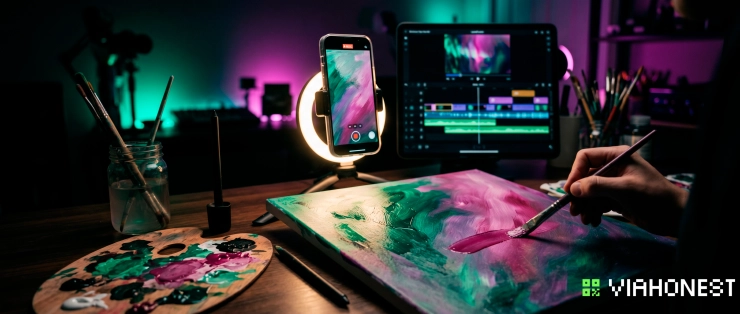
The single most reliable format for art content is showing the transformation from beginning to end. Time-lapse work, before-and-after comparisons, and stage-by-stage progression all perform consistently well. The format works because it satisfies basic human curiosity about how things are made.
Show Your Workspace and Tools
Studio tours, tool collections, workspace organization, and the physical reality of being an artist all generate engagement. Audiences want to see where the work happens, not just the finished work. This category of content costs little to produce and provides genuine value to viewers interested in your practice.
Talk to the Camera Sometimes
Many artists resist appearing on camera or speaking directly to viewers. This resistance is one of the most common limiters of promotional growth. Even occasional direct-to-camera content where you explain your process, share thoughts about your work, or answer common questions builds the parasocial trust that turns viewers into buyers.
Post Consistently Rather Than Perfectly
Posting daily or near-daily for months produces dramatically better results than posting occasionally with high production value. The algorithms reward consistency, and the practice of posting frequently teaches you what works for your specific audience faster than any external advice can.
Cross-Post Strategically Across Platforms
The same video often works across Instagram Reels, TikTok, and YouTube Shorts with minor adjustments. Cross-posting amplifies the return on each piece of content rather than requiring entirely separate content streams for each platform. Just be aware that each platform has subtle differences that reward platform-native posting over copy-paste reposting.
Build Your Email List Strategically
Email has become the most underrated promotional channel in 2026. As social platforms grow more algorithmically uncertain, direct email contact with people who actively chose to hear from you produces more reliable results than any other channel.
Make Signup Available Everywhere
Add an email signup option to your social bios, your website, your shop, and any other channel where your work appears. The friction should be minimal. Asking for first name and email address is enough at the start. Anything more reduces signups significantly.
Offer Something in Return
Generic "join my mailing list" requests perform poorly. Offering something specific in return for the signup performs significantly better. Free desktop wallpaper, early access to new work, a behind-the-scenes guide to your process, or any small specific benefit increases signup rates substantially.
Send Useful Content, Not Just Sales
Email lists that receive only promotional content lose subscribers quickly. The pattern that works is mostly useful or interesting content with occasional sales mentions. A monthly email about what you have been working on, what you have been thinking about, and what is new in your practice builds the relationship that supports sales when you have new work to offer.
Segment Your List Over Time
As your list grows, separating active collectors from casual subscribers and treating each group differently produces better results than treating everyone identically. Active collectors receive early access and personalized communication. Casual subscribers receive general updates and occasional promotion.
Treat the List as a Long-Term Asset
The value of an email list compounds over years. The 200 subscribers you build in your first year become the foundation for the 2,000 you build over five years, and the 20,000 you build over a decade. The compounding requires sustained effort but produces results that other channels cannot match.
Use Long-Form Content to Build Authority
While short-form video drives discovery, long-form content builds depth and authority. The two work together. Artists who use both consistently produce stronger results than artists who focus only on one or the other.
Maintain a Blog or Newsletter
Regular long-form writing about your work, process, thinking, and category builds authority over time. The writing does not need to be elaborate. Even short essays of 500 to 1,000 words shared regularly build a body of content that establishes you as a serious voice in your category.
Create Tutorial or Educational Content
If your work involves techniques others want to learn, creating educational content positions you as an expert and reaches audiences interested in your category. Tutorials build trust that supports sales of your actual work.
Appear on Podcasts and in Interviews
Being interviewed by others reaches their audiences and provides social proof that you are worth listening to. Reaching out to podcasts and publications that cover your category, with specific suggestions for what you could discuss, regularly produces opportunities.
Write Guest Posts and Articles
Contributing to publications, blogs, and platforms in your category extends reach beyond your direct audience. Even unpaid contributions build your name and link back to your own channels.
Document Your Practice Through Long-Form Video
YouTube videos, longer interviews, and detailed process documentation reach audiences that prefer depth over short-form content. The same person posts both short and long videos for different parts of their potential audience.
Build Relationships With Other Artists and Tastemakers
Promotion that works in 2026 is rarely solo work. The artists who reach significant audiences usually do so through networks of mutual support, collaboration, and cross-promotion with other creators in their categories.
Engage Genuinely With Other Artists' Work
Commenting on, sharing, and engaging with other artists' work builds relationships that benefit you over time. Generic engagement does not work. Specific, thoughtful engagement that shows you actually paid attention to the work does. Building these relationships requires no money and produces enormous compounding returns.
Collaborate on Joint Projects
Joint releases with other artists, collaborative pieces, group shows, or shared projects expose each artist to the others' audiences. The collaborations work best when there is genuine creative reason for them rather than purely promotional motivation.
Cross-Promote Strategically
Shoutouts, mentions, and shares between artists in similar categories expand reach for everyone involved. Building a small network of artists who support each other's work regularly produces better results than trying to reach broader audiences alone.
Connect With Galleries, Curators, and Writers
Even artists who do not pursue gallery representation benefit from relationships with galleries, curators, critics, and writers in their category. These relationships open opportunities for inclusion in shows, articles, and discussions that reach audiences direct promotion cannot.
Treat Every Buyer as a Potential Long-Term Relationship
The buyers you have are dramatically more valuable than the buyers you do not have. Treating each sale as the start of an ongoing relationship rather than a transaction produces repeat sales, referrals, and the deep collector relationships that sustain careers.
If you have been promoting your art but the effort is not translating into actual sales, the gap is often in the selling infrastructure rather than the promotion itself. Start selling on ViaHonest where verified authentication, fair commission rates, and integrated payment turn promotional traffic into real sales. The promotion only matters if the selling actually works.

Use Platform-Specific Strategies That Actually Work
Each major platform rewards different approaches. Generic strategies across all platforms produce generic results. Platform-specific approaches produce significantly better outcomes for the same effort.
Instagram Strategy
Instagram rewards consistent posting across feed posts, Reels, and Stories. The platform increasingly prioritizes video over static images, but a mix of formats still performs better than video alone. Use hashtags strategically rather than spamming them. Engage with comments within the first hour of posting. Save and pin your best content. Use Story Highlights to organize your best content for new visitors. The Reels tab is where most discovery happens in 2026, so prioritizing video content makes sense.
TikTok Strategy
TikTok rewards rapid iteration, specific aesthetics, and authentic personality more than polished production. The algorithm gives new accounts genuine chances to reach broad audiences, so even beginners can find significant viewership. Posting frequency matters enormously. The platform favors at least daily posting for accounts trying to grow. Trends move fast, so participating in current sounds and formats while they are active produces better reach than after they peak.
YouTube Strategy
YouTube rewards depth, expertise, and long-term thinking more than other platforms. Building an audience takes longer but the audience tends to be more invested when it forms. Tutorials, process videos, and documentary content about your practice perform well. YouTube Shorts can drive discovery to longer content.
Pinterest Strategy
Pinterest remains overlooked but valuable, particularly for artists whose work has clear visual or stylistic categorization. The platform functions more as a search engine than a social network, with content discovered through searches rather than feeds. Pins from your work can drive traffic for years after posting, unlike content on other platforms that fades quickly.
LinkedIn Strategy
LinkedIn matters less for direct art sales but matters significantly for artists working with corporate clients, licensing, commercial work, or institutional buyers. Maintaining a professional presence there opens opportunities other platforms do not.
X (formerly Twitter) Strategy
X has become more polarized and less reliable as an art promotion channel, but some art categories still maintain strong communities there. Particularly for digital art, generative art, and certain niche categories, X conversations still drive meaningful discovery.
Track What Actually Works
The promotional channels and strategies that work for one artist do not necessarily work for another. Tracking results lets you focus on what actually produces income rather than what feels productive.
Measure Beyond Engagement Metrics
Likes, follows, and views feel rewarding but do not always correlate with actual sales. Track what matters most: email signups, shop visits, sales, and repeat buyers. The artists who succeed know which content actually drives the business, not just which content gets the most attention.
Pay Attention to Sources
When sales happen, ask buyers how they found you. The information identifies which channels deserve more effort and which deserve less. Many artists discover that the channel they spend the most time on is not the channel actually driving sales.
Test and Iterate
Try new approaches, formats, and channels regularly. Drop the ones that do not produce results. Double down on the ones that do. The artists who treat promotion as something to be experimented with consistently outperform those who follow generic advice without adjustment.
Use Platform Analytics
Each platform provides analytics that show which content reaches more people, drives more engagement, and converts to website visits. Reading these analytics regularly identifies patterns that intuition alone misses.
Document Your Process
Keep records of what you tried, what worked, and what did not. The information becomes valuable over time as you build a personal playbook for what works for your specific work and audience.
Avoid the Common Promotional Mistakes
A few patterns regularly limit the results of promotional effort. Avoiding them is most of what separates artists who reach sustainable income from those who plateau at hobby levels.
Posting Without a Plan
Sporadic posting based on when you feel inspired produces sporadic results. A simple weekly plan covering what you will post on which platforms turns scattered effort into a system that produces results over time.
Treating Every Post as a Sales Pitch
Content that exists only to sell something gets filtered out by both algorithms and audiences. The mix that works is mostly value-providing content with occasional direct sales mentions. The 80/20 ratio applies roughly across most platforms.
Comparing Your Beginning to Others' Middle
Comparing your early audience to artists with five-year head starts produces discouragement without producing improvement. The relevant comparison is your own results over time, not where other artists currently are.
Spreading Across Too Many Platforms
Trying to maintain serious presence on every available platform divides attention without building meaningful audience anywhere. Focusing on two or three platforms typically produces better results than scattering across eight.
Ignoring Email While Chasing Social Media
The artists who build sustainable careers usually have substantial email lists. Those who ignore email in favor of social media alone create dangerous dependence on platforms they do not control.
Avoiding Showing Your Face or Voice
The resistance to appearing personally in content is one of the most common limiters of promotional growth. Audiences want to follow people. Anonymous artists with great work consistently underperform artists who share themselves alongside their work.
Posting and Disappearing
Posting then leaving without engaging with responses, questions, or community produces dramatically worse results than posting and staying present for the conversation that follows. The first hour after posting is the most important for engagement, and the algorithms know whether you participated.
Giving Up Too Early
Most artists who quit promotion do so at exactly the point where compounding would have started producing meaningful results. The first six to twelve months show little. The second year shows growth. The third year and beyond show significant returns. Quitting at month four guarantees you never see the returns.
Address the Tension Between Creating and Promoting
Most artists feel real tension between time spent making work and time spent promoting it. Resolving this tension intelligently determines whether promotional effort sustains over years or burns out.
Treat Promotion as Part of the Practice
The artists who manage this tension well treat promotional work as a structural part of being an artist rather than as competition with the real work. The hour spent on a process video is not stolen from making art. It is part of making art reach the people who will value it.
Use Time-Blocking
Dedicating specific times to promotional work and other times to creative work prevents either from consuming the other. Many working artists reserve mornings for creating and afternoons for business and promotional work, or use similar consistent structures.
Batch Promotional Tasks
Producing multiple pieces of promotional content at once, then scheduling them over time, requires less total time than producing each piece separately. Many artists set aside one day a week or month for promotional content production.
Use the Work Itself for Content
The act of making work generates the raw material for promotional content. Filming process while painting, photographing work-in-progress while creating, and documenting your studio as you work all turn creation time into promotional content time at minimal additional effort.
Accept That Promotion Is Part of the Career
The artists who resist promotion as inherently corrupting usually have shorter and more frustrated careers than those who accept it as part of the work. The acceptance is not a betrayal. It is what makes the long career possible.
For a deeper look at how platform-level infrastructure changes what art promotion can produce, the About ViaHonest page goes into the underlying philosophy.
Who Is Already Doing This Well
We will be publishing detailed case studies soon on artists building promotional practices across categories:
- Independent painters using short-form video to build collector audiences
- Digital illustrators driving sales through consistent Instagram and TikTok presence
- Photographers building email lists that drive limited edition releases
- Sculptors documenting process work that reaches international audiences
- Mixed-media artists combining multiple platforms into integrated promotional systems
If you want to be one of the first stories featured on the blog, launch your first drop and tag the brand. Artists who develop effective promotional practices often have insights worth sharing with others working through similar challenges.
Frequently Asked Questions
How long does it take to see results from promoting my art online?
Most artists need three to twelve months of consistent effort before seeing meaningful audience growth, and twelve to thirty-six months before promotion translates into substantial sales. The artists who succeed treat promotion as a long-term investment rather than expecting immediate results.
Which platform should I focus on first?
For visual artists, Instagram and TikTok typically produce the strongest discovery results in 2026. The specific choice depends on your category and audience, but starting with one or two platforms and building real depth there outperforms spreading across many platforms from the start.
How does ViaHonest help artists promote their work?
While ViaHonest is not primarily a promotional platform, it provides the selling infrastructure that makes promotion worthwhile. Verified seller profiles, integrated authentication, fair commission rates, and direct buyer relationships mean that promotional traffic translates into actual sales rather than leaking through inadequate selling systems.
Do I really need to show my face in content?
Not always, but artists who do consistently outperform those who do not in most categories. The parasocial trust that drives art sales builds more reliably through personal presence than through purely visual content. Even occasional direct-to-camera content significantly outperforms entirely anonymous posting.
How often should I post to social media as an artist?
For active growth, near-daily posting on at least one primary platform produces dramatically better results than less frequent posting. The exact frequency varies by platform and category, but consistency matters more than perfection. Three quality posts per week sustained for a year outperforms ten posts per week for a month then nothing.
Should I pay for ads to promote my art?
For most emerging artists, organic promotion produces better returns than paid advertising. Ads can be useful for established artists with proven offerings, but spending on ads before you know what converts usually produces poor results. Build organic reach first, then consider paid promotion to amplify what already works.
How do I balance time between making art and promoting it?
The ratio varies by career stage. Early artists often spend more time creating than promoting. As audiences develop, promotion takes more time. Most working artists settle into rough patterns where promotional work occupies twenty to forty percent of total business hours, with the specific split depending on what produces the best results for their specific practice.
What if I hate self-promotion?
This is common and worth examining honestly. Some discomfort is normal and worth pushing through. Total resistance suggests a path that involves working with a manager, gallery, or partner who handles promotional work while you focus on creating. Both paths can produce sustainable careers, but pretending you will promote effectively while feeling intense aversion usually produces neither successful promotion nor sustainable practice.
Promote With Patience. Build With Purpose. Sell With Infrastructure.
Promoting art online in 2026 is more accessible than it has ever been, and also more demanding than most artists expect. The tools and platforms that put global reach within the budget of any working artist also require consistent attention to produce results. The artists who build sustainable careers through promotion are not the ones who got lucky or went viral. They are the ones who treated promotion as structural work, sustained the effort over years rather than months, used multiple channels strategically, and connected promotional reach to selling infrastructure that converted attention into income.
Start with one or two platforms where your work fits. Post consistently with a mix of process content, finished work, and personal voice. Build an email list from the first day. Engage genuinely with other artists in your category. Document what works and adjust based on actual results rather than guesses. Connect promotional channels to selling infrastructure that handles authentication, payment, and shipping so that traffic becomes income. Trust the compounding effect of sustained effort across years, not weeks.
If you have been making art and promoting inconsistently, this is the moment to upgrade both sides of the work. Start selling on ViaHonest with verified authentication and integrated selling infrastructure that turns promotional effort into actual sales. Book a free demo to see exactly how the selling tools work, or launch your first drop and begin building the verified track record that promotional work needs to actually pay off.
The art deserves to be seen. The seeing deserves to translate into actual income. The combination of patient promotion and structural selling infrastructure is what makes art careers work in 2026. The artists who understand both sides are the ones whose practices will still be growing five years from now.