
A solid online business idea is a specific way to create value and get paid using the internet as your main channel for marketing, sales, and delivery. The best web-based business concepts aren’t “get rich quick” tactics - they’re repeatable systems built around real customer problems. They’re especially relevant right now because Americans keep buying online (in Q3 2025, the U.S. Census Bureau estimated e-commerce at 15.8% of total retail sales on an unadjusted basis) and entrepreneurship activity remains elevated (532,319 business applications in January 2026, seasonally adjusted).
Remote work is common in home-doable jobs; Pew Research Center found 75% work remotely at least some of the time. That helps you test offers quickly.
In this guide, we’ll map the major business models, share practical ideas, and walk through how to launch from home with an emphasis on execution, trust, and safety.
What Is an Online Business?
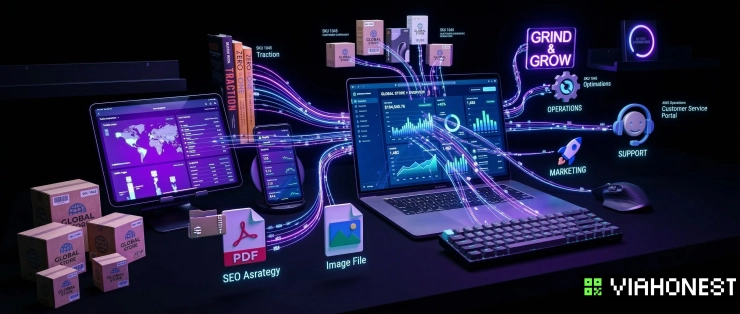
An online business is a business that operates primarily through the internet: customers discover you online, purchase online, and either receive the product digitally or get a physical item shipped after an online checkout. The “storefront” might be a website, a marketplace listing, an app, or even a simple checkout link attached to your content.
Compared with offline businesses, the biggest advantages are reach and speed. You can serve customers across regions without opening new locations, and you can test demand quickly with search, social platforms, and marketplaces. But the trade-off is that digital trust becomes central: customers must feel confident in the accuracy of what’s being sold, the security of the payment, and the business’s ability to deliver.
That risk is not theoretical. The Internet Crime Complaint Center reported 859,532 complaints and $16.6 billion in losses in 2024, and the FTC reported $12.5 billion in reported fraud losses in 2024 - while noting that online shopping issues were among the most commonly reported fraud categories.
This is why founders need to treat operational discipline as part of the product. In practice, the core skill behind online businesses is building trust at scale: clear policies, secure accounts, consistent fulfillment, and responsive support. The FTC’s small-business cybersecurity guidance calls out practical protections like multi-factor authentication, keeping software updated, and limiting access to sensitive assets - controls that matter even for a one-person business.
Types of Online Businesses
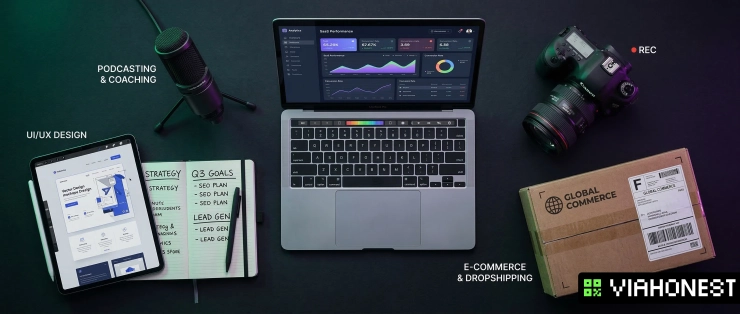
The fastest way to avoid “shiny object syndrome” is to choose a model before you choose a niche. The model determines what you sell, how you price, and what skills you’ll need to develop.
Main types of digital businesses include:
- Physical products (e-commerce). You sell tangible goods online and deliver through shipping. This can be your own products, curated resale, or small-batch production.
- Digital products. Files, templates, courses, memberships, paid research, or software tools delivered online.
- Remote services. You sell expertise and execution (freelance, consulting, coaching, tutoring) and deliver via calls, messaging, and documentation.
- Subscription and membership. Recurring revenue for ongoing support, content, community access, or periodic drops.
- Media + monetization. Content monetized through ads, sponsorships, affiliates, or lead generation.
- Software (SaaS / micro‑SaaS). A product that solves a recurring problem and earns through retention.
No matter which type you choose, the same foundational moves show up: conduct market research, define a clear offer, make basic legal and tax decisions, and launch with a measurable plan.
If your model includes selling physical goods or collectibles, creating an account on ViaHonest can give you a simple place to publish your first listing and start testing demand.
A practical note: if your model relies on affiliate links, sponsored reviews, or influencer-style recommendations, U.S. endorsement guidance expects clear disclosure of “material connections” so consumers aren’t misled.
Best Online Business Ideas to Start

Below are options that map to real demand and can be started solo quickly. Treat them as flexible blueprints to adapt.
Low-cost, skill-based ideas
- Specialized freelancing with productized packages. Instead of selling a broad service (“marketing”), sell a specific outcome (“email welcome sequence + 3 launch emails for ecommerce brands”). Productized packages reduce sales friction: customers can buy without a custom quote, and you can systematize delivery.
- A micro‑agency around one repeatable workflow. Agencies become viable when you can deliver a repeatable result and manage quality. Start solo, document your process (checklists, templates, SOPs), and only then add contractors - an approach that aligns with SBA guidance emphasizing planning before you scale.
- Virtual tutoring or cohort-based workshops. Tutoring is straightforward to validate because customers pay for outcomes. Cohorts are the scalable version: a structured 2–6 week program with live sessions, templates, and feedback.
- Remote bookkeeping and “ops cleanup” for small firms. Many small businesses want cleaner processes but don’t have time to maintain them. A 30-day cleanup package plus ongoing maintenance can produce stable, repeatable work.
Product and commerce ideas
- Print-on-demand merch for a niche community. POD is strongest as a community product, not a generic t‑shirt store. The advantage is low inventory risk. The challenge is differentiation - your edge must come from a sharply defined audience and story.
- Curated resale where trust is the differentiator. Recommerce is crowded, but curation plus proof wins. Choose one category (sneakers, vintage denim, trading cards, collectibles), then build trust through consistent condition grading, photos, and transparent policies. Counterfeit goods can look legitimate to consumers buying through third-party and person-to-person channels, according to U.S. enforcement warnings. If authenticity is the edge, ViaHonest can help.
- Handmade or small-batch products with one hero SKU. The most sustainable version is not “endless one-offs.” It’s one signature product, a few variations, and efficient repeatable production - so customers can reorder and recommend.
- Digital downloads that save professionals time. Examples include workspace systems, proposal templates, classroom materials, client onboarding kits, or design assets. High margins are possible, but only if the buyer understands exactly what they’re getting and how to use it.
Audience and platform ideas
- A newsletter built around one recurring decision. Niche newsletters can monetize through paid tiers, sponsorships, and affiliate offers. The key is that you help readers decide something they already care about. If you monetize with sponsorships or affiliate links, disclosures are part of trust-building, not just compliance.
- Affiliate content in a high-intent topic. Affiliate works best when your content influences purchases people are already planning to make (software, equipment, specialized services). Build for search, then convert search readers into subscribers so you’re not dependent on one algorithm.
- Micro‑SaaS for a narrow workflow. The winning pattern is “one painful task, one clear automation.” Validate with a manual concierge version first, then build the software once you know what customers will pay for. Security fundamentals should be basic hygiene: U.S. small-business guidance recommends MFA, and NIST notes that passwords alone are not effective protection for sensitive assets.
- Community memberships tied to tangible perks. Memberships work when the benefits are explicit: office hours, templates, private workshops, or periodic drops. The mistake is charging for “vibes.” The win is charging for outcomes and access.
If you’re struggling to choose, use this rule: the best online business to start is the one that matches your current leverage. Skills → services first. Access to supply or unique products → commerce. Distribution (even small) → audience-based offers.
How to Start an Online Business From Home

Here’s a practical launch plan that balances speed with legitimacy. Think of it as a 90-day runway. Keep your first launch simple and measurable.
Validate demand before you overbuild
The SBA places market research at the top of its startup steps for a reason: it helps you confirm demand and identify a competitive advantage. For a home-based founder, validation can be fast:
- Pick one customer type and one problem you can solve.
- Talk to 10–15 people in that customer group (quick calls or DMs).
- Write a one-page offer: who it’s for, the deliverable, timeline, price, and refund terms.
- Pre-sell a first “beta” cohort or small batch and deliver personally.
Once you’ve validated interest, the next step is listing your product somewhere buyers can actually purchase it. Registering on ViaHonest allows you to publish a product listing and start testing real transactions.
Set up the legal and financial basics
Even a home business needs proper foundations. The SBA’s launch checklist includes choosing a business structure, registering, and obtaining federal/state tax IDs; the IRS also publishes a starting checklist and highlights that state-level requirements vary. If you’re selling physical goods, confirm any sales tax or licensing requirements for your state and local area.
Build a trust-first operating system
Document what happens after purchase (shipping timeline or delivery method), returns and dispute handling, customer support channels, and response time. Then secure your tools. The FTC recommends MFA, regular updates, and limiting access to sensitive data — habits that help prevent account takeovers and expensive downtime.
Launch with one channel, then iterate
Pick one channel for the first 30 days: direct outreach, a marketplace, local partnerships, SEO content, or short-form video. Measure conversion, fulfillment speed, refunds, and repeat purchase - not just reach. This is the practical meaning of how to start an online business from home: prove demand, build trust, then scale what works.
How ViaHonest Can Help You Launch and Scale Online Businesses Securely

Some ideas depend on trust more than others. If you sell limited drops, collectibles, or items where authenticity is a purchase driver, the transaction flow itself becomes part of your value proposition.
ViaHonest describes itself as a Web3-powered marketplace focused on direct selling, reputation, and scam resistance. For sellers, it highlights low-friction setup: the platform says it can auto-generate a secure wallet at registration and frames listing as a simple upload process. It also states that listing is free, with a flat 2.5% service fee only after a successful sale.
For authenticity, ViaHonest describes token-linked verification: when a seller publishes a product, the system can mint a unique token certificate linked to the physical item and a QR code so the buyer can verify ownership and authenticity information. The platform also describes escrow-style protection; in its documentation, escrow payments are described as funds held in a smart-contract vault until the buyer confirms delivery or authenticity.
If that trust layer fits your model, sellers can create an account to list products in a storefront designed for verification, and buyers can create an account to purchase with clearer proof and a structured transaction flow.
Common Mistakes When Starting an Online Business
Founders usually lose time and money in predictable ways - often before they ever make a serious attempt to sell.
- Building before validating. The SBA frames market research as a first step because it reveals whether there’s an opportunity and how to compete. A landing page and conversations beat a six-month build.
- Overcomplicating the model. Many first-time founders combine e-commerce, subscriptions, content, and ads on day one. Start with one core offer and one channel until the basics are stable.
- Confusing reach with revenue. Track acquisition cost, delivery time, refunds, and repeat purchase. Vanity metrics can hide unprofitable work.
- Weak security and fraud hygiene. Online commerce attracts criminals. The FBI’s IC3 reported 859,532 complaints and $16.6 billion in losses in 2024, and the FTC reports large consumer fraud losses overall while identifying online shopping issues as a common fraud category. Practical protections like MFA and keeping systems patched are recommended for small businesses for a reason.
- Non-compliant marketing. If you use affiliate links or sponsorships, disclose appropriately. The FTC’s endorsement guides apply across modern channels, including social and reviews.
Conclusion
Choosing the right digital business direction is less about chasing trends and more about identifying real problems you can solve consistently. The most successful web ventures usually start with simple, practical offers - services based on existing skills, niche digital products, or small e-commerce projects built around a clearly defined audience. What matters most is not the complexity of the model, but the ability to deliver value, build trust, and improve your offer over time.
If you’re evaluating the best online business to start, focus on the resources you already have. Your current skills, access to suppliers, professional network, or niche knowledge can become the foundation of a profitable online venture. Many successful digital businesses begin with a single product or service and grow gradually as founders refine their systems, marketing channels, and customer experience.
The most effective approach is to start small, test demand quickly, and learn from real customers. Instead of building a complex platform immediately, validate your offer, deliver results, and improve the process step by step. If your model involves selling physical goods or limited items, platforms that emphasize verification and secure transactions - such as ViaHonest - can also help reinforce trust between buyers and sellers as your business grows.
Ultimately, turning an online business idea into real income comes down to consistent execution. Choose a clear direction, focus on solving a specific problem for a specific audience, and build systems that make your business reliable and transparent. With that approach, even a small idea can evolve into one of the best online business ideas you could pursue today.
If you’re ready to turn an idea into a real online business, you can register on ViaHonest and start testing your first product listing in a marketplace designed for secure and verified transactions.