The Beauty of Imperfection: Naive Authenticity and Raw Textures in Contemporary Art
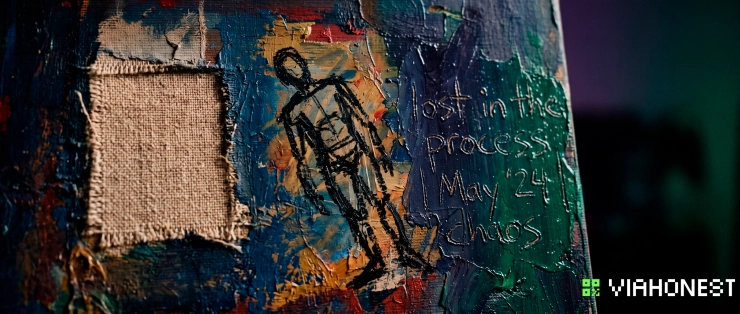
A crooked figure, an exposed patch of raw canvas, a sentence scratched into wet paint. These elements once looked unfinished to viewers trained to expect polished surfaces and controlled composition. In 2026, they feel immediate, human, and culturally precise. Contemporary artists are rediscovering the expressive force of the awkward mark, the unstable image, and the surface that refuses to hide how it was made.
The current naive art trend is not a nostalgic return to childhood drawing. It is a conscious refusal of visual obedience. Artists working with spontaneous linework, distorted bodies, abrupt color, graffiti gestures, oil sticks, spray paint, collage, and damaged surfaces are challenging the idea that technical perfection is the highest artistic value. Their work replaces polish with presence. Instead of concealing doubt, revision, and physical effort, it turns those qualities into content.
This shift is closely connected to the rise of raw texture art and renewed interest in neo expressionism techniques. As digital images become cleaner, faster, and easier to generate, visible human decisions gain cultural weight. A smeared handprint, torn paper edge, charcoal stain, or accidental drip can communicate something that immaculate rendering cannot: an unrepeatable moment of contact between the artist, the material, and the world.
For contemporary painters, illustrators, and digital authors, imperfection is no longer a defect to correct. It is a language to develop. The challenge is not simply to make work look rough. The challenge is to create a raw visual system that feels intentional without becoming predictable, and spontaneous without becoming empty. This mixed media painting guide explores how that system works, why collectors are responding to it, and how artists can present original work to ViaHonest for verification and curatorial consideration.
The Cultural Shift Toward Raw Authenticity
The appetite for rawness is part of a wider cultural correction. For more than a decade, audiences have lived inside a stream of filtered portraits, frictionless interfaces, idealized interiors, polished brand identities, and algorithmically optimized images. Every shadow can be softened. Every face can be corrected. Every rough edge can be removed before publication.
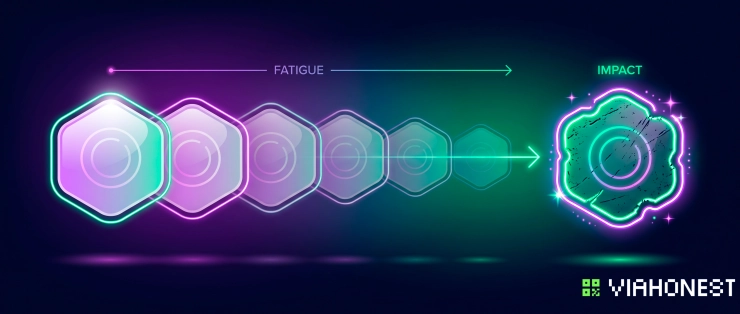
The result is visual abundance, but also visual fatigue. When everything appears finished, finish loses its authority. When every image is technically flawless, flaws begin to carry meaning.
The naive art trend answers this fatigue through tactile authenticity. It foregrounds the evidence of making: pressure, speed, hesitation, damage, repetition, and revision. The viewer can often reconstruct the artist's actions by looking at the surface. A charcoal contour disappears beneath acrylic, then returns as a scratch. A sprayed field of color is interrupted by an oil-stick figure. A section of raw canvas remains exposed beside a heavily worked area. The image becomes an archive of physical decisions.
This is why contemporary imperfection should not be confused with carelessness. Carelessness leaves no tension between choice and accident. Strong raw texture art depends on that tension. It allows uncontrolled events to enter the work, but it also edits, redirects, covers, and reveals them. The surface may look urgent, yet its urgency is held together by rhythm, contrast, and emotional focus.
Collectors increasingly recognize this difference. They are not simply buying an attractive composition. They are buying proximity to a process that cannot be perfectly repeated. The scratches, stains, embedded fragments, and shifts in material create a physical identity that belongs to one object. In a culture saturated with reproducible images, that singularity matters.
Rebounding Against Digital Perfection
Digital perfection has changed how physical artwork is perceived. A smooth gradient or precise outline once demonstrated rare control. Today, software can produce both instantly. Technical refinement still matters, but refinement alone no longer guarantees emotional or cultural relevance.
The anti-digital aesthetic has emerged as a response, not because artists reject technology, but because they want to restore friction to the image. Friction appears through broken lines, rough scans, uneven registration, compressed fragments, visible grain, torn collage, and surfaces that resist immediate interpretation. It slows the viewer down by refusing to become transparent.
Raw texture art is especially effective in this context because it preserves the scale and resistance of real material. Thick acrylic catches light differently across the canvas. Charcoal falls into woven fibers. Spray paint creates a soft atmospheric edge beside a hard scraped line. Oil pastel sits on top of paint with a waxy density that remains visible even in photographs. These variations remind the viewer that the work occupies space and has a body.
This material presence has become more valuable as generated and edited imagery grows increasingly seamless. A physical mark carries information about force and duration. A deep scratch indicates pressure. A diluted stain records gravity and absorption. A hurried line contains the speed of the artist's arm. Even an apparent mistake can become proof of a decision made in real time.
The strongest artists do not imitate digital imperfection as a style filter. They build surfaces through actual conflicts between materials. They let water resist oil, allow spray paint to drift beyond a contour, or draw into paint before it has fully dried. The image develops through reaction rather than execution alone.
This is also why close-up documentation is essential. A full view explains the composition, but a detailed photograph reveals the artwork's material intelligence. Collectors should be able to see scratched layers, aerosol transitions, exposed fibers, embedded paper, and the meeting point between oil sticks and spray paint. These details communicate value because they prove that the surface is not a flat effect. It is constructed history.
Naïve Authenticity and Emotional Directness
Naïve authenticity begins when an artist stops using academic accuracy as the default measure of success. A head can be too large. A hand can become a symbol rather than an anatomical study. Perspective can collapse. Objects can float, overlap incorrectly, or change scale according to emotional importance.
Expressive distortion makes inner experience visible. A frightened figure may shrink into a corner while an ordinary chair dominates the composition. A face may contain two incompatible expressions. A building may tilt because stability is not the subject. Such distortions do not indicate an inability to draw. They reveal a decision to prioritize psychological truth over optical correctness.
The naive art trend often borrows the directness associated with children's drawings, outsider practices, folk imagery, street art, comics, and personal notebooks. Yet contemporary naïve work operates with self-awareness. The artist understands visual convention and chooses when to ignore it. That choice creates tension between innocence and sophistication.
Spontaneous linework art is central to this language. A spontaneous line does not necessarily mean a line made without thought. It means a line that retains energy after it is made. It can hesitate, accelerate, wobble, break, or collide with another mark. Instead of merely describing an object, it records the artist's encounter with that object.
To preserve this energy, artists often need to resist correction. Redrawing every unstable contour can sterilize the image. A more effective approach is to respond rather than repair. If a face feels too small, the artist might surround it with oversized text. If a line fails to describe a body, it can become a shadow, scar, or second outline. The initial error remains active inside the final composition.
Emotional directness also depends on subject matter. Repeated symbols, private phrases, fragmented memories, crude figures, animals, masks, and domestic objects can create a personal iconography. The goal is not to make every symbol easy to decode. It is to make the visual world feel internally necessary.
Naïve authenticity fails when it becomes a collection of fashionable signs. Random crowns, crossed-out eyes, graffiti arrows, and misspelled words do not automatically create emotional depth. The punk-grunge aesthetic has power only when its damage, humor, and confrontation emerge from a real artistic position. Rawness must reveal something. Otherwise, it becomes another polished surface wearing a distressed costume.
Mixed-Media Tactics and Studio Practice
Mixed media gives artists a practical way to combine immediacy with complexity. Different materials create different speeds of thought. Acrylic can block a form quickly. Charcoal can search for it. Spray paint can disrupt its edge. Oil pastel can return with a dense, decisive gesture. Collage can introduce an image, texture, or piece of language that painting alone could not invent.
The studio should become a site of controlled instability. This does not require expensive materials or a large inventory. A focused group of incompatible tools often creates stronger results than an unlimited selection. The purpose of mixed media is not to demonstrate variety. It is to create meaningful collisions.
A useful process starts with an emotional premise rather than a finished image. The premise might be pressure, isolation, false confidence, tenderness, noise, or fragmented memory. Materials are then chosen according to how they behave. Charcoal suits uncertainty and revision. Spray paint suggests speed, public space, atmosphere, or intrusion. Oil stick creates bodily pressure. Thin acrylic establishes stains and veils. Heavy acrylic creates resistance and relief.
This approach keeps technique connected to meaning. It also prevents the work from becoming a catalogue of effects.
Layering Unconventional Materials
Raw canvas is an active material, not an empty background. Its visible weave introduces warmth, irregularity, and absorption. Paint behaves differently on an unprimed surface because liquid pigment enters the fibers instead of resting entirely on top. The resulting stains can feel more vulnerable than conventional brushwork, especially when placed beside opaque passages.
Artists should understand the risks before working extensively on unprimed fabric. Oil paint can damage untreated fibers over time, so a compatible barrier or carefully planned material system may be necessary. Acrylic washes, acrylic markers, charcoal, oil sticks designed for mixed-media use, and spray paint can all behave differently depending on the support. Testing materials on a separate piece of fabric helps reveal cracking, bleeding, adhesion, and color changes before those issues appear in a finished work.
Begin with a limited structure. A few stains, a loose charcoal drawing, or a sprayed shape can establish the first layer without filling the entire surface. Leaving portions untouched gives the later marks room to breathe. Raw canvas is most powerful when it participates in the composition rather than surviving as an accidental border.
Acrylic works well for broad fields, veils, drips, and fast corrections. It can be applied with brushes, cloth, cardboard, scrapers, or gloved hands. Thin layers preserve previous marks, while opaque passages can create abrupt visual closure. Alternating between transparency and opacity gives the work depth without relying on conventional modeling.
Charcoal introduces instability because it can remain loose, smear into wet media, or disappear under later layers. Fixing every charcoal mark too early can make it feel separate from the painting. Allowing some of it to dissolve creates a more integrated surface.
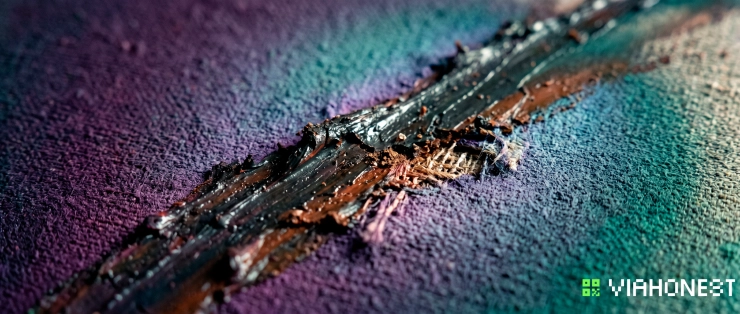
Oil sticks and spray paint produce a particularly charged contrast. Aerosol paint is dispersed, atmospheric, and difficult to contain. Oil stick is dense, direct, and physically resistant. A sprayed halo behind an aggressively drawn figure can expand its psychological presence. A waxy line pushed through a soft aerosol field can restore focus after the composition begins to drift.
Safe studio practice remains essential. Spray materials require appropriate ventilation, protective equipment, and careful attention to manufacturer instructions. Technical responsibility does not weaken spontaneity. It protects the artist's ability to continue working.
Layering should alternate between construction and interruption. Build an image, then challenge it. Cover a successful passage if it has become too comfortable. Introduce a color that changes the emotional temperature. Rotate the canvas. Draw with the non-dominant hand. Transfer a fragment from another surface. Each interruption should open a new problem rather than supply instant decoration.
The final layer does not need to resolve everything. Contemporary mixed-media work often remains strongest when some contradictions stay visible. A refined passage beside a crude one, or a quiet stain beneath an aggressive phrase, can create the unresolved pressure that keeps the image alive.
Scratches, Text, and Visual Distortions
Sgraffito transforms the surface by removing material rather than adding it. A tool dragged through wet paint can expose an earlier color, the raw support, or a buried line. The gesture feels archaeological because it reveals the painting's previous state. It can also feel violent, especially when used across faces, bodies, or words.
The tool affects the emotional register. A palette knife creates broad, hard cuts. A wooden stick produces irregular grooves. A comb generates mechanical repetition. A blunt object pushes paint aside without making a clean edge. Testing these marks helps the artist develop a vocabulary rather than relying on one recognizable scratch.
Text can function as message, texture, interruption, or failed communication. A complete sentence establishes narrative, while a partial word creates ambiguity. Repetition turns language into rhythm. Crossing out a phrase does not erase it completely. It gives the rejected words a second, often stronger presence.
Handwritten text should belong to the same physical world as the rest of the image. Clean typography placed over a distressed painting can feel disconnected unless that contrast is intentional. Writing with charcoal, oil stick, marker, scratched lines, or sprayed stencils allows language to participate in the surface.
Graffiti elements bring associations with public space, speed, protest, territory, and anonymity. Their use requires more than borrowing an urban visual accent. Artists should consider why a mark appears, who seems to have made it, and whether it supports the work's social and emotional context. The difference between influence and empty imitation is specificity.
Collage introduces a second reality into the painting. Receipts, packaging, fabric, photocopies, handwritten notes, maps, and printed fragments carry histories before they enter the composition. Once torn, covered, or partially removed, they create gaps between what can be seen and what has been lost.
Expressive distortion can then connect all these materials. A figure can be redrawn across a collage seam. A mouth can become a block of text. A sprayed line can extend beyond the body and turn into architecture. Distortion should move through the whole composition, not remain isolated in one exaggerated face.
Dynamic chaos still needs hierarchy. The viewer requires an entry point, a pause, and a reason to continue looking. One dominant gesture, a recurring color, a cluster of repeated marks, or a large quiet area can organize even the most aggressive surface. Without hierarchy, every mark demands equal attention and the image becomes visually flat despite its physical complexity.
Bringing Raw Textures into Digital Illustration
Digital artists can participate in the naive art trend without pretending that a screen is a canvas. The goal is not to disguise digital work as painting. It is to transfer the logic of material unpredictability into a digital process.
The strongest custom texture brushes begin with original marks. Charcoal strokes, dry acrylic, scraped paint, stained paper, canvas fibers, and oil-pastel fragments can be photographed or scanned, then converted into brush shapes and texture sources. Because the marks come from the artist's own hand, the resulting brush library develops a recognizable identity.
Variation is crucial. A brush that stamps the same texture repeatedly creates a visible pattern and quickly loses its organic quality. Adjusting scale, rotation, spacing, pressure response, and opacity helps each mark behave differently. Combining several related brushes produces a richer surface than forcing one brush to simulate every material.
Noise and grain should support the image rather than cover it uniformly. Real surfaces do not distribute texture equally. Grain may gather in shadows, break along an edge, disappear beneath an opaque form, or become stronger in an exposed field. Selective texture creates depth. A universal grain overlay often looks like a filter.
Digital spontaneous linework art also benefits from reduced correction. Excessive smoothing, vector cleanup, and repeated undo actions can remove the very tension the artist wants to preserve. Drawing quickly, limiting undo, changing scale, and allowing imperfect selections can restore risk to the process.
Layer organization can be intentionally flexible, but it should not become careless. Merging selected layers creates commitment. Erasing into a merged passage can imitate sgraffito logic by revealing a lower state. Printing digital fragments, altering them physically, and bringing them back into the composition can further blur the boundary between screen and studio.
A digital work gains tactile authenticity when its irregularities originate in process. Artificial scratches added at the end rarely carry the same authority as marks that influenced the composition from the beginning. Texture should affect decisions about form, value, color, and space. It should not sit above the image as decorative evidence of roughness.
For digital authors creating physical originals, high-quality pigment printing can become the first stage rather than the final product. The print can be altered with charcoal, acrylic, collage, oil pastel, and hand-drawn text, producing a unique mixed-media object. That object is materially distinct from the underlying digital file and can be documented as an original work or clearly defined edition.
How to Develop a Recognizable Raw Visual Language
A successful aesthetic is not built by repeating the same surface effect. It develops through recurring decisions. Artists should pay attention to the symbols, colors, distortions, and material conflicts that appear naturally across several works.
Creating a series is more valuable than chasing isolated experiments. A group of works can investigate one emotional or visual problem through different compositions. The same unstable figure might reappear at multiple scales. A repeated phrase might become less readable from one painting to the next. Exposed canvas might gradually occupy more of the image. These changes show development while preserving continuity.
Restraint is as important as intensity. If every work contains every technique, the result becomes formulaic. One painting may depend on scratches and raw fabric, while another uses thick text and sprayed color. The connection between them can come from attitude, palette, or emotional logic rather than identical materials.
Documentation should capture both the complete work and its tactile details. Photograph the full composition directly and consistently, then record close views of layered paint, scratched passages, collage edges, oil-stick pressure, spray transitions, and exposed canvas. Side lighting can reveal relief and surface variation that frontal lighting may flatten.
Accurate documentation is especially important when offering original contemporary art online. The buyer cannot initially stand in front of the work, so images and descriptions must communicate scale, material, condition, and physical character. Include exact dimensions, support, medium, year, edition information where relevant, and any display requirements.
Clear presentation does not neutralize a rebellious aesthetic. It gives that aesthetic credibility. The artwork can remain unstable, confrontational, and unresolved while its ownership information is precise.
Join the Contemporary Art Wave
The naive art trend is not an invitation to make unfinished work. It is an invitation to reconsider what completion means. A work may be complete when its tension becomes clear, not when every surface is polished. Raw texture art succeeds when material, emotion, and composition reinforce one another. It fails when roughness is used to avoid decisions.
In 2026, collectors are paying closer attention to work that preserves human presence. They want to encounter surfaces that cannot be reduced to a thumbnail, gestures that retain physical force, and original objects with verifiable authorship. This creates an opening for contemporary artists working with mixed media, neo expressionism techniques, expressive distortion, and experimental digital-to-physical processes.
ViaHonest helps artists present original contemporary work within a marketplace built around authenticity and clear provenance. Verification gives collectors stronger context for evaluating an artwork, while professional documentation makes its material and ownership history easier to understand. For artists whose work depends on singular surfaces, hand-built layers, and unrepeatable gestures, this context is essential.
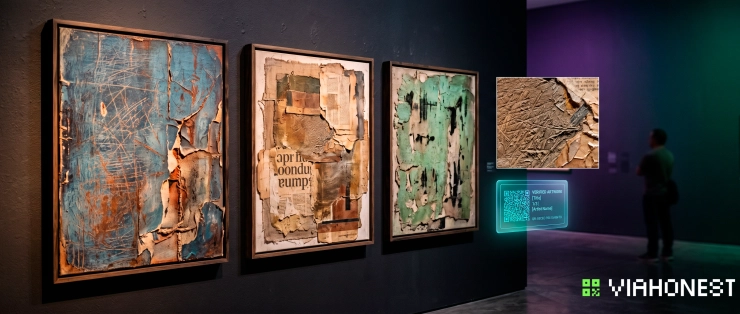
Artists can apply for gallery verification and consideration for ViaHonest curatorial selections. Submit a cohesive group of original works, accurate images, close-up texture photographs, dimensions, materials, creation dates, and a concise statement explaining the ideas that connect the series. Show the full physical character of each piece, including raw canvas, scratched paint, collage seams, sprayed passages, and other details that distinguish the original from a reproduction.
A strong application should demonstrate consistency without repetition. Curators need to see more than technical experimentation. They need to understand the artist's position, the visual questions being explored, and why the chosen materials are necessary. A clear body of work is more convincing than a large collection of unrelated images.
Apply to ViaHonest for gallery verification and the opportunity to be included in curated contemporary art collections. Present your work as the original object it is: documented, attributable, physically specific, and ready to meet collectors who value tactile authenticity.
Conclusion
Imperfection has moved from the margins of contemporary practice to the center of the cultural conversation. Against automated polish and endless digital correction, the naive art trend offers emotional directness. Against weightless imagery, raw texture art offers resistance, depth, and touch. Against academic certainty, expressive distortion and spontaneous linework art offer unstable but honest ways of seeing.
The most compelling work in this movement does not reject skill. It redefines skill as the ability to preserve energy, edit chaos, and make materials carry meaning. Oil sticks and spray paint, charcoal and acrylic, collage and raw canvas become more than stylistic signals. They become instruments for recording pressure, memory, conflict, humor, and vulnerability.
Whether the work begins in a physical studio or on a digital screen, authenticity comes from decisions that cannot be separated from the artist's process. Build textures from your own marks. Let distortion serve emotion. Use grain selectively. Leave evidence of revision. Allow the surface to remember what happened to it.
Then document the result with the same seriousness used to create it. The contemporary collector may be drawn to disorder, but trust depends on clarity. Accurate materials, dimensions, authorship, condition, and provenance give experimental work the professional framework it deserves.
Embrace the imperfect, but do it with purpose. Develop a visual language that belongs to you, create original work whose surface rewards close attention, and apply for verification on ViaHonest. The future of contemporary art does not have to be smoother. It can be stranger, rougher, more tactile, and unmistakably human.