Choosing where to sell your work is one of the most consequential business decisions an artist makes, and the honest answer is that there is no single winner. The best online art marketplaces for you depend on three things: the type of work you create, your price range, and whether you want to earn money only on the first sale or on every sale that comes after it. That last point is the one almost nobody talks about, and it can quietly change your lifetime income from a single painting.
Below, we compare eight of the best platforms to sell original art online by commission, audience, and the kind of work each one suits. You get a side-by-side table with real fees in dollars, detailed reviews, a recommendation for each artist type, and a clear look at which platforms actually pay you when your art is resold.
What to Look for in an Art Selling Platform
Before comparing names, it helps to know what actually drives your take-home pay and your long-term growth. When you evaluate any art marketplace, weigh these factors:
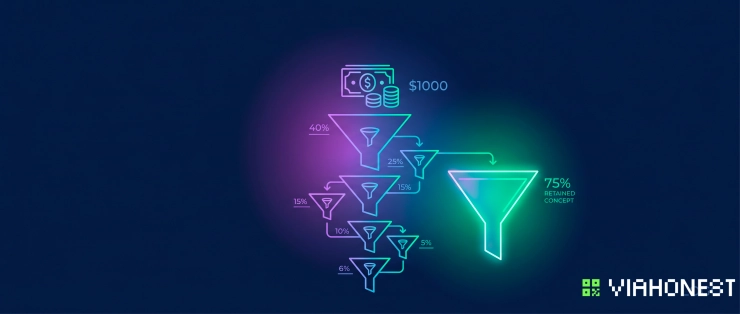
- Commission and fees. This is the headline number, but read past the percentage. A 40% commission on a $1,000 painting is $400 gone. Some platforms also add monthly subscriptions, listing fees, or payment processing on top.
- Audience and traffic. A low fee means little if nobody sees your work. Established marketplaces bring built-in buyers; newer ones may offer better economics but require you to drive traffic.
- Speed of listing. Some platforms let you publish in minutes. Others are curated and require an application, a portfolio review, and approval.
- Trust and authenticity. Collectors paying real money want proof a piece is genuine. Platforms that verify authenticity protect both your reputation and your price.
- Shipping and fulfillment. Do you pack and ship yourself, or does the platform handle logistics? This affects your time and your margins.
- Fit for limited editions and originals. Print-on-demand sites are built for reproductions. If you sell one-of-one originals or small limited drops, you need a platform designed for that.
- Royalties on resale. When your work is resold later, do you see any of that money? On most platforms the answer is no. On a few, it is yes, and that difference compounds over a career.
Keep these seven criteria in mind as you read, because the "cheapest" platform on paper is rarely the one that earns you the most over time.
Best Platforms to Sell Original Art Online: Quick Comparison
Here is a fast overview of eight leading platforms, with commission, the approximate amount you keep on a $1,000 original sale, any monthly cost, and whether the platform pays you on resale. Use it as a map, then read the detailed reviews below.
| Platform | Commission / core fees | You keep on a $1,000 sale (approx.) | Monthly cost | Pays you on resale? |
|---|---|---|---|---|
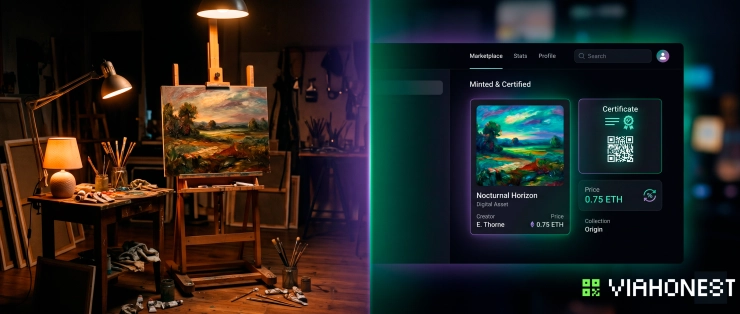
| ViaHonest | 2.5% low platform fee, plus on-chain certificate of authenticity | Most of the sale, plus ongoing resale income | None to list | Yes, ongoing resale royalties |
| Saatchi Art | 40% commission on originals | ~$600 (before ~3% processing) | None | No |
| Artfinder | 40% (Premium) or 45% (Core) | ~$550 to $600, minus subscription | ~$10 to $30 | No |
| Singulart | Around 50% (varies), curated | ~$500 or less, minus subscription | ~$30 to $150 | No |
| UGallery | 50% commission, curated | ~$500 | None | No |
| Etsy | ~$0.20 listing + 6.5% + 3% and $0.25 | ~$905 (about 10% in fees) | None (optional $10 plan) | No |
| Fine Art America | 0% on originals (you handle everything) | Close to 100%, but no buyer protection or logistics | $0 or $30/year | No |
| eBay | ~15% final value fee (Fine Art) plus per-order fee | ~$850 | None (optional store) | No |
The pattern is worth pausing on. The lower-commission print platforms keep more of your money but are built for reproductions, not high-value originals. The curated galleries take up to half your sale but bring prestige and buyers. And only one platform in this list pays you again when your art changes hands later.
Best Platforms for Selling Original Art (Detailed Reviews)
Saatchi Art
Saatchi Art is probably the most recognized online gallery for original work, with millions of monthly visits and a global collector base. It is free to list, takes a 40% commission on original sales (recently raised from 35%), and handles the courier pickup while the buyer pays shipping. The trade-off is a crowded, saturated marketplace where standing out takes strong photography and consistent self-promotion. Best for emerging artists who want reach and curation and can price a 40% cut into their work.
Artfinder
Artfinder focuses on independent, self-representing artists selling original pieces. In 2026 it runs on paid seller plans: roughly 45% commission on the Core plan or 40% on Premium, plus a monthly subscription of about $10 to $30. Commission applies to the artwork price only, not shipping, and you generally manage fulfillment yourself. The subscription only pays off if your sales volume is high enough to justify it, so run the math against your actual numbers.
Singulart and UGallery
These two represent the curated, higher-touch end of the market. Both require an application and take a large cut, commonly around 50%, in exchange for curation, marketing, and in many cases handled logistics. Singulart adds a monthly subscription that can range from roughly €30 to €150 depending on tier. These platforms suit established artists who value prestige and a hands-off sales process and who price with a 50% commission in mind.
Etsy
Etsy is not a fine-art gallery, but it is one of the best platforms to sell art in the affordable and print segment. Fees are layered: a $0.20 listing fee, a 6.5% transaction fee, and payment processing of 3% plus $0.25, which lands around 10% to 11% total before optional advertising. That is competitive for prints, cards, and lower-priced pieces aimed at a craft-friendly audience, but Etsy offers no authentication or provenance for high-value originals.
Fine Art America
Fine Art America (also known as Pixels) is a print-on-demand powerhouse. For prints, it sets a base manufacturing price and you keep 100% of whatever markup you add. For original artwork it charges no commission at all, but there is a catch: the buyer contacts you directly and you handle payment, packing, and shipping yourself, with no escrow or buyer protection. Excellent for reproductions and photography, weaker for selling and protecting high-value one-of-one originals.
eBay
eBay gives you a massive audience, but in the Collectibles and Fine Art category the final value fee is one of the highest here, around 15% (14% with a store subscription), plus a small per-order fee. You get reach and flexibility, offset by a bargain-hunter culture and the constant work of standing out among millions of listings. It works as a high-reach channel, less so as a home for building collector trust.
Which Platform Is Best for You? (By Artist Type)
- Emerging artist selling affordable prints: Fine Art America for print-on-demand, or Etsy for a craft-oriented audience.
- Original painter seeking reach and curation: Saatchi Art or Artfinder, as long as you can absorb a 40% to 45% commission.
- Established artist who wants prestige and a hands-off process: Singulart or UGallery, accepting a roughly 50% cut.
- Creator of limited drops, one-of-one originals, or collectible pieces who wants authentication and long-term income: ViaHonest, which is built for verified originals and pays you on resale.
Most working artists use more than one channel: a marketplace for discovery, and a platform like ViaHonest for verified originals and limited editions where authenticity and resale value matter most. If you sell originals, you can list your work on ViaHonest and reach collectors who are specifically looking for verified, one-of-a-kind pieces.
Can You Earn Money After Your Art Is Sold?
Here is the question that separates a one-time payout from a lasting income stream. On almost every platform above, once your painting sells, your relationship with that piece ends. If a collector resells it next year for triple the price, you see none of it. That is simply how traditional marketplaces and galleries are built. The commission is charged once, on the first sale, and the secondary market belongs to dealers and resellers.
A handful of jurisdictions have artist resale rights that pay a small royalty on certain secondary sales, but enforcement is inconsistent and most online platforms are not set up to track or pay it automatically. For the vast majority of artists, the honest reality is this: on Saatchi Art, Artfinder, Etsy, eBay, Fine Art America, and the curated galleries, you are paid once and only once.
This is exactly the gap that on-chain, tokenized marketplaces were designed to close. When a physical artwork is tied to a digital certificate that records ownership and enforces resale terms automatically, the artist can keep earning every time the piece changes hands. That is a structural advantage, not a promotional promise, and it is where the newest generation of the best online art marketplaces is heading.

Why ViaHonest Is Different from Other Art Platforms
ViaHonest is a Web3 marketplace for real, physical goods, built for brands, creators, and collectors who care about authenticity and provenance. Instead of choosing between low fees and real protection, it combines a competitive fee structure with three things most platforms cannot offer:
- A digital certificate of authenticity for every piece. Each physical artwork is paired with an on-chain certificate that verifies it is genuine, so collectors buy with confidence and your work is protected from forgery.
- Transparent ownership history. Provenance is recorded and visible, which is exactly what serious collectors look for and what raises the value and trust around your originals.
- Resale royalties that actually reach you. Because ownership and terms live on-chain, you can keep earning a share every time your work is resold, not just on the first sale.
For artists who make originals, limited editions, or collectible drops, that combination directly answers the two biggest weaknesses of traditional platforms: proving authenticity and getting paid after the resale.
How to Protect Your Art and Prove Authenticity
Authenticity is the foundation of value in the art world. A painting with clear, verifiable provenance commands a higher price and sells faster than an identical piece with a murky history. Traditionally, proving authenticity meant paper certificates, gallery records, and expert appraisals, all of which can be lost, forged, or disputed.
On ViaHonest, protection is built into the product itself. When you list a work, it receives a tamper-resistant digital certificate that lives on-chain and travels with the piece through every future sale. That means:
- Buyers can verify a work is genuine before they purchase, which reduces disputes and builds trust.
- The ownership record cannot be quietly rewritten, so provenance stays intact.
- Your reputation as the creator is permanently linked to the work, protecting your name and your market.
For collectors, this is peace of mind. For artists, it is a durable defense of both your pricing and your legacy. If you are buying rather than selling, you can browse verified original art and limited drops on ViaHonest and know each piece carries a certificate of authenticity.
How ViaHonest Helps Artists Sell and Earn More
Put the pieces together and the value for artists is straightforward. ViaHonest is designed so you can list quickly, sell securely, and keep earning:
- List and reach real buyers. Set up your originals, limited editions, and collectible pieces, and connect with collectors who are specifically seeking verified work.
- Sell with confidence and security. Secure transactions and a certificate of authenticity on every item reduce friction and protect your price.
- Earn on the first sale and every resale after. Instead of a one-time payout, you build a stream of income that grows as your work moves through the secondary market.
- Keep more of what you make. With a low platform fee and no forced 40% to 50% gallery cut, more of each sale stays with you.
That is a fundamentally different economic model from a marketplace that charges you once and forgets you. It rewards the long-term value of your work rather than extracting the most from a single transaction.
Frequently Asked Questions
What is the best platform to sell original art online?
It depends on what you're selling and what you want long-term. Saatchi Art and Artfinder offer the widest collector reach for original paintings. Singulart and UGallery suit established artists who want a curated, hands-off process. ViaHonest is the best fit if you want to sell verified originals or limited editions and keep earning every time your work is resold.
Which art platform has the lowest fees?
Fine Art America charges no commission on originals, but you handle payment, packing, and shipping yourself with no buyer protection. ViaHonest combines a low platform fee with built-in authenticity verification, so you keep more of each sale without giving up security.
Do any art platforms pay artists when their work is resold?
On almost every marketplace — Saatchi Art, Artfinder, Singulart, UGallery, Etsy, eBay — you are paid once, on the first sale, and never again if the piece is resold later. ViaHonest is the exception: it's built to pay you a share of every resale, not just the first one.
How can I prove my artwork is authentic when selling online?
Paper certificates and gallery records can be lost, forged, or disputed. On ViaHonest, every listed work gets a digital certificate of authenticity that stays linked to the piece through every future sale, so buyers can verify it's genuine and your ownership history stays intact.
Conclusion
So what are the best online marketplaces for art? The honest answer is that it depends on your work, your budget, and your goal. If you want a fast, quick payout on affordable prints, Fine Art America and Etsy keep fees low. If you want reach and curation for originals and can absorb a large commission, Saatchi Art, Artfinder, Singulart, and UGallery each have a place. And if you want to sell high-value originals securely while earning after every resale, that is a different category altogether.
Two things are worth remembering as you choose. First, commissions differ enormously, so calculate your real loss in dollars, not just the percentage: 40% or 50% of a $1,000 painting is $400 to $500 gone on every sale. Second, ask who pays you after the resale, because on nearly every traditional platform the answer is no one.
If you create original art and want to sell it safely, prove its authenticity, and keep earning every time it changes hands, try ViaHonest. It is one of the few best platforms to sell original art online that treats your work as a lasting asset rather than a one-time sale.